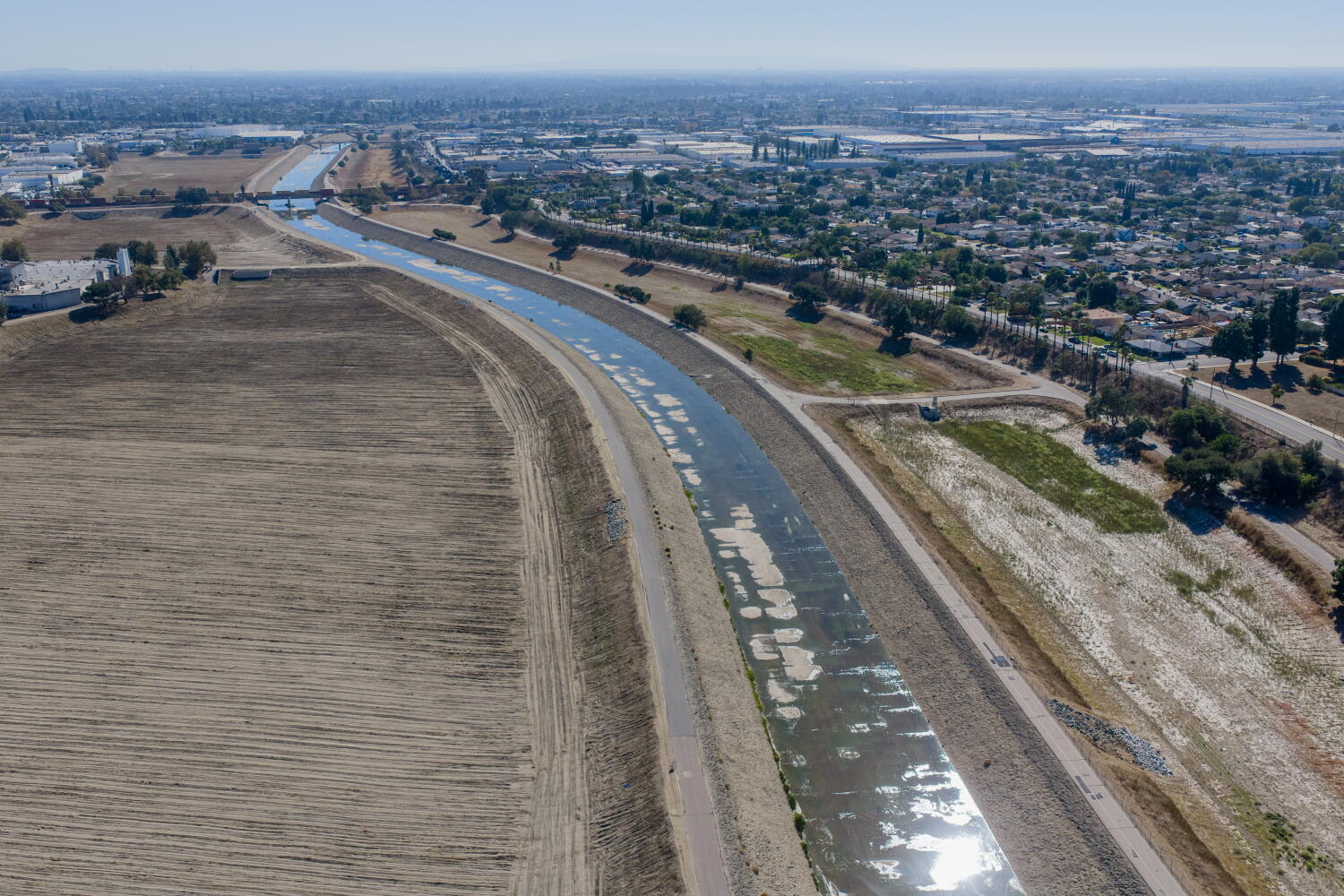
Big storms terrify coastal neighborhoods. They also fill empty underground aquifers. When forecasters point toward a heavy Pacific weather pattern, the immediate reaction is panic over mudslides and flooded freeways. But water managers look at the same forecast and see a massive, flashing neon sign of opportunity.
California deals with an extreme boom-and-bust water cycle. Months of dry heat leave reservoirs depleted and soils bone-dry. Then, atmospheric rivers and strong El Nino systems dump months of rain in a matter of weeks. The central challenge isn't just surviving the deluge. It's figuring out how to capture the water before it rushes uselessly down concrete channels straight into the Pacific Ocean.
The Race to Clear Basins Before the Rains
You can't catch water if your buckets are already full of mud. That reality drives a frantic dry-season maintenance window across Southern California.
Crews are currently racing to haul out an estimated 1.3 million cubic yards of sediment from key flood-control sites. Think about locations like the San Gabriel, Eaton Wash, and Devil's Gate reservoirs. That volume of dirt and debris is roughly enough to fill the historic Rose Bowl three times over. Excavators pull out sand, mud, and rocks day after day, moving thousands of truckloads to old gravel pits.
Without this massive cleanup, basins would fill up instantly. Instead of protecting homes from debris flows, clogged reservoirs would overflow, sending dangerous torrents into populated streets. Clearing that space gives the system vital breathing room. It turns flood protection into a primary water-storage strategy.
Pumping Water Underground for Dry Days
Surface reservoirs like state lakes only tell part of the story. They fill up fast and spill over just as quickly during a major storm sequence. True drought resilience requires looking downward.
In the Los Angeles region and across agricultural valleys, water agencies rely heavily on spreading grounds and underground aquifers. When storms arrive, operators divert runoff into large gravelly basins. The water slowly percolates through the soil, filtering naturally before recharging the deep groundwater table.
Cities can then pump that stored liquid back out during dry summer months to feed taps and agricultural fields. It's a pragmatic approach to an unpredictable climate. Capturing water underground minimizes evaporation losses that plague surface reservoirs while creating a reliable buffer against future droughts.
The Persistent Bottlenecks in the System
Moving water isn't just about digging holes and clearing mud. Red tape frequently gets in the way of smart engineering.
State regulations and complex permitting processes often slow down local irrigation districts and farmers who want to capture floodwaters on their own land. When emergency proclamations go into effect, governors sometimes suspend specific sections of the Water Code and Public Resources Code to let water flow onto percolation basins. But temporary waivers aren't enough.
Without streamlined long-term permits, crucial projects stall. Furthermore, critical infrastructure in places like the Sacramento-San Joaquin River Delta suffers from severe silt accumulation. Clogged channels restrict flow capacity, forcing operators to release precious water from upstream reservoirs early out of fear of structural failure. Dredging those channels would restore flow capacity, improve native fish habitats, and allow the state to hold onto more water when it matters most.
What Needs to Happen Now
If you want to understand how California survives its weather extremes, look past the dramatic footage of coastal erosion and flooded highways. Look at the maintenance schedules, the sediment trucks, and the underground basin projects.
Municipalities must continue prioritizing aggressive sediment removal ahead of every wet season. State regulators need to permanently cut through bureaucratic delays that prevent rapid water diversion. Build more spreading grounds. Expand underground storage capacity. Treat every drop of storm runoff as a finite resource rather than an emergency disposal problem.
The next big storm isn't just a threat to manage. It's the lifeline California needs to secure its water future.
California Declares State Of Emergency As Historic, Potentially Strongest-Ever El Nino Looms
This video provides context on the state emergency declaration and preparations for severe El Nino storms in California.
http://googleusercontent.com/youtube_content/1