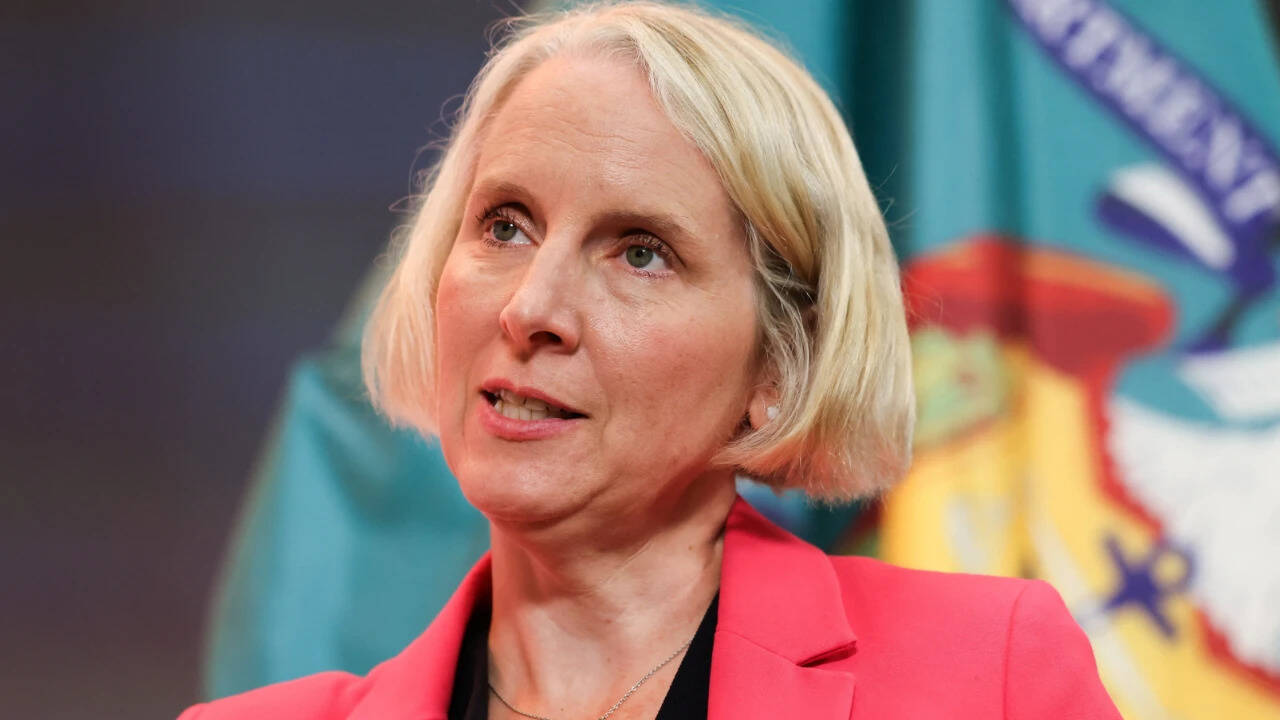
Words matter in Westminster. When a government minister draws a sharp line between business owners and the labor force, people notice. Chief Secretary to the Treasury Emma Reynolds recently triggered a massive political storm by asserting on broadcast media that employers are not "working people," but rather "companies".
That single distinction blew wide open a sensitive debate about who exactly pays the price for state spending and taxation.
The Semantics of Labor and Capital
The remark surfaced during an interrogation over Labour's fiscal policies and tax adjustments. Critics immediately jumped on the soundbite. If you run a local high street shop, employ an apprentice, or manage a small team while clocking eighty hours a week, hearing a Treasury minister suggest you aren't a working person feels like a slap in the face.
Opponents from across the political spectrum were quick to point out the disconnect. Small business owners often risk their personal savings, work nights, and carry the financial stress of payroll before they ever pay themselves. Drawing a rigid wall between the corporate entity and the flesh-and-blood human steering it ignores the reality of modern enterprise.
Manifesto Promises Under the Microscope
At the heart of the outrage lies a deeper anxiety about political pledges. During the 2024 general election campaign, Labour made a signature promise not to raise taxes on working people—specifically ruling out hikes to income tax, employee national insurance, and VAT.
When the government subsequently increased employers' national insurance contributions, defenders insisted the pledge remained intact because the levy hit businesses rather than individuals. Reynolds leaning into the idea that employers are corporate entities distinct from workers is basically an extension of that defense.
The trouble is that businesses don't absorb costs in a vacuum. Higher national insurance bills for employers translate directly into frozen hiring, suppressed wage growth, or higher prices for consumers. Treating the employer as an abstract corporate machine divorced from the working class ignores basic economic mechanics.
The Small Business Reality
Walk down any British high street, and you'll find the reality of employment looks nothing like a faceless multinational corporation. You'll find independent electricians taking on trainees, family-run cafes managing margins week to week, and tech founders coding nights and weekends.
When ministers treat these risk-takers as if they belong to a separate economic species, trust erodes. Business leaders and entrepreneurs want stability and a government that understands their sweat equity. Dismissing them with bureaucratic hair-splitting over who counts as a worker only deepens the suspicion that Whitehall is entirely out of touch.
Tax policy is never just about balance sheets. It communicates values. Right now, the message being sent to British entrepreneurs is that their daily graft doesn't count as real work.
Watch Camilla Tominey grill Emma Reynolds over the working people claim
This interview clip captures the tense exchange on GB News where Chief Secretary to the Treasury Emma Reynolds defended the government's stance and sparked widespread backlash.


