Canada is tired of putting all its economic eggs in one basket. For decades, the play was simple. Produce goods, ship them south across the border, and let American consumers do the heavy lifting. That era is hitting a massive wall.
With American tariffs causing a visible chill in investment, Ottawa is forced to look west across the Pacific.
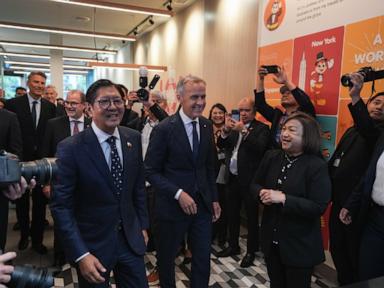
The latest proof of this hard pivot happened in Vancouver. Canadian Prime Minister Mark Carney and Philippine President Ferdinand Marcos Jr. just walked out of bilateral meetings with a signed Strategic Partnership that aims to completely reshape how these two nations interact. They even celebrated the deal with a casual stop for fried chicken at a local Jollibee, but the implications of their meeting are strictly high-stakes business.
This isn't just about diplomatic pleasantries. It's an aggressive effort by Canada to find a safety valve away from US protectionism. If you're a business owner or an investor wondering where the next decade of growth is coming from, this geopolitical shift is your roadmap.
Breaking Free From the American Trade Shadow
Canada has set an incredibly ambitious goal. Prime Minister Carney wants to double the country's non-US exports over the next ten years. It's a massive hill to climb. Right now, the dependency on American buyers makes the Canadian economy vulnerable to every unpredictable policy shift coming out of Washington.
The Philippines represents exactly what Canada needs. It's a surging economy sitting right at the center of the Indo-Pacific action. Bilateral merchandise trade between the two nations reached $3.4 billion in 2025, making Manila Canada’s sixth-largest merchandise export market in the ASEAN region. But both leaders think that's just a baseline.
By pushing hard to conclude a bilateral free trade agreement by the end of December, the stated goal is to triple that bilateral trade volume by 2035.
Minerals, Nuclear Power, and the New Supply Chain
The real meat of this agreement isn't in generic manufactured goods. It’s in energy, mining, and security. The two countries signed a Joint Declaration of Intent concerning Energy and Natural Resources Cooperation alongside a new Technical Assistance Partnership.
Here's why that matters to you. The Philippines needs infrastructure, clean energy, and modern supply chains. Canada has deep pockets and massive expertise in nuclear energy, liquefied natural gas, and mining tech.
- Critical Minerals: The global transition to clean energy requires nickel, copper, and cobalt. The Philippines has massive reserves, and Canada has the technical know-how to extract them responsibly.
- Nuclear Energy: Marcos wants nuclear power in the Philippines to stabilize their notoriously expensive electricity grid. Canadian nuclear tech is now at the front of the line for those upcoming contracts.
- Food Security: Canadian agriculture and forest products are primed to flood the Philippine market once the trade tariffs drop.
The Secret Weapon is Already Inside Canada
You can't talk about Canada-Philippines relations without looking at the human element. Nearly one million Filipino-Canadians live in the country right now. They aren't just statistics; they're an economic engine. Both leaders openly acknowledged that this diaspora is the foundation making this aggressive trade expansion possible.
To protect this vital pipeline of talent, Carney and Marcos announced a Joint Declaration of Intent on Labour and Migration. The goal here is simple: eliminate predatory recruiters, protect migrant workers, and build a transparent framework for safe labor mobility. It ensures that critical sectors like Canadian healthcare, agriculture, and manufacturing keep getting the skilled hands they need without the red tape.
At the same time, a broader Canada-ASEAN free trade agreement is being negotiated simultaneously. Since Marcos is chairing ASEAN, Canada is using this friendship to slide into the wider Southeast Asian market. That regional deal alone is projected to pump nearly $2 billion into Canada’s GDP and create roughly 14,000 new jobs.
What Businesses Need to Do Next
The diplomatic handshake is over. Now the real work falls on the private sector. If you want to capitalize on this shifting trade corridor, don't wait for the final signatures in December.
First, audit your supply chain vulnerabilities to US tariffs. Identify if your raw inputs or prospective customer bases can be diversified into the ASEAN bloc using Manila as your entry hub.
Second, map your talent acquisition strategies to the new, streamlined labor frameworks. The rules around labor mobility between these two nations are changing fast. If you're struggling to fill technical or agricultural roles in Canada, the incoming ethical recruitment pipelines will change your hiring outlook.
Finally, keep your eyes on Manila this coming November. That's when Carney heads to the ASEAN summit. Expect the official trade deals to cross the finish line there, and the companies that move first will capture the early market share.