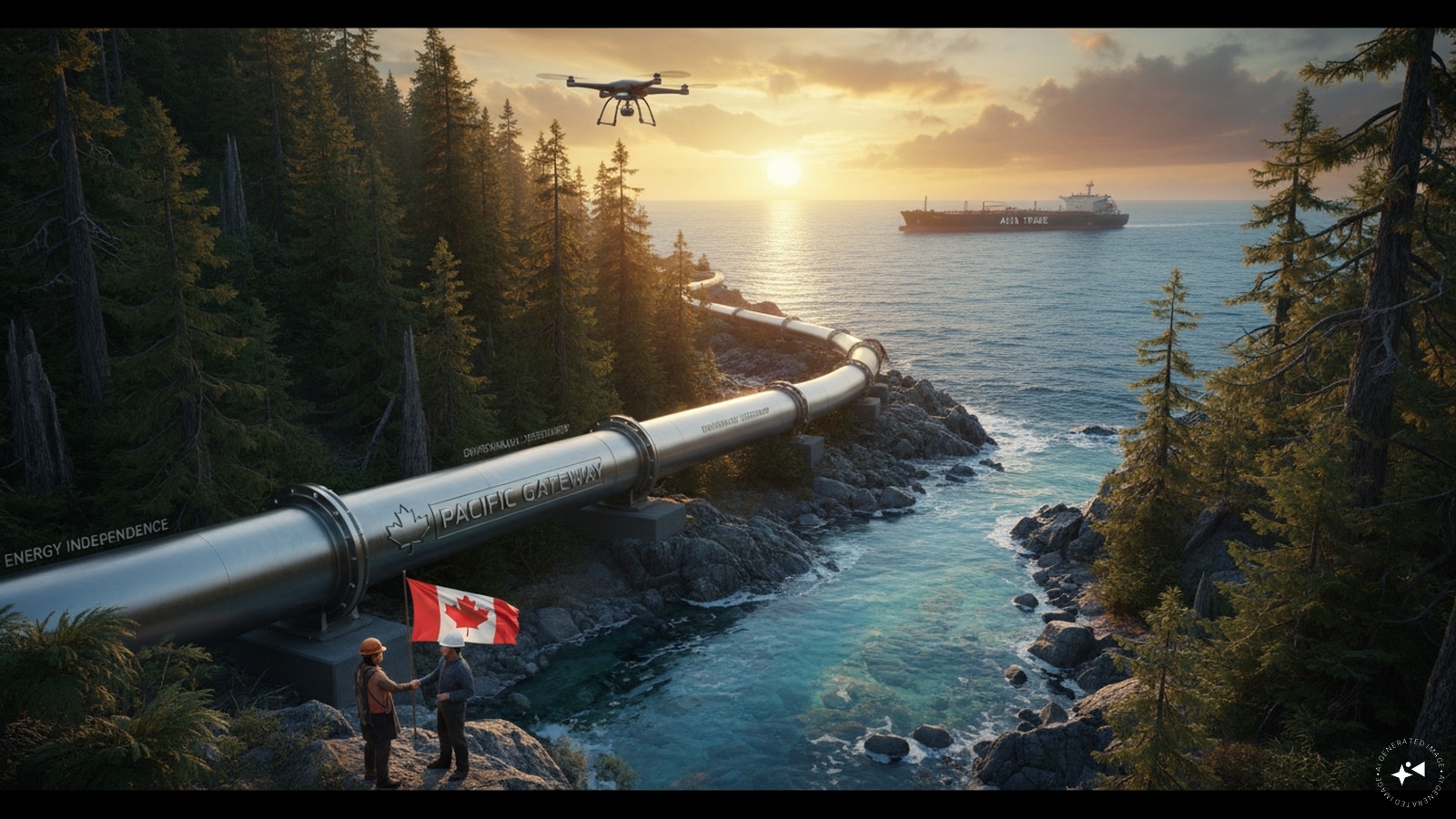
Canada just made a massive move to break its reliance on the American energy market. Prime Minister Mark Carney and Alberta Premier Danielle Smith stood side-by-side to unveil a route for a brand-new, million-barrel-a-day bitumen pipeline stretching from the oil sands to the Pacific Coast. It sounds like a slam dunk for an economy that exports the vast majority of its crude south of the border.
But if you think this project will smoothly cruise through construction, you're missing the massive political and environmental minefields ahead.
The federal government and Alberta want this project fast-tracked. They're aiming to get the pipeline designated as a project of national interest by October, hoping to see construction begin by 2027. On paper, it looks like a rare moment of unity between Ottawa and Western Canada. Look a little closer, though, and it's clear that this deal is a high-stakes political compromise engineered to put out a few fires at home while chasing cash in Asia.
The Real Reason Ottawa is Racing to the Pacific
For decades, Canada has been trapped in a one-customer relationship. The US buys nearly all of Alberta's oil, usually at a painful discount. When you only have one buyer, they dictate the price.
The Trans Mountain pipeline expansion, which opened in 2024, proved that sending oil to the Pacific works. Roughly two-thirds to three-quarters of the crude leaving that terminal now heads straight to Asia. It showed Canada that diversification isn't just a buzzword; it keeps real money from leaking out of the economy.
This new proposal aims to double non-US exports over the next decade. Premier Smith wants to push Alberta's total production to a staggering eight million barrels per day over the next 15 years. But economics only tell half the story here. This pipeline is being weaponized to save Canadian unity.
Alberta has been simmering with separatist tension for years. Smith has consistently blamed federal leadership for strangling the province's energy sector. With a public vote looming this fall on whether Alberta should hold a formal referendum to leave Canada, Prime Minister Carney needed a massive olive branch. Handing Alberta a path to a brand-new West Coast pipeline is exactly that. It's an attempt to buy peace and keep the country whole.
The BC Compromise and the Tanker Loophole
You can't build a pipeline from Alberta to the Pacific without crossing British Columbia. That's where energy projects usually go to die.
To get BC Premier David Eby on board, Carney had to make a major concession. The pipeline will carve through the southern part of BC, tracing the existing Trans Mountain corridor. This strategic choice keeps a strict, long-standing federal ban on oil tankers off northern British Columbia completely intact.
Former Prime Minister Justin Trudeau famously killed the Northern Gateway project because it threatened the pristine northern coast and the Great Bear Rainforest. By keeping the northern tanker ban alive, Carney pacified Eby and protected the environment up north. To sweeten the deal, Ottawa promised to compensate BC for the environmental risks of running yet another line through its southern territory.
Why the 2027 Timeline is Pure Fantasy
Politicians love aggressive deadlines. They look great in press releases. But industry experts and financial analysts aren't buying the government's timeline. The deal claims that if conditions are met, final approvals will drop by September 2027, letting crews break ground immediately.
Honestly, that's a best-case scenario that borders on delusion.
First, there isn't an anchor private investor running the show yet. Pembina Pipeline Corporation is attached as a partner, but the exact financial split between the government and the private sector is completely up in the air. If the Trans Mountain expansion taught us anything, it's that government-backed megaprojects have a habit of ballooning in cost. Taxpayers might end up holding a very expensive bag.
Second, the legal hurdles are massive. The federal government has a constitutional duty to consult First Nations. While some Indigenous communities might sign equity deals, others are fiercely opposed to expanded fossil fuel infrastructure crossing their traditional lands. You can expect a wave of lawsuits and demands for deep environmental reassessments to hit the courts before the year is out.
Finally, the deal has a massive catch. The pipeline approval is legally tied to the Pathways Alliance carbon capture and storage project. This initiative, backed by major oil sands producers, is supposed to trap emissions and move them to a central hub. It's a massive, unproven tech network. If the carbon capture project stalls or fails to meet its targets, the pipeline deal legally unravels. Add in an industrial carbon price set to hit $100 per ton next year—and $140 by 2040—and the economic pressure on producers is intense.
What This Means for Global Energy Markets
If this pipeline actually gets built, it alters global oil flows. Asia gets a massive, reliable stream of heavy crude from a stable democracy. It chips away at OPEC's leverage and gives refiners in places like India and China a steady alternative.
For Canada, it means finally fetching global market prices for its most valuable resource. But getting to that point requires surviving years of regulatory warfare, Indigenous court challenges, and the staggering engineering hurdles of the Rocky Mountains.
Keep your eyes on the Ottawa major projects office this fall. If the federal government successfully designates this a project of national interest by October, it clears the first hurdle. But don't expect to see bulldozers clearing southern BC forests anytime soon. Watch how the Pathways carbon capture project progresses over the winter; that's the real bellwether for whether this pipeline ever carries a single drop of oil.