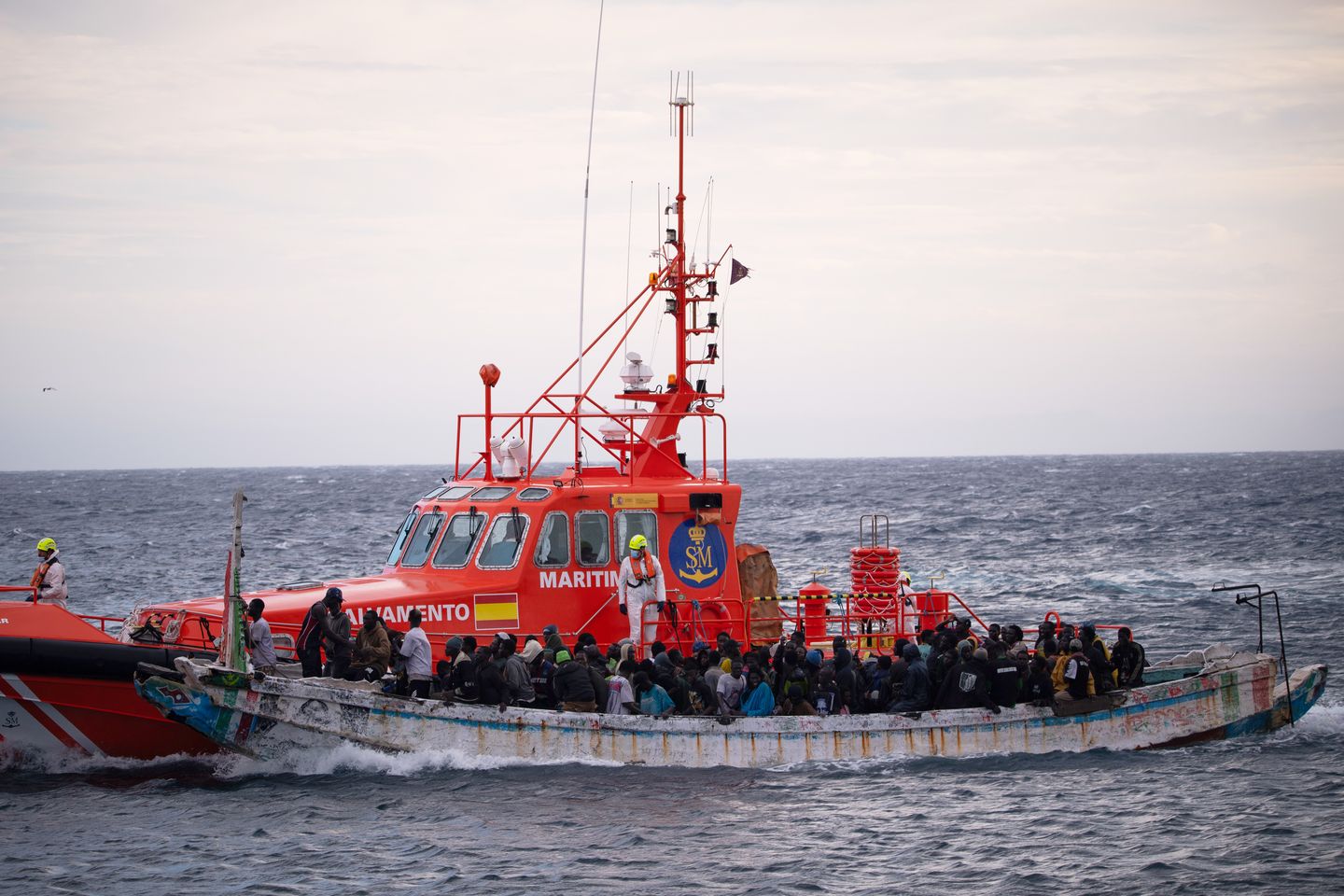
Nearly 2,000 migrants hit Spain's Canary Islands in a single day this week, shattering records and exposing how unprepared Europe still is for West African sea crossings.
Let's get straight to the numbers before the headlines blur together. On Tuesday, November 24, 2026, Spanish maritime rescue teams brought ashore around 1,990 people aboard 15 boats, with separate tallies from Spanish news agency EFE counting 1,971 arrivals across 14 vessels—and broader 24-hour rescue counts topping 2,100. Most of those boats landed on El Hierro, a tiny volcanic island of roughly 11,400 to 12,000 residents. One person died during the voyage. A baby girl born at sea was just four days old when she reached shore. Discover more on a related issue: this related article.
That broke a daily record that hadn't even stood for two weeks. Earlier in November, on November 14, authorities rescued 1,580 people across El Hierro, Gran Canaria, and Tenerife, topping a 2020 high-water mark of 1,461.
Honestly, watching basic news wire recaps repeat the same "record broken" line misses the real story. When nearly 2,000 newcomers step onto an island of 12,000 people in one day, arithmetic stops being abstract and becomes a logistical emergency. More reporting by Al Jazeera explores related perspectives on this issue.
Why the Canary Islands Record Surge Keeps Breaking
People often ask why boats keep leaving West Africa even when patrols tighten and winter storms loom. The answer comes down to a mix of calm weather windows, seasonal timing, and harsh economic realities back home.
Most of Tuesday's boats set off from Senegal and The Gambia. Smugglers pack dozens—sometimes up to a hundred—people into long wooden fishing boats known as cayucos or pirogues for multi-day or week-long Atlantic runs. November sits right on the edge of rougher winter seas. Calm spells in late autumn give captains a narrow window, so departures cluster hard.
There's also a ripple effect from earlier enforcement. When routes closer to North Africa get watched more tightly or conditions shift along the coast, departures swing south toward Senegal and The Gambia. That makes the trip longer and far riskier. Boats overshoot the islands and drift into open Atlantic waters, sometimes with tragic results.
Look at the broader tally for 2026. Over 26,000 people have reached the Canary Islands this year, and roughly half of that annual count arrived in November alone, with regional authorities reporting nearly 14,000 arrivals on 139 boats during the month. Nationwide sea arrivals in Spain have already outpaced last year's full-year total, though they remain below the 2024 peak of 46,843.
Why El Hierro Is at a Breaking Point
If you haven't looked at a map of the archipelago lately, El Hierro is the westernmost, smallest main island in the chain. About 83.5% of the nearly 14,000 arrivals recorded in November landed there.
Do that math again. An island with roughly 12,000 permanent residents has absorbed around 11,800 arrivals in a single month. You can't run a normal local clinic, school, or harbor with that kind of pressure without strain showing everywhere.
Authorities opened a field hospital on El Hierro in mid-November just to take pressure off local health services. Rescue crews—represented by the CGT union—have called for reinforcements as boat after boat arrives. And the regional government has been scrambling to speed up transfers to Tenerife and mainland Spain while Madrid approved an extra €1.5 million to clear abandoned wooden boats clogging local ports.
The Unaccompanied Minors Bottleneck
One detail gets buried in quick wire stories, yet it drives much of the political fight in Spain. Minors are among every wave. Depending on the official tally cited on Tuesday, between roughly 100 and 137 minors arrived in that single-day surge, alongside at least 203 women.
Across the Canary Islands, regional authorities were caring for 3,325 unaccompanied migrant children, with Canary Islands President Fernando Clavijo warning that the total could pass 4,000 by year's end if arrivals and mainland transfers keep moving at this pace. Under Spanish law, caring for unaccompanied minors falls heavily on regional child-welfare systems. When one region carries thousands of kids and other regions resist taking transfers, local officials feel boxed in.
The Political Clash Between Madrid, the Islands, and Brussels
Migration isn't sitting in a vacuum right now. It's front and center in Spanish politics ahead of a national election, and it's exposing sharp friction between different levels of government.
Canary Islands President Fernando Clavijo called Tuesday's influx "sadly historic" and pushed back hard against European proposals to send migrants to third countries like Rwanda. He called that approach "ridiculous," argued that Europe is on the wrong path, pressed for an urgent meeting with European Commission President Ursula von der Leyen, and said Madrid's diplomatic efforts with Senegal and Gambia haven't gone far enough.
Spanish Prime Minister Pedro Sánchez has argued for a collective European response. He backs tighter border controls with Senegal alongside legal migration pathways for sectors facing labor shortages, such as housing.
Here's where I think both sides miss something practical. Tougher border checks alone rarely stop desperate departures when wages and job prospects at home feel nonexistent. At the same time, pretending a tiny island like El Hierro can handle thousands of arrivals a week without fast, mandatory solidarity across Spain and the EU isn't realistic either.
What Most People Get Wrong About This Route
A common misconception is that arrivals spike only because of one sudden policy change or a single event. In reality, West African sea crossings move in waves shaped by seasons, smuggling networks, diplomatic agreements, and economic push factors.
Another myth is that every boat is just young men traveling alone. Tuesday's figures—over 200 women, more than a hundred minors, and a four-day-old baby born at sea—show families and young people taking extreme risks. And keep in mind that official arrival numbers only count people who make it to rescue or shore. Many boats go unreported or never make it.
How to Follow Reliable Updates and Cut Through Noise
Because breaking news on sea rescues moves fast, early numbers often shift slightly as maritime rescue services, regional governments, and news agencies reconcile boat counts. That doesn't mean someone is lying; it usually means one tally covers a calendar day while another covers a rolling 24-hour window or a specific island.
If you want to track what happens next without getting pulled into rumor or partisan spin, take these concrete steps:
- Check primary rescue and agency tallies: Look for updates from Spain's maritime rescue service (Salvamento Marítimo) and major wire services like Reuters or the Associated Press, and note whether figures cover a single island like El Hierro or the whole archipelago.
- Watch transfer numbers, not just arrival counts: Arrival headlines get attention, but fast transfers to mainland Spain and other EU states are what actually relieve pressure on island reception centers and local clinics.
- Track minor-care agreements: Pay attention to disputes over unaccompanied minors, since those rules determine which regions bear the long-term welfare cost.
- Follow West African diplomacy: Watch concrete agreements on patrols, port clearance, and legal work visas with countries like Senegal and Gambia, because short-term emergency fixes won't change departure incentives on their own.