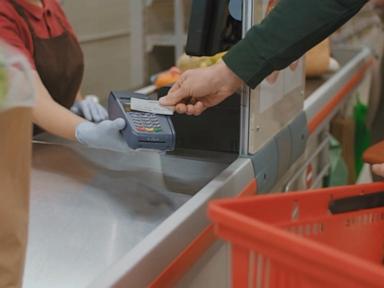
You pull out a plastic card or tap your phone at the register. It takes two seconds. You walk away without a second thought. Most of us haven't carried a physical wallet stuffed with paper bills in years, and we rarely think about what happens behind the scenes.
Walk into any modern coffee shop or trendy restaurant today and you'll likely spot a sign reading "Card Only" or "No Cash Accepted." Tech companies and major financial institutions want you to believe physical currency is already dead and buried. They tell you that a fully digital economy is cleaner, faster, and completely inevitable.
They are wrong.
While tap-to-pay and mobile wallets dominate daily life, physical money refuses to disappear. In fact, a surprising pushback is happening right now. Lawmakers on Capitol Hill are actively reviewing legislation to mandate that physical bills remain a legal option for everyday shoppers. If you look closely at how people actually handle their finances, cash still plays a stubborn, irreplaceable role.
The Real Cost of Going Completely Digital
Convenience comes with a hidden price tag. Every time you swipe a debit or credit card, merchants get hit with transaction fees. These fees typically range from one to three percent per purchase. For a massive multinational corporation, that percentage is a rounding error. For a local bakery or independent bookstore operating on razor-thin margins, those processing fees eat straight into profit.
When businesses try to pass those costs along or absorb them, everyone loses. That's why many small vendors still quietly prefer physical bills. It keeps their money in their hands immediately, bypassing middleman processors who take a cut of every single transaction.
Privacy is another massive factor that tech evangelists love to ignore. Digital payments leave a permanent data trail. Every sandwich, transit ride, and magazine purchase gets logged, tracked, and stored by third-party corporations. Cash remains the only truly anonymous way to exchange value. You don't need an internet connection, a functioning smartphone, or a bank account approval to hand a five-dollar bill to a cashier.
Who Gets Left Behind in a Cashless Society
Proponents of total digitization often overlook the millions of people who rely on paper currency to survive. A cashless economy assumes everyone has stable internet access, a smartphone, and a traditional bank account. That is a dangerous assumption.
Unbanked and underbanked populations depend entirely on physical bills for survival. Older adults who struggle with complex smartphone apps or modern banking interfaces find themselves alienated when local businesses refuse physical notes. Furthermore, rural areas prone to severe weather or spotty cellular service face a harsh reality during power outages. When the local internet tower goes down, digital registers freeze instantly. A crisp twenty-dollar bill doesn't need Wi-Fi to work.
During major emergencies, having a stash of physical currency isn't just about nostalgia; it's basic preparedness. If the power grid fails or a regional banking system suffers an outage, digital wallets become useless paperweights overnight.
Consumer Behavior and the Budgeting Reality
There is a psychological shift that happens when you hand over physical paper versus tapping a piece of plastic. Behavioral studies consistently show that parting with physical cash hurts more than swiping a card. That physical sensation of loss acts as a natural spending brake.
People who struggle with impulse buying often find that switching back to a cash-only budget is the only thing that actually works. When your physical wallet is empty, your spending stops automatically. Digital apps make spending frictionless, which is fantastic for corporate revenues, but terrible for personal savings goals.
Where the Future Is Actually Heading
We aren't hurtling toward a 100 percent cashless utopian future anytime soon. Instead, society is settling into a messy, parallel standard.
Digital tools will continue to handle the bulk of online commerce, travel bookings, and automated subscriptions. At the same time, physical currency will persist as a vital backup layer, a tool for privacy, and a lifeline for small businesses escaping exorbitant processing fees. Lawmakers stepping in to protect cash acceptance prove that paper money isn't just an outdated relic. It is a fundamental pillar of economic freedom.
Take a look at your own spending habits this week. Keep a small amount of physical currency in your pocket for emergencies, support the local shops that keep registers open for everyone, and stop buying the myth that cash is already gone.
Will cash soon be a thing of the past? | 7.30
This reporting explores how the rapid decline of physical money in certain regions impacts communities and everyday commerce.
http://googleusercontent.com/youtube_content/1