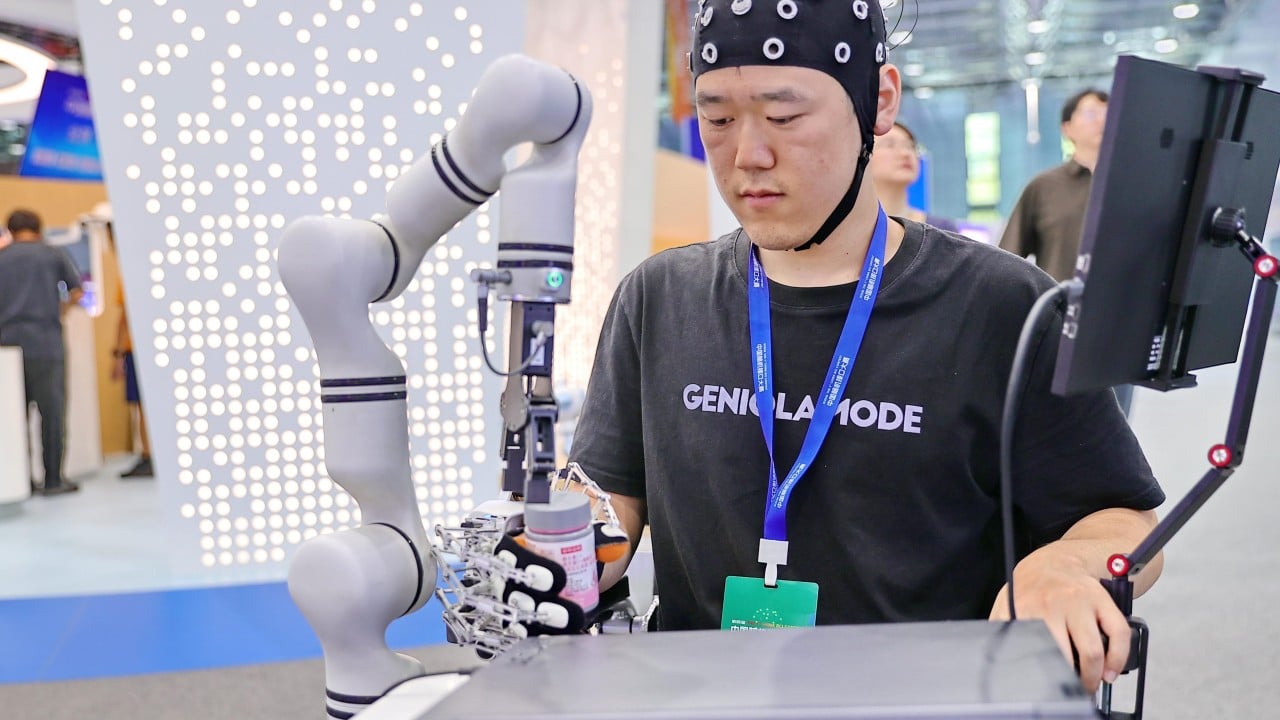
Two brain-chip models are colliding right now. One moves fast on state-backed rules and early clinical launches. The other pushes high-channel cortical implants toward a U.S. pivotal trial.
If you've watched the headlines around brain-computer interfaces over the last year, you probably noticed a split screen. Chinese teams have pushed commercial approvals and national technical standards into motion. Meanwhile, Neuralink moved its N1 implant into a pivotal U.S. study called LINK for adults living with ALS.
Here's the blunt truth most hype skips. Neither side has "won" neurotechnology yet. They're optimizing for different bottlenecks, and each trade-off creates real clinical risks.
How China Pushes Brain-Computer Interface Scale and Standards
Walk through the policy shifts in Beijing and Wuhan over 2026, and you see a playbook built around coordination rather than single-company heroics. China listed brain-computer interfaces among six future industries in its 2026 government work report. That status pulls ministries, hospitals, universities, and device makers into the same lane.
In March 2026, Neuracle Technology's NEO system received Class III medical device registration from China's National Medical Products Administration. Designed to help people with quadriplegia from cervical spinal cord injuries grasp objects using an implanted interface paired with a pneumatic glove, it became the first invasive BCI medical device authorized for market launch in China.
Other teams are pushing right behind it into late clinical evaluation. NeuCyber, working with the Chinese Institute for Brain Research, reported over 44 human implants with its NeuCyber Matrix BMI System (Beinao-1) by October 2026, logging more than 170,000 cumulative safe operating hours and preparing a 2027 registration push. Meanwhile, researchers at Zhejiang University reported early clinical trial results for DeepAxtiv, an invasive BCI system aimed at severe treatment-resistant depression.
Then came the rules layer. China's Ministry of Industry and Information Technology formed a new working group under its BCI standardization technical committee and convened BCI Standards Week in Wuhan in late November 2026, splitting work across eight sub-teams from hardware and data to medical and safety governance.
Why Standard-Setting Matters More Than Flashy Demos
A cool lab demo doesn't scale across hospitals. Standards do.
When you test neural decoders or compare clinical outcomes across clinics, messy data formats kill progress. China has rolled out national recommended standards in 2026 covering system reference architecture, multimodal data formats, and visual evoked potential encoding and decoding, alongside medical device rules like EEG dataset quality standards.
In my experience watching medical hardware rollouts, boring interoperability work saves years later. If hospitals, software teams, and regulators agree on how data is structured and evaluated, reimbursement and multi-center trials get much cleaner. Still, fast regulatory pathways come with a catch: early commercial access doesn't automatically prove decade-long durability across thousands of diverse patients.
Where Neuralink Stands as LINK Begins
Neuralink took a different route. Instead of chasing an immediate commercial badge with a simpler electrode layout, it spent years building a high-density thread array, the N1 implant, paired with its R1 surgical robot.
On November 25, 2026, Neuralink announced FDA clearance to start LINK, the first pivotal clinical trial of an implantable brain-computer interface in the United States. Enrollment opened for adults living with severe paralysis caused by amyotrophic lateral sclerosis (ALS), focusing on daily digital device control and multi-year safety and reliability.
By the time LINK launched, Neuralink reported more than 30 implanted participants worldwide across earlier feasibility studies, up from 21 reported in its January 2026 update. Those earlier studies aren't just press fodder—they surfaced real engineering headaches. Neuralink's January 2026 update documented thread retraction in its first participant and subsequent surgical and postoperative adjustments aimed at keeping signal quality steady.
Signal Bandwidth vs. Surgical Reality
Here's the trade-off patients and clinicians wrestle with every day. Placing electrodes closer to motor cortex neurons can capture rich signals for cursor control and imagined-hand typing. Yet deeper or finer cortical interfaces face biological pushback—micromotion, scar tissue, and long-term electrode stability—which is why pivotal trials require extended follow-up.
Semi-invasive or epidural options, like NEO, trade some raw single-neuron granularity for a different surgical profile and targeted motor assistance. Non-invasive headsets avoid surgery altogether, though skull attenuation limits fine motor decoding compared with implanted arrays.
Anyone telling you one architecture is strictly "better" for every patient is selling a slogan. A person with late-stage ALS, someone recovering from a cervical spinal cord injury, and someone exploring non-invasive assistive tools have very different risk tolerance and functional goals.
Common Misconceptions People Have About Brain Implants
- Myth: A brain chip restores full limb movement or cures paralysis. Not right now. Current systems like N1 focus on translating neural intent into digital device control, such as moving a cursor or clicking, rather than regrowing spinal pathways or curing neurological disease.
- Myth: Approval to run a trial or sell a specialized device means mind-reading for everyone. Clinical trials test safety and specific functional endpoints under strict oversight. Even commercial or late-stage systems remain targeted medical or assistive tools—not consumer telepathy on store shelves.
- Myth: One country's milestone erases the other's strengths. Market authorization in one jurisdiction and pivotal trial clearance in another answer different regulatory questions. Long-term real-world outcomes still decide who earns lasting trust.
What to Watch Next and How to Evaluate BCI News
Don't get swept up by single-day headlines from either side. When a new BCI milestone drops, look at four concrete details:
- Check the regulatory stage. Is it early feasibility, a pivotal trial like LINK, or a formal market authorization like NEO's Class III registration?
- Look at duration, not just day-one demos. Ask how many months or years participants kept stable signal quality and how adverse events were handled.
- Read the functional scope. Does the device help a user type, navigate a computer, or operate a specific assistive brace?
- Follow standards and data rules. Watch how groups like MIIT's standardization working group and international bodies define data formats, safety testing, and clinical evaluation.
If you're tracking this space for clinical research, investing, or personal care planning, bookmark primary trial registries and regulatory announcements rather than relying on secondary summaries. Compare actual patient outcomes over 12 to 24 months, and judge every breakthrough by how reliably it works on a Tuesday morning six months after surgery.
China's Brain Chip Just Beat Neuralink to the Human Brain
This video breaks down the commercial approval gap, hardware trade-offs, and regulatory context behind China's early BCI rollout and Neuralink's progress.