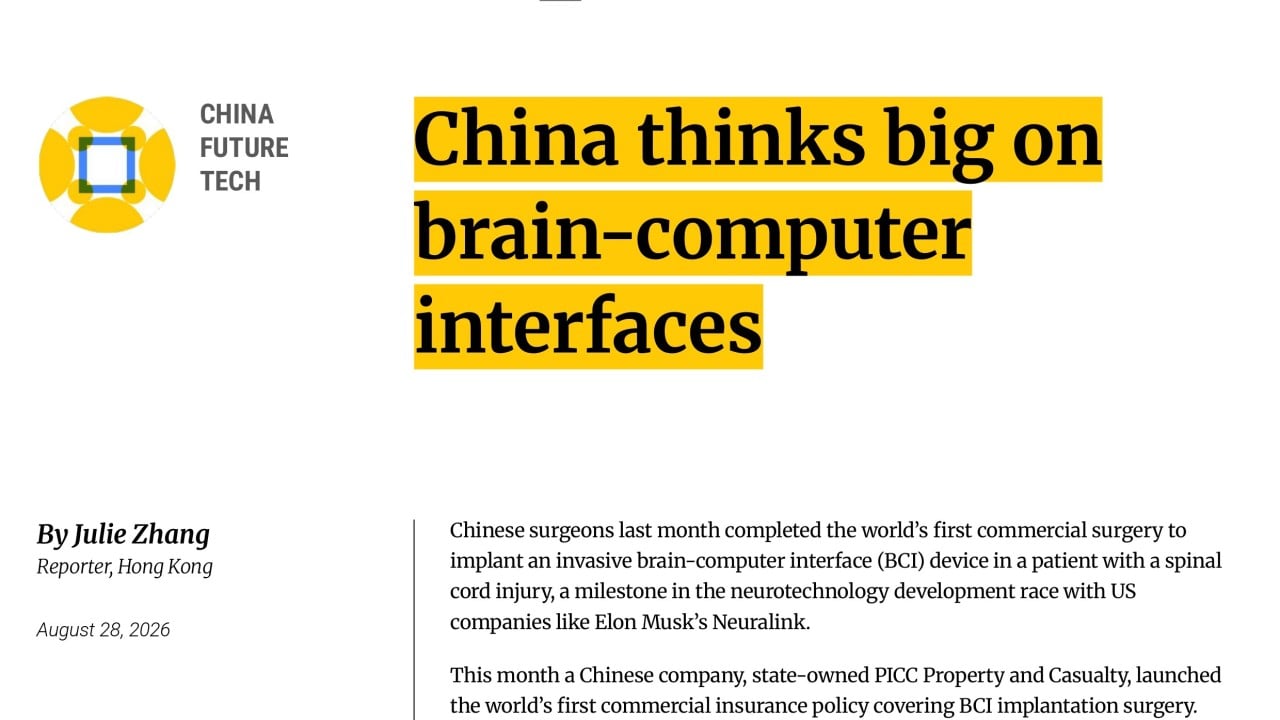
You’ve probably heard about Western tech giants trying to merge human minds with computers. But while Silicon Valley grabs headlines with flashy demos, China is quietly building an industrial powerhouse around brain computer interfaces. Following groundbreaking clinical procedures, Beijing isn't treating neural technology as a distant science fiction project. They're treating it as national infrastructure.
Let's look at why this shift matters. When a nation scales a medical breakthrough into an economic engine, the rules of the entire tech ecosystem change.
Moving Beyond the Laboratory Phase
For years, neural interfaces lived in academic papers and tightly controlled clinical trials. People with paralysis or severe neurological conditions served as experimental subjects for university labs. That era is over.
China's recent clinical milestones changed the calculus. By successfully completing world-first surgical implantations and pushing toward commercial scaling, the country is proving that neural technology can move from research wards into the broader healthcare market.
Why does this matter right now? Because translation from lab to market is where most nations stumble. The US has brilliant researchers, but regulatory bottlenecks and venture capital risk aversion often slow down hardware deployment. China’s state-backed financial planning cuts through that friction. When the government decides that brain computer interfaces are a strategic priority, hospitals, universities, and manufacturers align almost overnight.
The Industrial Blueprint Behind the Surgery
You can't talk about China's strategy without looking at the broader manufacturing ecosystem. You're talking about a country that dominates hardware supply chains from rare earth elements to micro-machined electrodes.
When domestic firms design neural implants, they aren't outsourcing component fabrication halfway across the world. They have the cleanrooms, the semiconductor packaging facilities, and the precision engineering hubs right at home.
Consider what happens when you combine neurosurgery with mass manufacturing capabilities:
- Implantable hardware costs drop significantly faster.
- Clinical trial recruitment accelerates through massive national hospital networks.
- Regulatory approval pathways coordinate directly with industrial policy goals.
This isn't just about helping paralyzed patients walk again, though that remains the primary humanitarian goal. It’s about building an entire industrial vertical. From signal processing chips to biocompatible sensors, China wants to own the intellectual property and the manufacturing lines.
Facing the Real Challenges Ahead
Let’s be honest. Building hardware that interfaces directly with human gray matter is brutally difficult. Biological rejection, signal degradation over time, and the sheer complexity of decoding neural firing patterns are problems that money alone can't instantly solve.
Western competitors like Neuralink face the exact same biological walls. The difference lies in how the respective systems fund and support long-term iteration. While private companies in the West answer to quarterly earnings pressures or speculative funding rounds, Chinese initiatives benefit from multi-year state backing that absorbs early-stage failure.
Even so, safety standards and ethical oversight remain massive hurdles. When you put foreign hardware inside a human brain, trust is everything. If a single clinical batch fails or causes adverse long-term effects, public backlash can freeze an entire industry. That's why researchers in Beijing are proceeding with intense caution behind the grand ambitions, knowing that one major slip could stall years of momentum.
What Happens Next
If you’re watching the global tech race, stop looking only at artificial intelligence models and software benchmarks. The real frontier sits at the intersection of biology and silicon.
China's pivot toward commercializing brain computer interfaces signals a fundamental shift in how advanced medicine gets deployed globally. Expect faster clinical iteration cycles, broader domestic deployment in major hospitals, and increased pressure on Western regulators to match the speed of Eastern innovation.
Keep an eye on component supply chains and clinical trial registries over the next twelve months. The race isn't about who performs the first surgery anymore. It's about who builds the ecosystem that makes neural technology accessible to millions.