For years, multinational corporations operated under a simple, unwritten rule: when Washington issues a sanction, you obey it. It didn't matter if your factory was in Shanghai or your headquarters was in Frankfurt. The fear of getting cut off from the US dollar system outweighed almost everything else.
That era is officially over.
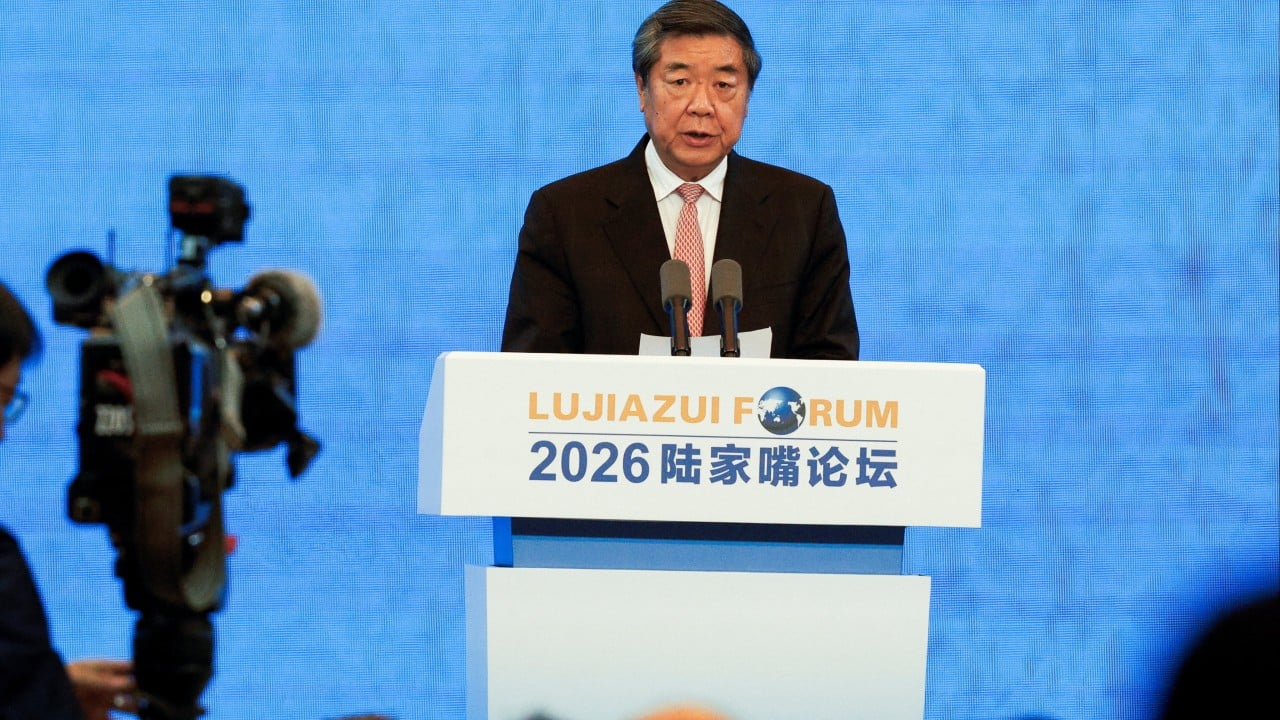
With the implementation of State Council Decree No. 835—the Regulation on Countering Foreign States' Unlawful Extraterritorial Jurisdiction—Beijing has turned its theoretical counter-sanctions tools into an active legal squeeze. Vice-Premier He Lifeng made China's stance clear at the Lujiazui Forum in Shanghai: "We don't stir up trouble, but we're absolutely not afraid of it."
If you run a business with footprints in both the US and China, you're no longer just managing compliance. You're caught in a direct clash of laws where obeying one country means breaking the laws of the other.
The Catch-22 Just Got Real
Historically, China's anti-sanctions rhetoric was mostly diplomatic theater. Western firms could quietly comply with US Office of Foreign Assets Control (OFAC) rules while operating on the mainland.
Decree No. 835 changes the game by giving Chinese authorities a procedural instruction manual to punish compliance with foreign laws.
The mechanism relies on a tool called a prohibition order. Issued by the Ministry of Commerce (MOFCOM), these orders legally forbid Chinese companies and individuals from recognizing or enforcing specific foreign sanctions.
The Reality Check: On May 2, 2026, MOFCOM issued Announcement No. 21, officially banning domestic compliance with US oil-related sanctions targeting five Chinese petrochemical entities.
This isn't a vague warning. If a bank or logistics provider cuts off business with those blacklisted firms to appease Washington, they now face severe domestic consequences. Under Article 17 of the new regulations, ignoring a prohibition order can lead to massive administrative fines, asset freezes, and a complete cutoff from cross-border data transfers.
International law experts point out that this is explicitly designed to give Chinese firms a defense mechanism in Western courts. A bank like the Bank of China can now argue in a US court that complying with a US subpoena carries a devastating, existential legal cost at home.
Private Lawsuits Are the Real Threat
Most corporate executives assume that if they stay under the radar of Beijing's regulators, they'll be fine. That's a dangerous misconception. The biggest risk in this new framework isn't government enforcement—it's private litigation.
The legal framework gives Chinese companies the right to sue multinational corporations in local courts for damages caused by compliance with foreign sanctions. A recent case in the Nanjing Maritime Court proved that Chinese judges are fully willing to treat sanctions-driven commercial decisions as actionable civil wrongs.
[Foreign Sanction Issued]
           │
           ▼
[Multinational Cuts Ties With Chinese Supplier]
           │
           ▼
[Chinese Supplier Sues For Damages In PRC Court]
           │
           ▼
[PRC Court Freezes Multinational's Mainland Assets]
If a shipping insurer withdraws coverage or a component supplier terminates a contract because of a US blacklisting, the affected Chinese counterparty has an economic incentive to sue. They can demand compensation for lost revenue, and Chinese courts have the power to seize your mainland assets, manufacturing equipment, or bank accounts to satisfy that judgment.
The Supply Chain Trap
Beijing didn't drop this decree in isolation. It coordinates directly with Decree No. 834, the Regulation on Industrial and Supply-Chain Security.
Together, these laws target the exact mechanism Western companies use to de-risk: supply chain investigations and ESG due diligence.
If your compliance team hires a third-party firm to audit a Xinjiang-based supplier to ensure compliance with the US Uyghur Forced Labor Prevention Act (UFLPA), you are now breaking Chinese law. Decree No. 834 strictly restricts unauthorized information gathering within domestic supply chains. Gathering data to help a foreign government enforce a sanction against a Chinese company is treated as an illegal act.
De-risking the Non-Dollar System
Western sanctions only work because the world relies on the US dollar. China knows this, which is why the legal shield is backed by a massive push for financial autonomy.
The Cross-Border Interbank Payment System (CIPS) now processes a significant chunk of trade with Russia, Iran, and Venezuela entirely in yuan. Beijing has activated currency swap lines with over 40 nations, allowing central banks to settle transactions without touching a US server or a dollar intermediary.
Just this month, China accelerated its digital yuan (e-CNY) push, integrating 26 foreign banks into a new cross-border platform. For companies operating in the Global South, the choice to bypass the dollar system is transitioning from an ideological statement to a practical business necessity to avoid secondary US sanctions.
Actionable Steps for Compliance Officers
You can't rely on a single, global compliance playbook anymore. If you try to enforce standard US sanctions clauses across your entire global network, you will eventually hit a wall in China.
Here is what you need to do immediately:
- Audit Your Sanctions Clauses: Review all active contracts with Chinese counterparties. Boilerplate language like standard Lloyd's Market Association (LMA) sanctions exclusion clauses can be viewed by Beijing as an illegal mechanism to implement foreign laws.
- Bifurcate Your Compliance Architecture: Treat China as a distinct legal silo. Your mainland operations need a localized compliance framework that prioritizes Chinese law, while your Western operations handle OFAC compliance.
- Reframe Contract Terminations: If you must end a relationship with a Chinese supplier due to geopolitical risks, never cite US sanctions as the justification in your communications. Frame the termination around commercial factors, shifting tariff economics, or changing market demand. Providing a written paper trail pointing to an OFAC filing is handing the supplier the exact evidence they need to sue you in a Chinese court.