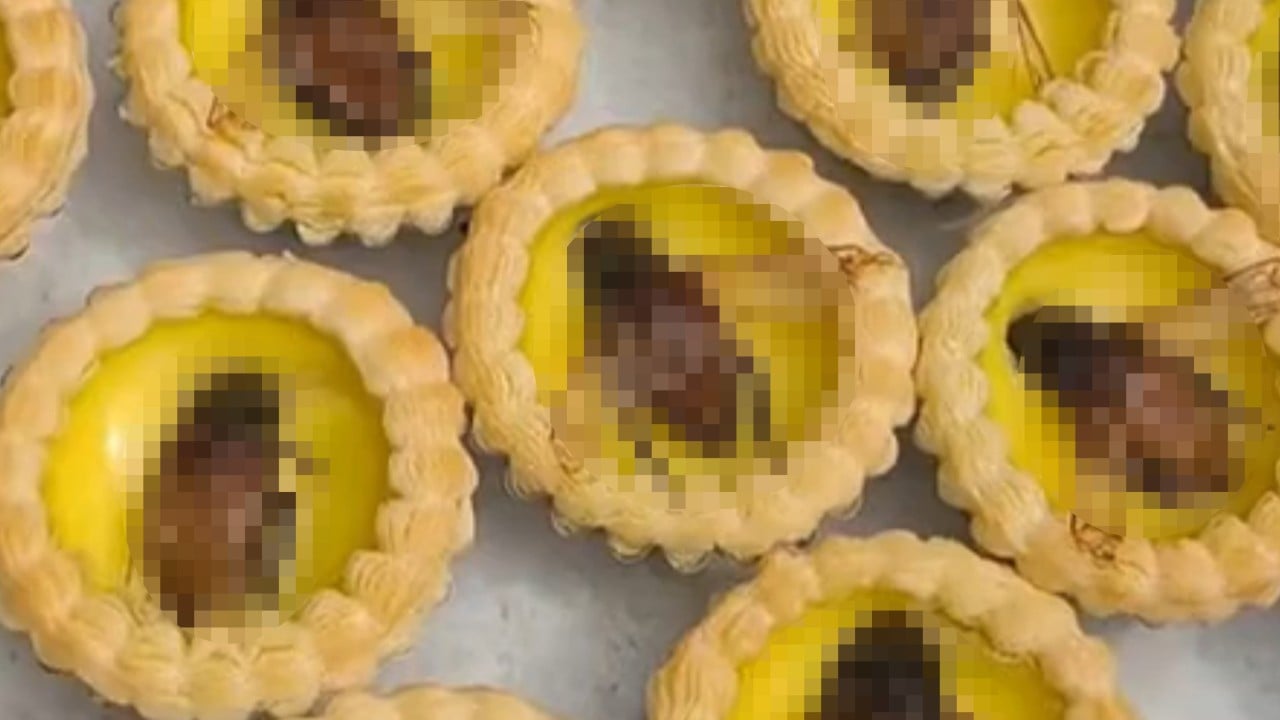
People love to freak themselves out over food. If you put something on a plate that looks like a household pest, the internet will lose its collective mind within seconds. That is precisely what happened when a restaurant in Shunde, Guangdong, decided to roll out a brand-new dessert featuring giant insects sitting right on top of sweet pastry crusts.
Priced at 28 yuan, roughly four US dollars, for a set of three, these pastries feature a crispy water beetle perched directly on the custard. To the untrained eye, it looks like a nightmare scenario straight out of an exterminator's nightmare. Social media feeds flooded instantly with shock, curiosity, and sheer disbelief. But if you look past the initial gross-out factor, this viral stunt taps into centuries of culinary tradition and regional pride that most casual observers completely miss.
What is Actually on the Tart
Let us clear up the biggest misconception right away. Those bugs aren't crawling out of the kitchen cupboards. They are giant water bugs, specifically a species often referred to locally in parts of China and Southeast Asia as edible aquatic insects.
Shunde holds an official designation as a UNESCO Creative City of Gastronomy. Culinary ambition runs deep there. Chefs don't just throw random things together for shock value; they lean into heritage ingredients. These specific water bugs carry a distinct, potent aroma and flavor profile that some food enthusiasts compare to a mix of mint, anise, and heavy seafood notes. In traditional Chinese medicine and local dietary culture, certain insects are valued for clearing blood stasis or detoxifying the body.
Using them as a topping for a delicate, sweet egg tart creates an extreme flavor collision. You get the creamy, sugary custard and flaky butter crust mixed with the earthy, pungent crunch of a large aquatic insect.
The Economics of Viral Shock Food
Why would a restaurant in a culinary capital risk alienating diners with creepy crawlies? Simple math. Modern food culture thrives on attention.
In a crowded marketplace where thousands of bakeries sell traditional egg tarts, standing out requires more than just a better crust. You need a hook. When someone snaps a photo of a giant beetle resting on a baked dessert and posts it on Xiaohongshu or Weibo, the free marketing machine takes over. Queues form. People drive across the province just to taste a novelty and film their reactions for short-form video platforms.
Most buyers aren't ordering these tarts because they need a daily snack. They buy them for the experience. They want the adrenaline rush of eating something terrifying. Restaurants know this playbook well. They build extreme items to drive foot traffic, knowing that once customers arrive, they will also buy the normal, profitable menu items.
Is Eating Insects the Future
Insect protein gets touted constantly by food scientists as an eco-friendly alternative to traditional livestock. Raising bugs requires a fraction of the water, land, and feed that cows or pigs demand.
Yet, cultural barriers remain massive. Western societies often recoil at the thought of six-legged meals, while parts of Asia and Latin America have long traditions of incorporating bugs into everyday dishes. Novelty items like water bug egg tarts act as a bridge. They turn an intimidating dietary shift into a playful, daring challenge.
If you ever find yourself visiting Guangdong and spot one of these pastries on a menu, don't just judge it by the visual shock. Take a bite. You might hate it, or you might realize that our definition of normal food is entirely arbitrary. Either way, you will have a story to tell.