Another courtroom showdown, another headline-grabbing sentence that leaves the public scratching their heads. Grammy-winning singer Chris Brown just dodged immediate prison time in London, walking away with an eight-month suspended sentence after admitting his role in a violent 2023 nightclub brawl.
If you have been following the R&B star's decades-long trajectory of legal turbulence, this outcome feels frustratingly familiar. But what actually went down inside Mayfair's Tape nightclub, and how did high-priced legal maneuvering keep him out of a British jail cell? Let’s break down the reality behind the verdict.
What Happened Inside Tape Nightclub
The incident traces back to February 19, 2023, at Tape, an exclusive private members club in London's upscale Mayfair neighborhood. According to prosecutors, a routine night out turned explosive when a dispute erupted involving music producer Abraham Diaw.
Surveillance footage captured a chaotic scene. Prosecutors stated that Brown struck Diaw twice over the head with a tequila bottle during a vicious and unprovoked attack inside the crowded venue. Diaw suffered injuries severe enough to require hospitalization, sparking an immediate international police response and subsequent arrest warrants for Brown and his co-defendant, vocal coach Omololu Akinlolu.
Rather than facing the music immediately, Brown caught a flight out of the United Kingdom. His absence lasted until May 2025, when British authorities finally nabbed him at a Manchester hotel after he touched down for a scheduled concert tour stop.
The Legal Maneuvers and the Suspended Sentence
Brown spent months out on a hefty 5-million-pound bail, which strangely permitted him to keep touring across North America and Europe while his legal team hammered out a defense strategy. When he finally entered a guilty plea to affray at Southwark Crown Court in July, prosecutors agreed to drop more severe charges, including attempted grievous bodily harm and possessing an offensive weapon.
On Monday, Judge Tony Baumgartner handed down the definitive verdict: an eight-month prison sentence, suspended for one year.
Why no jail time? Under British sentencing guidelines, custodial sentences of twelve months or less must generally be suspended unless specific exceptional circumstances apply or the offender is excluded. Judge Baumgartner noted that while violence in a crowded venue creates an obvious danger to everyone present, the eight-month term was the shortest custodial sentence commensurate with the offense.
Co-defendant Omololu Akinlolu received a four-month suspended sentence for his involvement. As long as Brown stays out of trouble for the next twelve months in the U.K., he serves zero days behind bars.
A Long History of Legal Confrontations
This isn't an isolated blip on a clean record. Brown’s career has been shadowed by continuous run-ins with the law ever since his 2009 felony conviction for assaulting his then-girlfriend Rihanna. Over the years, police blotters have featured various allegations and arrests spanning multiple states and countries, including a 2019 detention in Paris over rape allegations from which he was released without charge.
Despite continuous controversies, his commercial success remains largely insulated. His latest Grammy win for 11:11 (Deluxe) in 2025 proves that his dedicated fanbase continues to stream his music, ignoring the recurring courtroom drama.
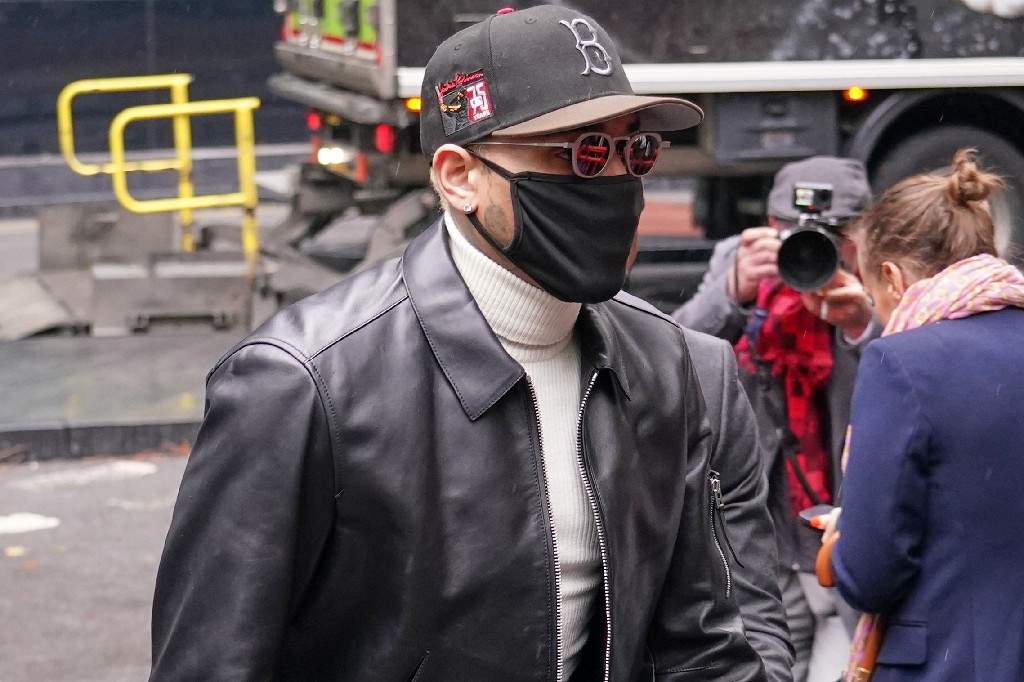
When Brown left Southwark Crown Court wearing a black face mask, sunglasses, and a baseball cap, he walked straight past a throng of reporters and cameras. True to form, he even paused briefly to sign an autograph for a fan before climbing into a waiting vehicle.
The legal system handed down its punishment, but for Chris Brown, it’s business as usual.