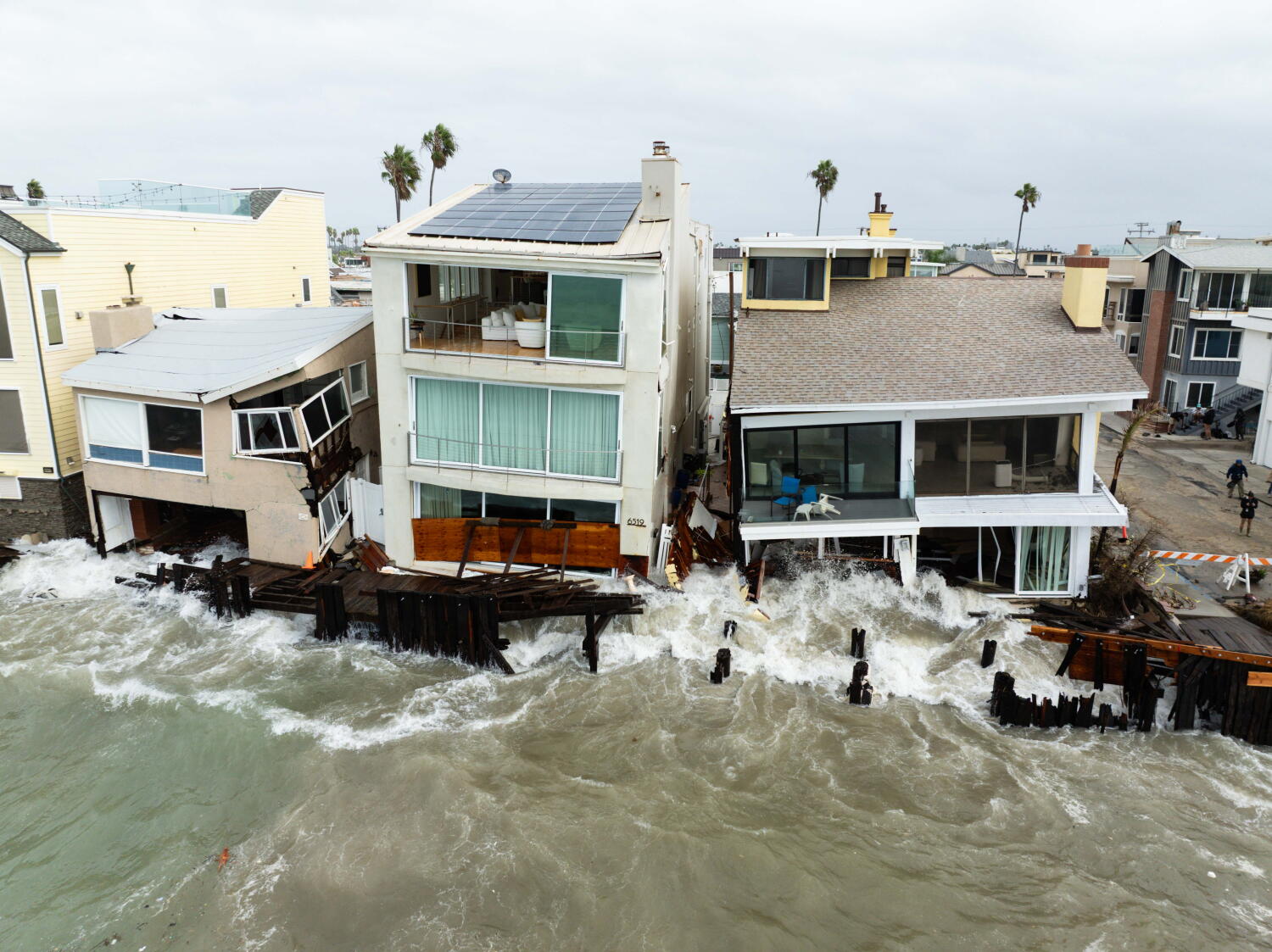
The ocean doesn't care about your property line. When Tropical Storm Rachel slammed into the Southern California coast, it didn't just bring powerful swells and heavy surf—it delivered a hard, expensive lesson about where we choose to build.
Eight structures spanning thirteen addresses on the Long Beach Peninsula were red-tagged by inspectors over the weekend. These homes are now officially unsafe to enter. One structure teeters precariously near the edge, its foundation compromised by relentless waves that chewed through sand berms and battered boardwalks.
Mayor Rex Richardson put it bluntly: these impacts aren't normal. But the truth is, we've spent decades pretending that living right on top of a dynamic, movable boundary line was a sustainable long-term bet. Now, the bill has arrived, and it's coming due all at once.
The Breaking Point on the Peninsula
For residents living along Seaside Walk, the situation escalated from a routine high-tide warning to a mandatory evacuation order. Powerful waves breached seawalls, flooded streets, and turned beachfront neighborhoods into active disaster zones.
City crews moved fast, deploying construction cranes to drop massive 3,000-pound sandbags designed to shore up failing bulkheads. Thousands of standard sandbags went out to residents scrambling to protect their thresholds. City Manager Tom Modica noted that crews already shifted 45,000 cubic yards of sand to widen the beach by 200 feet, with another project slated to add up to 100,000 cubic yards and install a low-profile rock abutment.
Fixing the damage costs millions. City officials are staring down an emergency response bill north of $1 million alone, with zero guarantees on how much state or federal disaster relief will reimburse.
Why Traditional Seawalls Aren't Enough
We rely heavily on reactionary engineering. When the surf rises, we stack sandbags. When bulkheads fail, we drop boulders and cross our fingers for the next storm season.
That approach is broken. Hardened seawalls often accelerate erosion on neighboring properties by reflecting wave energy rather than absorbing it. Mother Nature simply routes around our barricades. Building bigger walls on a receding shoreline treats the symptom while ignoring the underlying disease.
Communities across the coast face a stark choice. Do we keep throwing millions at temporary fixes every time a tropical storm pushes north, or do we rethink coastal zoning entirely? Rebuilding identical structures in the exact same high-risk footprint after every major weather event is financial insanity.
The Mounting Cost of Denial
Insurance markets are already reacting. Homeowners along vulnerable stretches face soaring premiums or outright cancellations, leaving them exposed to catastrophic financial loss. Municipalities are caught in the middle, trying to protect property tax revenue from beachfront real estate while absorbing mounting infrastructure and emergency response costs.
The immediate emergency response on the Long Beach Peninsula will eventually wind down. The water will recede, the red tags might come off some structures, and the boardwalk will get patched up.
Don't expect the underlying problem to disappear. Sea levels are rising, storm patterns are shifting, and the margin for error on our coastlines is shrinking fast. If we keep treating these severe weather events as isolated flukes instead of the new baseline, the next storm won't just red-tag a few homes—it will wipe entire neighborhoods off the map.
Take a hard look at where public funds go. Stop subsidizing perpetual rebuilding in high-risk zones, and start investing in smart, proactive relocation strategies before the ocean makes the decision for you.
Homes red-tagged as one teeters near ocean in Long Beach
This video provides an on-the-ground look at the severe coastal damage and red-tagged properties along the Long Beach Peninsula following the powerful storm surge.