If you still think college athletics runs on school spirit and ticket sales, you haven't looked at a spreadsheet in five years. The industry is in a full-blown identity crisis. Most athletic departments aren't just struggling to keep up with costs; they're hemorrhaging money.
For the 2023-24 academic year, 94% of Division I athletics programs—including 49 of the 69 Power conference schools—spent more than they brought in. That isn't a "tough year" or a "rebuilding phase." It's a structural failure. The median department reported a $20.6 million shortfall. To plug that hole, universities redirected $7.2 billion in institutional funds, often pulled from student fees or tuition. For an alternative view, consider: this related article.
The traditional model of relying on ticket sales and basic alumni donations is dead. It doesn't work anymore.
Moving Beyond the Logo Slap
Administrators are acting like desperate startup founders because, honestly, they are. They’ve moved past simple sponsorship deals like slapping a logo on a jersey. Now, you’re seeing entire stadium "takeovers." Similar coverage on the subject has been provided by Business Insider.
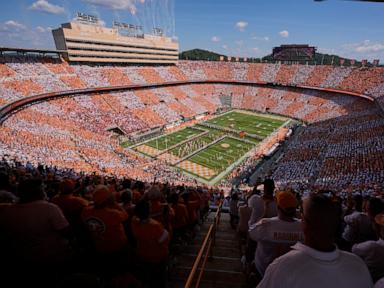
Look at Tennessee. They weren't just selling ad space; they started charging a 10% "talent fee" on football tickets. It sounds like a surly utility bill, but it’s a direct response to the $20.5 million annual revenue-sharing reality that hit the NCAA this year.
Schools are also turning into real estate developers. Your local stadium is no longer just a place for eight home games a year. It’s an entertainment district. They’re hosting concerts—Michigan packed in over 112,000 people for a single show—and turning the facility into a year-round event hub. Ohio State is charging fans $30 to $70 just to walk through their stadium on a tour. That’s pure, high-margin profit, and it’s a shift from being a sports team to being a venue manager.
The Reality of the New Salary Cap
The biggest change isn't the concerts. It’s the roster budget.
NIL deals and direct revenue-sharing haven't replaced each other. They’ve stacked on top of one another. For the 2026 season, the average Power Four football team is looking at a $25.7 million roster cost. That’s a salary cap in every way that matters, except there’s no central league office to enforce it.
Athletic directors are now essentially CFOs managing a payroll. They’re cutting non-revenue sports—the rowing teams, the track programs, the tennis squads—because they need every available dollar to keep the football and men’s basketball rosters competitive. If you aren't winning, the TV money dries up. If the TV money dries up, the department collapses. It’s a vicious cycle.
Where the Money Really Comes From
Most fans make one fatal mistake: they assume that a big new scoreboard or a flashy facility means the school is printing money. Wrong.
Most schools are heavily subsidized. Alabama is a brand name globally, but even they rely on institutional support to cover costs. The "generated revenue" you see in press releases often masks the fact that the actual operations aren't self-sustaining.
If you want to see who is actually winning, look at the broadcast rights, not the attendance. The Big 12’s recent deal with Fox and ESPN, paying roughly $380 million annually, is the engine. When programs like Washington or Florida State look at realignments, they aren't thinking about tradition. They're thinking about which TV package covers that $25 million roster bill.
The Rise of Independent Media
Athletes are done waiting for the university to tell their story. You're seeing the rise of the athlete-as-media-company. Why would a star quarterback wait for a school’s PR department to film a spot when they can build a following on TikTok, sign their own multi-season deals with brands, and keep 100% of the creative control?
This is a massive threat to the old "school-first" brand model. Brands now prefer these authentic, creator-led partnerships over the clunky, bureaucratic sponsorships of the past. If a program can’t figure out how to integrate their star players into the school's commercial strategy, they're going to get left behind.
Practical Next Steps for the Future
If you’re watching this from the outside, stop expecting a return to "the way things were." That ship has sailed. Here is what’s actually happening:
- Follow the Cap: Watch the annual $20.5 million revenue-sharing cap. It resets every year, and it dictates exactly how much pain the non-revenue sports will feel.
- Track the Venue Utilization: If a school isn't using its stadium for at least 150 days a year for events, they’re failing at the new business model.
- Look at Institutional Support: Before you celebrate a program’s "profitability," check if it’s actually revenue-neutral or if it’s just a massive hole being filled by student tuition dollars.
The sport is evolving into a professional entertainment enterprise. It’s leaner, meaner, and frankly, less romantic than it used to be. The schools that thrive won't be the ones with the most tradition—they'll be the ones that function most like a billion-dollar media company.