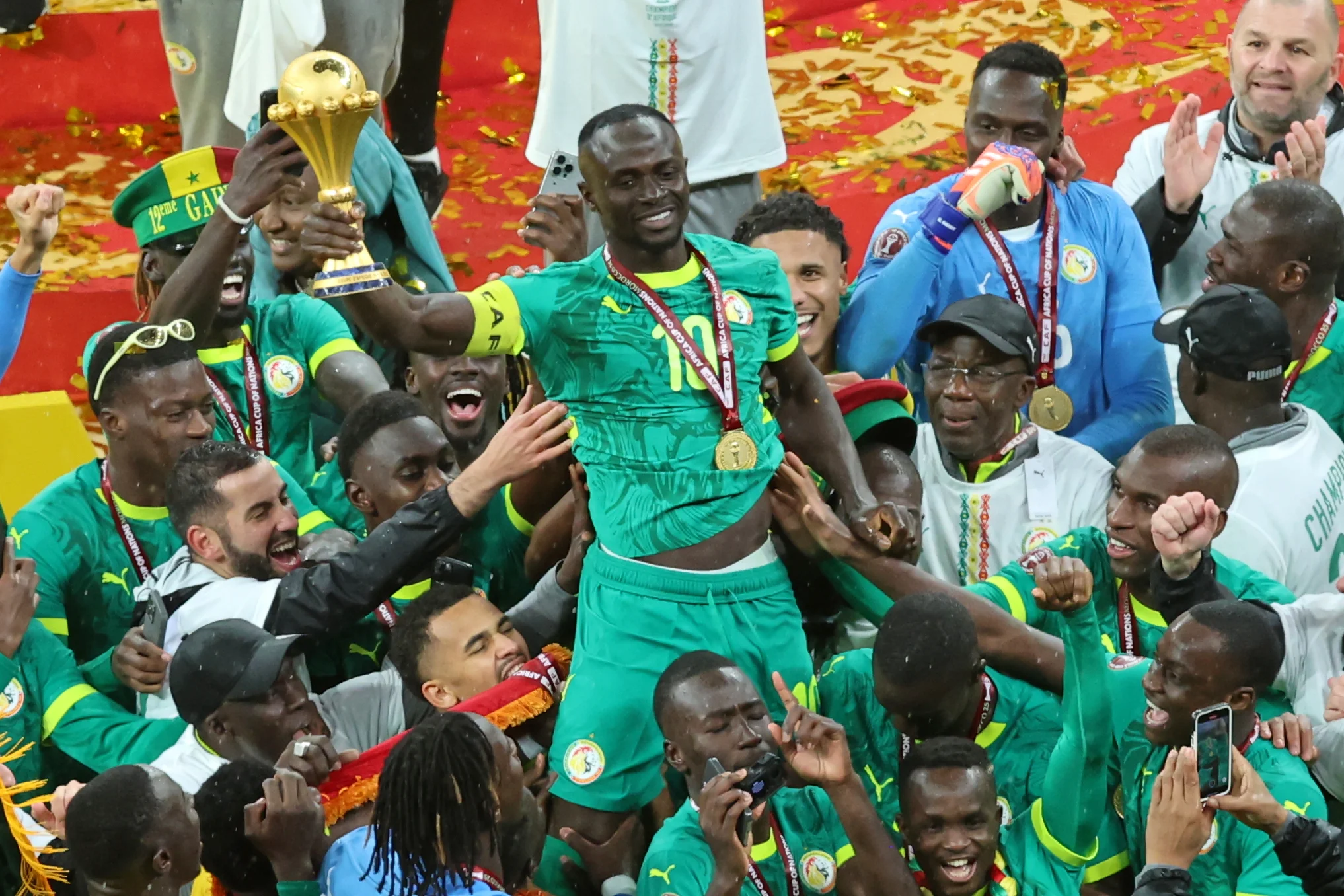
Ten months after a chaotic night in Rabat, football's highest tribunal just made a simple point that soccer bureaucrats forgot in March. You don't erase an extra-time winner in the boardroom because players lost their cool for a few minutes.
On November 24, 2026, the Court of Arbitration for Sport unanimously ruled to reinstate Senegal as champions of the 2025 Africa Cup of Nations. The decision wipes out a March 17, 2026 ruling by the Confederation of African Football's Appeal Board that had handed Morocco a 3-0 forfeit win and stripped the Teranga Lions of a 1-0 victory earned on the pitch back on January 18.
Honestly, the whole saga feels like a cautionary tale about what happens when governing bodies try to rewrite a match long after the final whistle. Senegal won on the grass, lost on paper in the spring, and just won again in Lausanne. For Morocco, who are gearing up to co-host the 2030 World Cup, the ruling stings—and the Royal Moroccan Football Federation is already signaling another legal fight.
How a Chaotic Final Turned Into a Ten-Month Courtroom War
To understand why CAS stepped in so forcefully, you have to rewind to January 18, 2026 in Rabat. The final between Senegal and hosts Morocco was deadlocked at 0-0 in second-half stoppage time when a late penalty call went against Senegal. Protest erupted. Senegal's players briefly walked off the field toward the dressing room in frustration.
That walk-off is the entire hinge of the legal dispute. Yet the match wasn't abandoned. Sadio Mane helped persuade his teammates to return to the pitch, play resumed, Brahim Díaz missed a Panenka penalty, and Senegal went on to win 1-0 in extra time.
At first, CAF's disciplinary path left that on-field scoreline standing while handing out separate sanctions to the Senegalese Football Federation, then-coach Pape Thiaw, and players Iliman Ndiaye and Ismaila Sarr. Then, on March 17, 2026, CAF's Appeal Board flipped the script. Invoking Articles 82 and 84 of the AFCON regulations on leaving the field without authorization or refusing to play, the board declared Senegal had forfeited the match and awarded Morocco a 3-0 win.
That move always looked shaky to me. If the referee on the spot chose to restart the game rather than abandon it, turning a temporary walk-off into a post-hoc 3-0 forfeit months later punishes the outcome of a completed match.
Why the Field of Play Doctrine Sunk Morocco's Case
CAS didn't overturn CAF out of sentimentality for Senegal. The three-arbitrator panel—chaired by Gérald Simon alongside Ulrich Haas and Luigi Fumagalli—rested its unanimous decision on a bedrock principle of sports law known as the field of play doctrine.
Under that doctrine, arbitrators refuse to second-guess calls made in real time by match officials applying the laws of the game unless there is proof of bad faith or arbitrary conduct. In Lausanne, CAS concluded that referee Jean-Jacques Ndala of the Democratic Republic of Congo did not commit an error of law when he allowed the match to resume. Both teams returned to the pitch, both were ready to play on, and Ndala chose not to declare the match abandoned.
As CAS Secretary General Matthieu Reeb explained around the ruling, operating under intense pressure doesn't automatically make a referee's decision arbitrary. Once the game restarted and played out to a 1-0 extra-time finish, the on-field result had real legal weight.
| Key Moment | Date | What Happened |
|---|---|---|
| AFCON 2025 Final | January 18, 2026 | Senegal walks off briefly after a late penalty call, returns, sees Brahim Díaz miss a Panenka, and wins 1-0 in extra time. |
| CAF Disciplinary Ruling | February 11, 2026 | Disciplinary sanctions are issued while the match outcome remains intact. |
| CAF Appeal Board Flip | March 17, 2026 | Citing walk-off rules, the Appeal Board declares a forfeit and awards Morocco a 3-0 win. |
| CAS Lausanne Hearing | October 8, 2026 | Both sides present their arguments behind closed doors in Switzerland. |
| CAS Final Award | November 24, 2026 | CAS unanimously sets aside the forfeit and restores Senegal's 1-0 championship win. |
What Most Fans Miss About Walk-Offs and Forfeits
A lot of fans assume that if a team steps off the field in protest, a forfeit is automatic. In practice, match management in the moment matters enormously. If a referee blows the match dead or formally records a refusal to resume under competition rules, the door opens wide for a forfeit ruling. Here, the match actually finished—complete with a missed spot kick and extra time.
There's also a practical lesson in how disciplinary punishment and match results are supposed to stay separate. Penalizing a federation, a coach, or individual players for misconduct or dissent is standard football governance. Erasing a completed extra-time goal months later because a protest happened earlier in stoppage time is a much bigger leap.
That said, this isn't a neat, kumbaya ending. Even as Senegalese Football Federation President Abdoulaye Fall spoke of brotherhood with Morocco and CAF stated it respects the award and will take steps to implement it, the Moroccan federation isn't letting go quietly.
Morocco's Next Move and Why Integrity Claims Are Front and Center
Right after the November 24 ruling, the Royal Moroccan Football Federation vowed to pursue further legal avenues. Beyond arguing that FIFA and International Football Association Board rules on leaving the pitch weren't given proper weight, FRMF raised sharp complaints about arbitration integrity, pointing to alleged contact involving an arbitrator and the Senegalese federation's leadership.
In international sports law, challenging a CAS award isn't easy. Appeals typically go to the Swiss Federal Tribunal on narrow procedural or public-policy grounds rather than serving as a full re-trial of every factual detail. Still, when a major footballing power like Morocco questions procedural integrity ahead of a co-hosted 2030 World Cup, the reputational stakes reach well beyond a single trophy.
For now, though, Senegal has its second Africa Cup of Nations crown back on the ledger, joining its earlier triumph in 2022.
Practical Next Steps If You're Following the Fallout
If you want to keep track of what happens next without getting pulled into rumor mills, focus on concrete steps:
- Watch for the published CAS award text. While the parties have received the decision, full written awards are often published later unless confidentiality is requested—reading the exact reasoning on the field-of-play analysis tells you far more than hot takes on social media.
- Track FRMF's formal filing. Look for whether Morocco files a challenge with the Swiss Federal Tribunal and specify which procedural ground they're invoking rather than treating every statement as a reversal.
- Check CAF's implementation updates. Follow official CAF notices to see how records, honors, and federation communications are updated as the ruling takes effect.