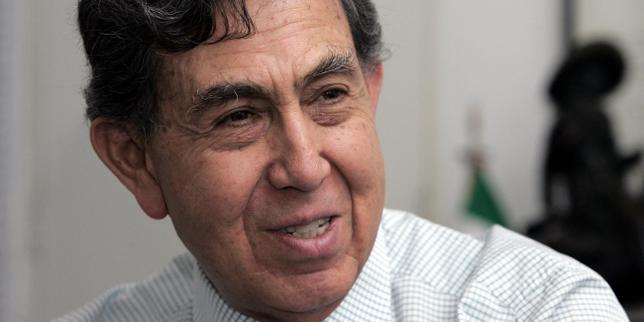
History rarely turns on a single night, but the election of July 6, 1988, came close. When the computerized vote-tallying system crashed in Mexico—officially blamed on a "system collapse"—the political monopoly held by the Institutional Revolutionary Party (PRI) cracked for good. At the center of that seismic tremor stood Cuauhtémoc Cárdenas. His death at 92 marks the final chapter for the generation of figures who forced Mexico out of single-party rule and into a multi-party democracy.
If you want to understand modern Mexican politics, you can't skip Cárdenas. He wasn't just another opposition politician. He was the son of Lázaro Cárdenas, the revered president who nationalized Mexican oil in 1938 and remains a towering icon of nationalist left-wing politics. Breaking away from the PRI machinery that nurtured him, Cuauhtémoc chose a harder, riskier path. He built a broad, fragmented opposition coalition that legitimately challenged the regime and changed the country's trajectory forever.
Breaking the Seven-Decade Mold
For over seventy years, the PRI operated as an almost unbreakable political machine. Elections were rituals rather than genuine contests. When Cárdenas launched his presidential campaign in 1988 under the National Democratic Front (FDN), millions of Mexicans saw a viable alternative for the first time.
The state apparatus fought back fiercely. The mysterious shutdown of the electoral counting system remains a dark milestone in Latin American political history. While official results handed the presidency to Carlos Salinas de Gortari, the widespread belief that Cárdenas won fueled an unstoppable democratic awakening. People realized the regime was vulnerable.
Out of that ashes rose the Party of the Democratic Revolution (PRD) in 1989, co-founded by Cárdenas. The PRD became the primary vehicle for the Mexican left, transforming a country that previously tolerated little ideological divergence outside the official party line.
Rewriting the Capital City
Winning the presidency eluded Cárdenas across three distinct runs in 1988, 1994, and 2000. Yet his influence extended far beyond executive office. In 1997, he achieved a historic victory by winning the first direct election for Head of Government of the Federal District (Mexico City).
Taking charge of the capital gave the left its first major administrative testing ground. Under his brief tenure, Cárdenas laid structural foundations for local governance, urban management, and public accountability that reshaped how Mexico City operated. It proved that the opposition could actually govern, dismantling the myth that only the PRI knew how to run the state machinery.
A Complex Legacy and Ideological Purity
Cárdenas remained fiercely principled, sometimes to his own political detriment. He didn't care about shifting with every passing populist trend. When newer factions of the left, led by figures like Andrés Manuel López Obrador, reshaped the political landscape under different banners, Cárdenas maintained an independent stance. He wasn't afraid to critique contemporary policies, even when they came from political allies he helped elevate.
In his later years, he stepped back from frontline electoral combat, though he remained active as a voice on sovereignty, economic nationalism, and energy policy. His appointment as honorary president of Pemex's oil consultative commission in early 2026 underscored his lifelong obsession with protecting national resources.
Love him or question his tactical choices, the political freedom current Mexican citizens enjoy exists largely because Cárdenas risked his career to shatter an authoritarian consensus. The transition to democracy was messy, slow, and incomplete, but he laid the foundation.
Mexico lost a foundational architect of its modern identity. The institutions that guarantee pluralism today trace their lineage back to the cracks he opened in 1988.
The 1988 election fraud that changed Mexico
This video provides an in-depth look at the historic 1988 election and its impact on Mexico's political transition.