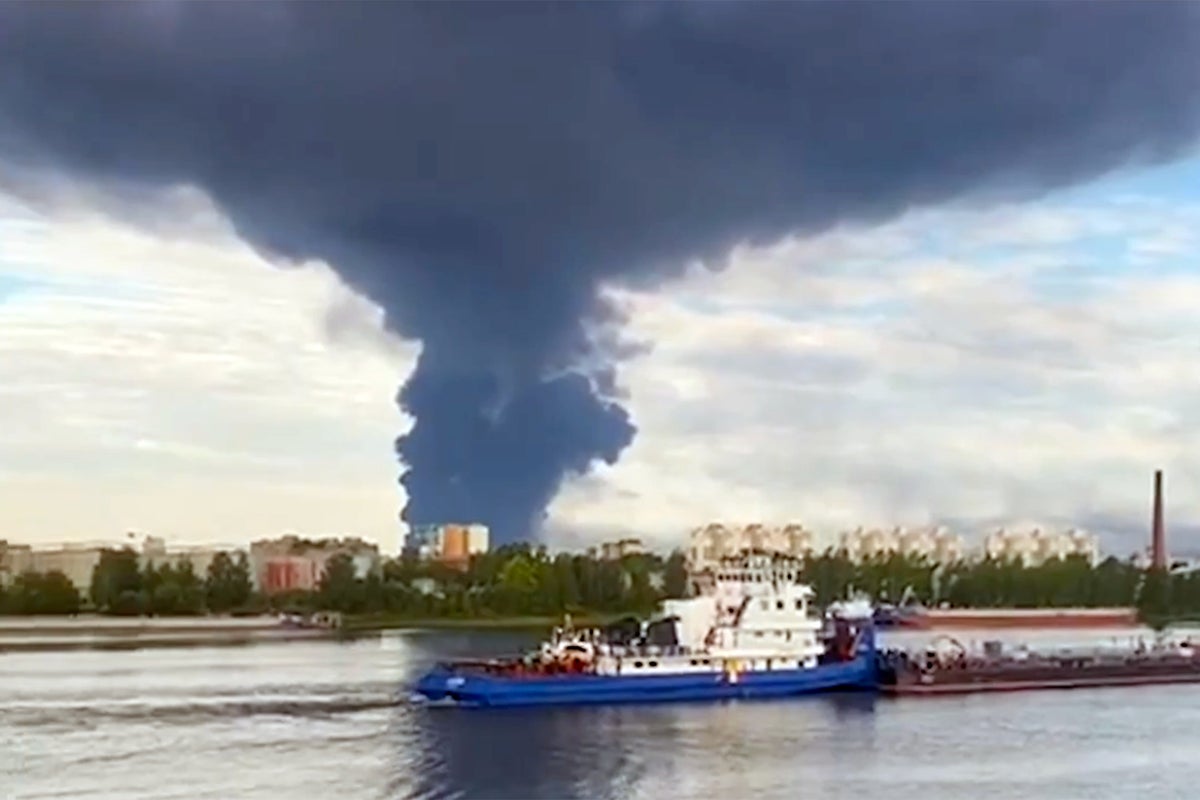
The physical front line in Ukraine rarely moves, but the war's actual perimeter now stretches over a thousand kilometers deep into Russian territory. When long-range Ukrainian drones slammed into the Slavneft-YANOS oil refinery in Yaroslavl and the Bashneft-Novoil facility in Bashkortostan, President Volodymyr Zelensky framed the operation as a direct way to restrict the oil profits funding Moscow's military.
Distance used to be Russia's primary shield. Not anymore.
Shattering the Illusion of Russian Air Defense
When explosions lit up the night sky over Yaroslavl, regional governor Mikhail Yevrayev called it the most massive drone assault the area had ever faced. Russian defense channels claimed scores of incoming aircraft were intercepted, yet video footage clearly showed thick black plumes of smoke billowing from the sprawling refinery complex.
The Slavneft-YANOS plant processes roughly 15 million tons of crude oil annually, making it one of the top processing hubs in the entire country. Hitting a target roughly 700 kilometers from the border is a major engineering feat, but stretching the strike distance to over 1,300 kilometers—as seen with the Bashkortostan site—changes the strategic calculus entirely. Moscow can no longer concentrate its air defense umbrellas solely near the frontline trenches. Every critical industrial node deep in the interior now requires heavy protection.
Striking the Wallet of the War Machine
Economic warfare rarely makes for cinematic viewing, but it dictates how long campaigns can last. Kyiv has systematically targeted Russian energy infrastructure to disrupt the production of petrol, jet fuel, and industrial lubricants.
Refineries are notoriously difficult to repair quickly under heavy international sanctions. Specialized machinery, electronic components, and Western-built control systems are hard to replace when trade restrictions block direct imports. Every time a distillation tower or a storage tank catches fire, the cost trickles down directly to the federal budget.
Beyond the burning refineries in Yaroslavl and Bashkortostan, Ukrainian operations also hit naval assets in the Black Sea, targeting military patrol boats and vessels belonging to the illicit shadow fleet used to bypass oil export caps.
The Broader Cost of Escalation
These deep strikes do not happen in a vacuum. Every successful drone penetration into Russian airspace triggers harsh retaliatory bombardments on Ukrainian cities, electrical grids, and civilian transit hubs. Power outages, destroyed residential blocks, and structural damage remain the grim daily reality for millions of Ukrainians while the industrial capacity of the aggressor state gets chipped away.
As long as the front line stays deadlocked on land, the skies overhead will remain the primary arena where the outcome of this conflict is decided. Kyiv's strategy is straightforward: make the cost of continuing the war higher than the state economy can absorb.
The smoke over Yaroslavl proves that distance is no longer a defense.
Ukrainian drones strike Russian oil refinery in Yaroslavl
This video captures the immediate aftermath and visual evidence of the drone strikes hitting the major oil refinery infrastructure in Yaroslavl.
http://googleusercontent.com/youtube_content/1