The text notification pinged on a quiet Thursday afternoon in Del Rio, Texas, breaking the midday lull of a small town accustomed to border-town pacing and predictable routines. Word spread quickly that a mother of five children was dead.
Caroline Peña, known as "Caro" to anyone who shared a word with her, was cornered on East 10th Street, just a short walk from the local Sonic drive-in. It didn't happen in a hidden alleyway or under the cover of a midnight blackout. It happened right in broad daylight on one of the busiest roads cutting through the heart of the community. Three young women surrounded her, a confrontation ensued, and within minutes, a 32-year-old life was violently cut short.
When a crime like this occurs, the immediate reaction is shock. But as the details emerged over the weekend, that shock curdled into collective rage. Surveillance footage and cell phone clips began making the rounds online before being scrubbed by moderators. They showed Caro standing in a pink shirt heavily stained with blood, facing down her attackers.
The public didn't just witness a tragedy through the clinical lens of a police press release. They watched a real-time nightmare play out on social feeds, raising a dark question that every community needs to confront. How does an argument on a public street escalate to a fatal stabbing while the world watches through a screen?
The Anatomy of a Daylight Attack
The Del Rio Police Department received an emergency call around 2:10 p.m. regarding a female patient arriving at Val Verde Regional Medical Center with severe trauma. Caro had been stabbed multiple times. The injuries were devastating. A close friend later revealed that one strike caught Caro in her side, while two others pierced her back, puncturing her lungs.
Because the local hospital lacked the specialized trauma equipment to stabilize her, emergency medical teams loaded Caro onto a helicopter. She was flown to a medical facility in San Antonio, roughly 150 miles away, as doctors fought to keep her alive. Back in Del Rio, detectives were already piecing together the timeline.
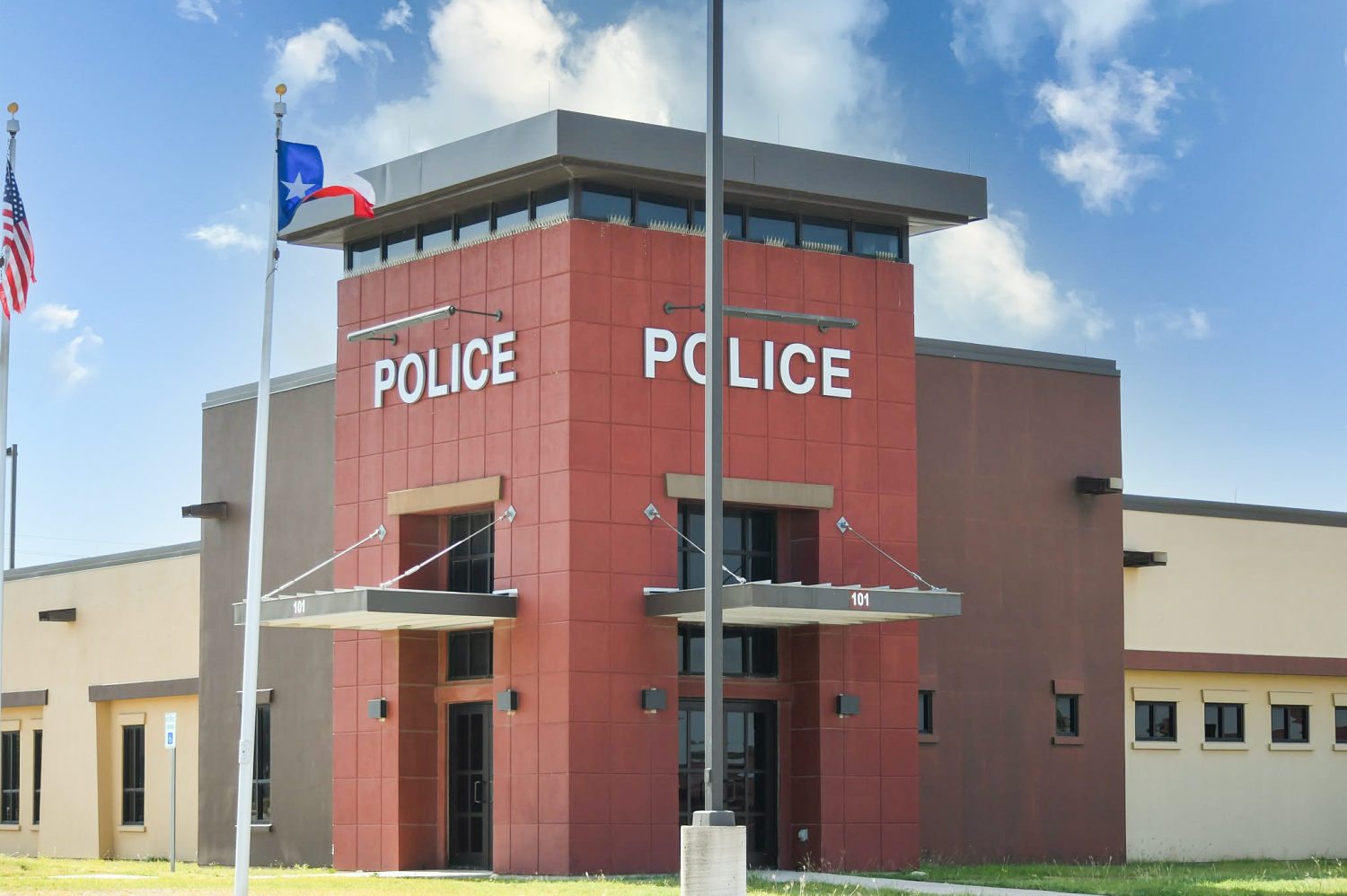
They didn't have to look far for evidence. The 800 block of East 10th Street is heavily trafficked and monitored by business security cameras. Investigators spent the next two hours reviewing digital footage and conducting quick interviews with people who were nearby. By 4:00 p.m., police located and arrested two sisters: 21-year-old Kitty Mia Diaz and 19-year-old Amaya "Cookie" Diaz. Shortly after, officers tracked down their friend, 21-year-old Kyandra Renee Faz.
While the suspects were being processed at the station, the worst possible news traveled back from San Antonio. At 9:00 p.m., medical staff pronounced Caro dead. The charges against the three young women instantly upgraded to murder.
Disturbing Behavior in the Aftermath
If the public execution of a mother wasn't enough to shake the region, the behavior of the suspects during their arrest sent shockwaves far beyond Val Verde County. Local news cameras caught the moments when police escorted the handcuffed women into patrol cars.
There were no downcast eyes. There was no sign of panic or remorse.
Amaya "Cookie" Diaz looked directly at the cameras and smiled. Media personnel on the scene noted that she appeared to be in a bizarrely happy mood, goofing off and playing up to the lenses. At one point, she leaned toward an open patrol car window, stuck her tongue out, and laughed. Her sister, Kitty, allegedly giggled and yelled at a cameraman to stop recording, treating the aftermath of a fatal stabbing like an annoying interruption to a social media video.
This cold detachment captured on digital video highlights a growing crisis in modern true crime. We are seeing a generation of individuals who view extreme violence not as a catastrophic, life-altering choice, but as content. The boundary between digital bravado and real-world violence has completely eroded for some.
A Legacy Left Behind in the Dust
To understand the weight of this loss, you have to look at who Caro Peña was when the cameras weren't rolling. She wasn't just a name on a police blotter. She was a fixture in her neighborhood, a woman who friends described as incredibly loyal, fiercely protective, and fundamentally bubbly.
Most importantly, she was a mother. Five children are now forced to navigate their futures without the woman who raised them.
Childhood friends have stepped up to share memories, trying desperately to ensure that Caro is remembered for her life rather than the brutal fashion of her death. She had her struggles, like anyone else. She made mistakes when she was younger, but her friends emphasize that she turned her life around completely for the sake of her kids. She lived for them.
The cruel reality of our justice system means that the women accused of this crime will eventually get their days in court. They'll see their defense lawyers, fill out paperwork, and potentially see their families during visitation. Caro's children get a plot of dirt and a memory. The structural collapse of a family happens in an instant, but the rebuilding takes lifetimes.
The Bystander Effect in the Digital Age
One of the most agonizing details for Caro's inner circle is the existence of the footage itself. If people were close enough to record the confrontation, and if business owners had eyes on the street, why didn't anyone step in before the blades were drawn?
Zelina Ochoa, a lifelong friend of Caro, pointed out the painful geographic reality of the attack. This didn't happen in a dark, abandoned corner of town. It happened near a major fast-food hub during peak daytime hours.
Psychologists have long studied the bystander effect, a phenomenon where individuals are less likely to offer help to a victim when other people are present. The probability of help is inversely proportional to the number of bystanders. In 2026, this effect has a dangerous new mutation: the recording lens.
When a conflict starts, the modern impulse for many is to pull out a smartphone and open a video app. The screen creates a psychological buffer. It makes the user feel like an observer watching a movie rather than a human being witnessing an active crisis. This detachment can delay life-saving interventions.
An old friend, Christina Selenas, revealed that she actually missed a phone call from Caro at 1:35 p.m., just moments before the violence erupted. It's a missed connection that will likely haunt her forever. She believes that if she had answered, she would have driven over, changed the dynamic, and broken up the gathering before it turned fatal.
What Communities Must Learn From This Tragedy
We can't change what happened on East 10th Street, but we can change how we respond the next time a public dispute escalates in our towns. Waiting for law enforcement shouldn't mean standing by passively with a camera rolling. Here are the immediate, actionable protocols that individuals should follow when witnessing public violence.
Assess the Situation for Personal Safety
You can't help anyone if you become a victim yourself. If you see an active argument involving multiple people, do not charge into the middle of the circle blindly. Look for weapons. Look for erratic movements.
Create a Distraction From a Safe Distance
Violence often requires a strange kind of social momentum to cross the line into physical assault. You can break that momentum without getting physical. Blare your car horn continuously. Shout loudly that the police are already on their way. Draw attention to the situation so the aggressors realize they have lost the advantage of anonymity.
Coordinate With Other Bystanders
If you are surrounded by other people who are simply watching, break their trance. Point directly at someone and give a specific command: "You in the blue shirt, call 911 right now." Give another person a task: "Go inside the store and get the manager." When you give people direct instructions, you shatter the bystander paralysis.
Document for Justice, Not Engagement
If you must record, do it discreetly from a position of safety and do it strictly for law enforcement evidence. Uploading active crime scenes to social media before families are notified is cruel. It compromises investigations, taints jury pools, and inflicts severe psychological trauma on the victim's surviving relatives.
The investigation in Del Rio remains active, and local prosecutors indicate that more charges could be filed as they comb through the remaining digital footprints left by the suspects. The town is left to pick up the pieces, mourning a vibrant mother while trying to make sense of a world where a public street can turn into a crime scene in a flash.
For an in-depth visual overview of the crime scene location and the subsequent police response, check out the KSAT 12 report on the Del Rio stabbing arrests. This news segment features local footage from Val Verde County and details from the initial police press briefing.