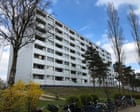
You can't bulldoze your way to social harmony. Denmark is learning this the hard way as its aggressive housing policy lands squarely on the docket of the country's Supreme Court.
For years, the Danish government pursued a polarizing strategy designed to break up what it officially termed "parallel societies"—neighborhoods with high concentrations of residents classified as "non-Western". Under a 2018 legislative package, social housing estates where more than 50 percent of residents fell into this demographic faced drastic restructuring, which included large-scale renovations, private sales, and the forced eviction of long-term tenants.
Now, the legal fallout is catching up to the politics. Families who lost their homes in places like the Nøjsomhed-Sydvej estate in Helsingør are fighting back at the highest judicial level, arguing that these sweeping urban policies amount to systemic discrimination.
The Core Conflict Behind the Housing Crackdown
The premise sounds bureaucratic on paper, but the human cost is brutal. Under the legislation, communities labeled as vulnerable or "hard ghettos" were subjected to mandatory demographic engineering. The stated goal from policymakers was noble on the surface: reduce unemployment, lower crime rates, and force integration by capping the percentage of non-Western residents at 30 percent over a multi-year period.
To hit those targets, housing associations had little choice. Leases were terminated. Entire blocks were emptied out, sold off to private investors, or demolished.
Critics and affected residents point out an uncomfortable truth. You aren't fixing integration by kicking stable, tax-paying working families out of the homes they've lived in for decades. You're just displacing the problem while uprooting established social networks. People who relied on local support systems, neighborhood childcare connections, and community groups suddenly found themselves cast out into temporary housing or unfamiliar suburbs.
The European Legal Pressure Mounts
Denmark's domestic legal battles don't happen in a vacuum. The Supreme Court proceedings follow critical legal headwinds from the European Union. The Court of Justice of the European Union (CJEU) previously ruled that measures relying strictly on ethnic or racialized classifications like "non-Western" require rigorous proportionality reviews to ensure they don't violate EU anti-discrimination directives.
While the Danish government maintains that its policies target socioeconomic indicators—such as employment levels and crime statistics—rather than ethnicity, the baseline definition relies heavily on a resident's country of origin. The grouping lumps together anyone of non-Western background, creating a broad brush that penalizes individuals regardless of their personal employment status, language fluency, or integration level.
Legal experts argue that using geographic housing policy to engineer ethnic quotas crosses a dangerous line. When the loss of a home becomes the penalty for living in the wrong postal code, fundamental housing rights guaranteed under European conventions are thrown into question.
What Happens When Homes Are Sold Off
The legal battles also highlight a practical hurdle that money can't easily fix. Even if the Supreme Court rules in favor of the evicted tenants, returning to their original neighborhoods is practically impossible for many.
Take the high-profile case of Mjølnerparken in Copenhagen, where apartments have already been sold off to private entities and restructured. Once public housing is privatized and gutted for upscale renovations, the original tenants are priced out permanently. A court victory might offer moral validation and financial compensation, but it won't magically rebuild the exact communities that were dismantled.
This creates a race against time for plaintiffs across different estates. They aren't just fighting for bricks and mortar; they're fighting to establish a legal precedent that stops governments from using housing policy as a tool for demographic social engineering.
The Wider Lesson for Urban Policy
Governments across Europe are watching Denmark closely. Immigration and integration remain volatile political fuel across the continent, and many conservative lawmakers admire Copenhagen's uncompromising stance.
Yet, the backlash reveals the limits of heavy-handed state intervention. Forcing integration through evictions breeds resentment, alienates immigrant communities who thought they were part of mainstream society, and invites years of debilitating litigation. True social cohesion comes from economic opportunity, educational equity, and safe infrastructure—not from handing eviction notices to families whose names sound foreign.
The Danish Supreme Court's upcoming decisions will determine whether this aggressive chapter of social engineering survives judicial scrutiny. No matter the outcome, the policy has already exposed a deep fracture in the Nordic model of social welfare.
If the state can strip away your lease simply because of where your grandparents were born, nobody's home is truly secure.