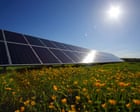
Imagine spending £20 million of your own money to build a massive, community-owned solar farm, only to be told on a bright Friday in May that you have to turn it completely off for the entire summer.
That isn't a hypothetical nightmare. It's the reality for nearly 10,000 everyday citizens who invested in the Derril Water solar park in North Devon. Just as peak summer generation hit, the National Energy System Operator (NESO) and National Grid ordered a total operational shutdown. The reason? The local grid couldn't handle the sheer volume of electricity being generated.
It's a colossal embarrassment, but it points to a much bigger structural flaw in how Britain is handling its green energy transition. We are building world-class clean generation on top of a mid-20th-century distribution network.
Why Britain's Biggest Community Solar Project Got Pulled Offline
The Derril Water site near Holsworthy is a 42-megawatt solar farm. Funded by roughly 9,500 co-op members alongside bank financing, it was designed as a landmark project for decentralized power generation. Investors weren't just big corporations—they were individual households looking to offset their energy bills while backing renewable infrastructure.
Then came the shutdown order, dropped on the co-op's volunteer board right before the late-May bank holiday heatwave without advance notice.
To prevent what engineers call a "thermal overload" and keep voltage within safe limits across North Devon, NESO instructed National Grid to shut down a critical super-grid transformer connected via the Alverdiscott substation near Barnstaple. Because thousands of homeowners across the South West have added rooftop solar panels in recent years, local summer power generation spikes wildly during the day. When everyone is generating and no one is consuming enough locally, electricity surges backward into a grid designed strictly for one-way power flow from large fossil-fuel stations to homes.
Without upgraded control equipment or battery buffers in place, the system operator took the bluntest tool available: pulling the plug on major regional generators like Derril Water.
The economic hit is severe. The shutdown is expected to strip £2 million in lost revenue from the co-operative. Worse, because network curtailments are standard grid operational procedures, commercial insurance policy coverage rarely kicks in for this kind of downtime. Co-op members expecting bill discounts this summer will get nothing until generation resumes, tentatively targeted for September.
The Root Cause: A Grid Stuck in the 1960s
The outage isn't a sudden engineering surprise. Network operators knew about capacity bottlenecks around North Devon as far back as 2023. Specialized grid equipment designed to manage voltage spikes was originally slated for installation by late 2025. Those upgrades got delayed—and the consequences were dumped straight onto the solar farm's balance sheet.
The fundamental mismatch boils down to three core vulnerabilities in the current system:
- Outdated Distribution Architecture: Britain's regional distribution grid was laid down decades ago. It assumes massive, predictable power plants push power down through local lines. Modern solar arrays do the exact opposite, pushing massive surges from remote countryside locations upward into higher-voltage transmission lines.
- Lack of Local Battery Storage: Generating power when the sun shines is useless if you can't hold onto it for a few hours. The South West currently lacks the short-term or long-duration battery storage assets needed to absorb sudden solar generation spikes during midday heatwaves.
- Regulatory Delays: Upgrades to vital substations move at a bureaucratic snail's pace compared to the speed at which renewable generation can be built and deployed.
[ Centralized Grid (Legacy) ]  --> Power flows ONE WAY --> [ Consumer Homes ]
[ Decentralized Solar (2026) ] --> Power surges BACKWARD --> [ Unprepared Substation ] = Thermal Overload
The Financial Reality for Individual Investors
This disaster hits harder because of the history behind the site. Derril Water was originally managed by Ripple Energy, a pioneer in consumer-owned clean power. Construction delays and supply chain costs pushed Ripple into administration in early 2025. A volunteer board stepped up to rescue the site, successfully bringing it online under the management of business energy supplier 1st Energy by September of last year.
Members thought they had survived the worst. Then came the grid failure.
When small investors put £2,000 or £5,000 into a co-operative project, they take on developer risk, market price risk, and weather risk. What they don't expect is that the government-backed grid operator will force them off the network because basic substation upgrades were delayed by nine months.
Stopping the Net Zero Bottleneck
If the UK wants to meet its ambitious climate goals, the current approach to grid management needs a reality check. You cannot approve massive solar projects while leaving local distribution networks untouched.
What actually needs to happen to fix this?
- Mandate Storage Alongside Generation: No major renewable generator over 10MW should receive grid connection approval without dedicated on-site battery storage or dynamic demand-response capabilities.
- Prioritize Grid Infrastructure Spending: Substation capacity expansion and super-grid transformer upgrades must be fast-tracked with the same urgency given to approving new solar farms.
- Compensate Community Projects: When a community-owned, non-profit co-op is forcibly curtailed through no fault of its own due to delayed state-managed grid upgrades, there should be a standardized grid compensation mechanism to prevent severe financial harm to retail investors.
Until system operators catch up with the modern reality of decentralized generation, incidents like Derril Water will keep happening. We don't have a lack of clean power in Britain—we have a total failure to transport it.
What You Should Do Next
If you are currently invested in a community energy scheme or considering buying into a shared renewable project, here are practical steps to protect your investment:
- Audit the Connection Agreement: Before committing capital to a community energy project, review the developer’s grid connection terms. Look specifically for firm vs. non-firm connection rights and curtailment exposure clauses.
- Check Substation Capacity: Look up local network availability via your regional Distribution Network Operator's (DNO) heatmap. If the connected substation is already listed as constrained, expect generation limits during peak summer months.
- Push for On-Site Battery Integration: Engage with your co-op board or energy group to advocate for co-located battery energy storage systems (BESS). Having storage on-site gives projects a buffer to save power during grid constraints and sell it back when demand spikes later in the evening.