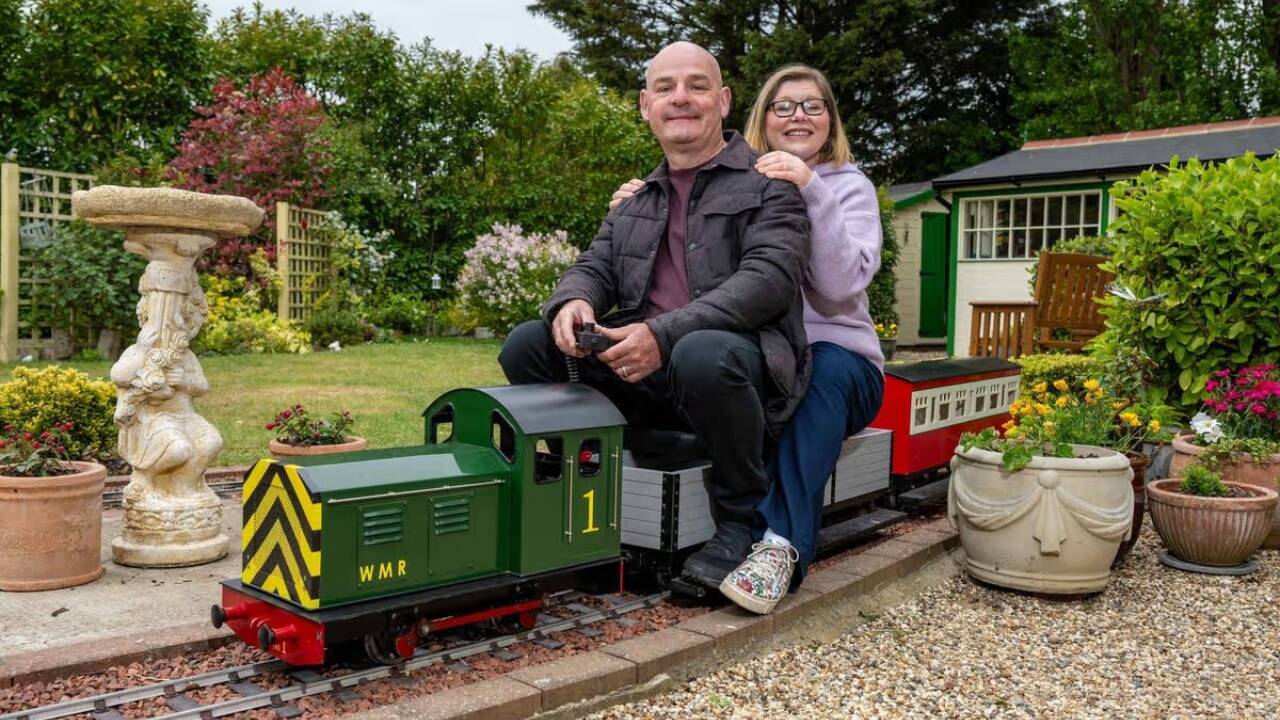
Most people use their quarter-acre garden for a lawnmower, a patch of grass, and maybe a tomato plant if they're feeling ambitious. Dave and Angela Walker decided to do something completely different. They spent eight solid years turning their Clacton-on-Sea backyard into an operational miniature railway network featuring 400 metres of track and five working locomotives.
Building a backyard railway isn't a weekend DIY project you pick up from a hardware store catalogue. It's a massive endurance test of physical labor, engineering grit, and financial commitment. If you’ve ever wondered what it takes to construct an operational passenger-carrying train system outside your back door, you need to look past the charming novelty and understand the sheer scale of the undertaking.
The Reality of Laying 400 Metres of Track in a Small Plot
Fitting 400 metres—about 1,312 feet—of track into a standard quarter-acre plot sounds impossible on paper. Gardens are full of obstacles, fences, patios, and flower beds. To make it work, the Walkers didn't just lay tracks on top of the dirt. They dug out track beds by hand, engineered curves, managed drainage, and laid thousands of custom-made sleepers.
Soil management is the hidden bottleneck of any landscape engineering project. Heavy clay or shifting topsoil will wreck a railway alignment during the first winter freeze-thaw cycle. You have to dig down, lay proper ballast, and ensure absolute level accuracy. If your rails are off by even a fraction of an inch over a long run, heavy locomotives will derail or wear down wheel flanges prematurely. The physical toll of moving tons of gravel and dirt manually over eight years stops most hobbyists in the first six months.
Locomotives, Cost, and Commitment
You can't run a line like this with cheap toy trains. The Walkers operate five distinct locomotives across their network, pulling together global memorabilia and railway accessories to give the line authentic character. Building a collection of scale locomotives and rolling stock capable of outdoor operation requires serious investment. Dave Walker openly admits he lost track of the spending long ago, noting the project sits comfortably at the top end of five figures.
When you start buying proper outdoor-gauge engines, track components, switches, and signaling gear, the costs scale fast. Beyond the hardware, there's ongoing maintenance. Outdoor tracks face falling leaves, rust, weed intrusion, and electrical oxidation. Keeping 400 metres of track clean and operational is basically a part-time job.
Living With a Giant Backyard Project
People often ask homeowners with eccentric hobbies whether they're crazy or brilliant. Dave Walker jokes that their house is either completely unsellable or worth triple its original value. Neighbors either think it's a neighborhood marvel or an absolute madness.
The real secret to finishing a project that spans nearly a decade is partnership. Angela and Dave built the entire network together. Without shared dedication, projects of this scale usually end up as abandoned piles of rusted iron halfway through year two. Instead, they turned their backyard into a local landmark and started planning community fundraising events for the local lifeboat station, proving that private passions can bring an entire neighborhood together.
If you are planning an ambitious backyard engineering project, stop looking for shortcuts. Respect the earthwork, budget for the unseen maintenance costs, and make sure you have someone willing to help you shovel the gravel when the novelty wears off.