If you think archaeology is just about dusty pottery shards and boring museum plaques, think again. A recent discovery in Italy’s ancient city of Kainua—near modern-day Marzabotto—is proving that the Etruscans had a much grittier, more intense relationship with their gods than we assumed.
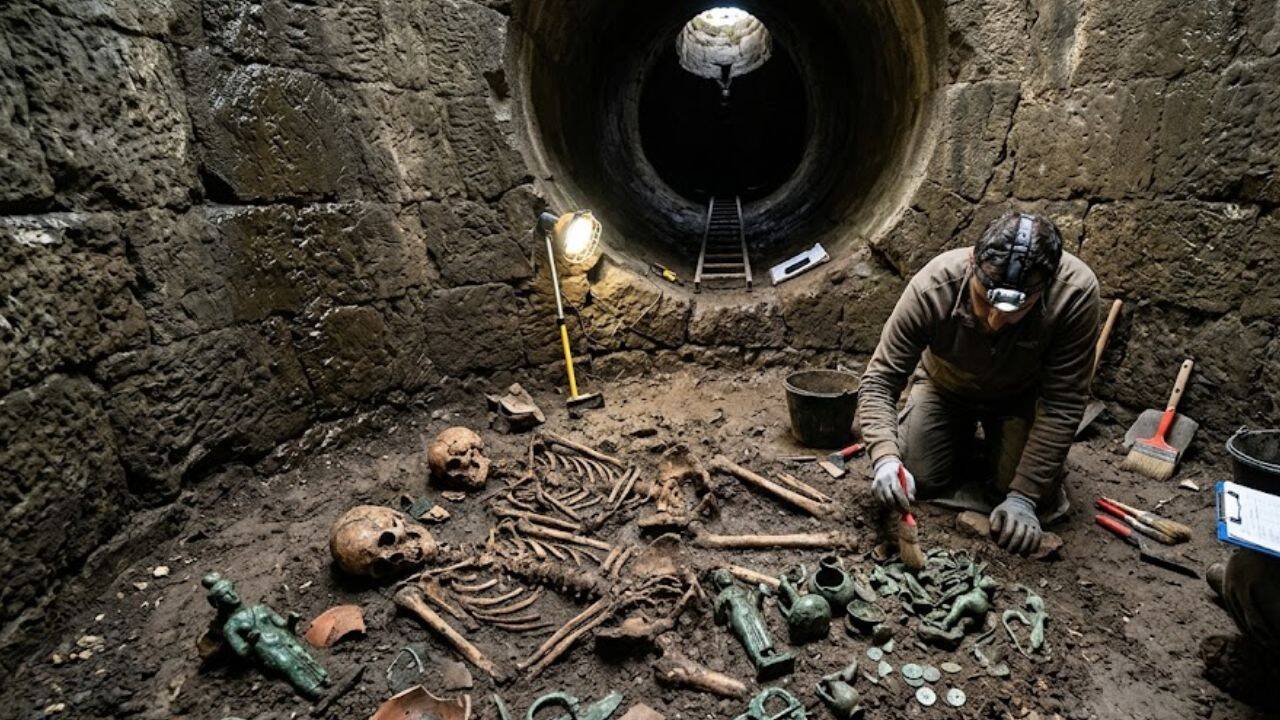
Archaeologists from the University of Bologna recently opened up a 2,500-year-old ritual well that wasn't just a water source. It was a time capsule of life and death, packed with high-quality bronze offerings and the skeletal remains of two people.
Why does this matter? Because it connects the dots between how these ancient people viewed the birth of a city and the finality of death.
The Reality of the Ritual
When you hear "sacred well," you might imagine people tossing coins in for good luck. This wasn't that. This was a deliberate, heavy-duty foundation ritual dating back to the late 6th or early 5th century BC.
The researchers found two female bronze statuettes and a rare, well-preserved bronze plate at the very bottom. These weren't leftovers or junk. They were expensive, shiny, and clearly meant as a high-stakes bribe to the gods of the sacred urban area, specifically Uni, who was essentially the Etruscan version of Juno.
If you're building a city, you need divine insurance. Placing these bronzes at the bottom of a well during the foundation phase was their way of saying, "We’re here, stay with us." It’s a direct look at the psychology of a civilization trying to secure its future in a dangerous world.
The Mystery of the Two Skeletons
The most striking part of this find isn't the bronze—it’s the human remains. Two skeletons were found in a position that strongly suggests they weren't just tossed down there by accident.
Archaeologists often run into the "sacrifice" label immediately when they see human bones in a ritual space. Let’s be clear: the current evidence doesn't confirm these were human sacrifices. It’s more likely these remains marked the closing of the structure.
Basically, the life cycle of the well was bookended by ritual. Bronzes at the bottom for the birth of the site, and human remains to seal it shut when its job was done. It’s a chilling reminder that for the Etruscans, the boundary between the sacred and the profane—or even the living and the dead—was incredibly thin.
Why Kainua Is Such a Goldmine
Kainua has been under the microscope of the University of Bologna since 1988, but this 39th excavation campaign has been a game-changer for our understanding of the area. Supported by a grant from the Italian Ministry of Culture, this dig shows that the "sacred urban area" wasn't just a quiet place for reflection. It was a bustling, active site of political and religious power.
You’ve got two massive temples here—one for Tinia, the king of the gods, and one for Uni. The well sits right in that mix. This tells us that their city planning was inseparable from their religious life. They didn't build a city and then add a temple. The temple and the ritual site were the city.
Moving Past the Myths
One common misconception about the Etruscans is that they were a shadowy, misunderstood group that left no records. While their language is notoriously difficult, their actions speak volumes. This well is a physical diary entry. It shows us that they prioritized stability, fertility, and divine approval in ways that clearly defined their social order.
If you’re interested in seeing these items, they are headed for the National Etruscan Museum of Marzabotto, also known as MNEMA.
What to Do Next
If this find peaks your interest, stop relying on shallow headlines. Dig into the actual reports from the University of Bologna’s ongoing projects. There’s a massive difference between reading a summary and looking at the stratigraphic records of these digs.
Check out the publications from the Alma Mater Studiorum when they release the full data on the skeletal analysis. That’s where the real story—and the potential DNA evidence—will be. Don’t settle for the sensationalized version. The truth is in the dirt, and we’re only just starting to clear it away.
History isn't just sitting in a museum. It’s being pulled out of the ground in real-time, and it’s a lot more chaotic than the textbooks say. Keep an eye on the Marzabotto site; it's going to keep giving.