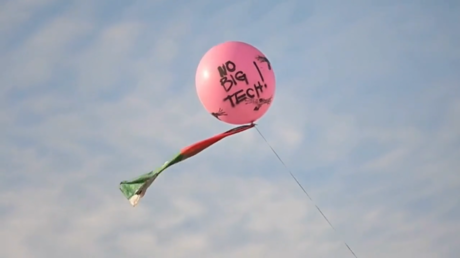
You can't scroll five minutes online without hearing about the artificial intelligence boom, but nobody talks about the physical violence happening on European streets because of it. Thousands of citizens across the bloc have had enough. They're hitting the streets, storming construction sites, and demanding that Brussels put an immediate halt to the unchecked expansion of energy-guzzling infrastructure.
The disconnect between European Union bureaucrats and everyday residents has reached a boiling point. While officials in Brussels push hard to triple the bloc's data center capacity within the next five to seven years—even proposing fast-track legislation to ease permits—local communities are footing the bill with strained water supplies, threatened forests, and skyrocketing electricity bills. If you liked this post, you should check out: this related article.
The recent wave of demonstrations, organized under the Stop Dirty Data Centres umbrella, brought together over 100 grassroots organizations across multiple countries. People aren't just sending polite letters to their local representatives anymore. They're taking direct action.
Take Amsterdam, for instance. Hundreds of protesters stormed a Microsoft data center construction site, cutting through fences, climbing cranes, and clashing with riot police. Over 200 people were detained in a chaotic scene that caught corporate tech executives completely off guard. For another perspective on this development, see the recent coverage from Ars Technica.
Meanwhile, in Finland, roughly 1,300 people marched through Helsinki, parading past Google offices before gathering outside parliament. Local frustration in Finland hit a fever pitch over proposed projects in Muhos and Kajaani. The pushback became so fierce that Finnish authorities ordered preparatory construction work suspended pending environmental impact assessments, while police opened a preliminary investigation into suspected environmental damage at the Muhos site.
Similar scenes played out in France, where residents marched through the Pas-de-Calais Department to fight a massive data center planned near Corbehem and Brebieres. Berlin activists rallied outside tech facilities with signs bluntly stating, "Data centers? No thank you!" Even the UK saw actions organized in London, Reading, and Northern Ireland.
The Brutal Resource Reality of the Cloud
Big tech companies love selling the myth of the cloud. They make it sound weightless, ethereal, and environmentally friendly. It floats somewhere out there in the digital ether, right?
Wrong.
Data centers are massive industrial heavyweights. They occupy sprawling tracts of land, consume staggering amounts of electricity, and suck up millions of gallons of water every single day for cooling systems. When an AI company drops a massive server farm next to a small European town, it doesn't bring a utopian future. It brings humming cooling towers, heavy electrical grid stress, and genuine competition with local households for vital power and water resources.
Let's look at the numbers. Industry analysts note that data center electricity demand is compounding at a rate that existing grids simply weren't designed to handle. When local utilities have to feed massive computing warehouses running machine learning models 24/7, residential power prices jump. Brownouts and blackouts stop being theoretical risks and become real possibilities for families living down the road.
Furthermore, water usage is deeply alarming. Facilities located in regions experiencing water stress draw heavily from local aquifers. Communities are expected to sacrifice their local groundwater, local biodiversity, and peaceful surroundings so that tech giants thousands of miles away can train larger large language models and run automated chat features.
The Brussels Blind Spot
EU tech chief Henna Virkkunen has tried to calm public anxiety, insisting publicly that these new facilities must not drive up electricity bills or cause blackouts. But words don't stop cranes or appease angry crowds.
The regulatory framework coming out of Brussels is built around speed and corporate expansion. Officials want Europe to compete globally in the artificial intelligence race against the United States and China. To win that race, they are streamlining administrative hurdles, cutting red tape, and fast-tracking land access.
By prioritizing tech supremacy over local ecological preservation, Brussels created a glaring blind spot. They forgot to ask the people living next to these sprawling server farms if they wanted them there in the first place.
Activists are pushing back against this top-down approach with clear, non-negotiable demands:
- Mandatory independent environmental and water-impact assessments before a single shovel hits the dirt.
- Total public transparency regarding exact water and electricity consumption numbers.
- Strict protection of local forests, groundwater tables, and regional biodiversity.
- Enforceable renewable-energy usage mandates and water-recycling standards.
- Real penalties for corporations that violate local zoning and environmental rules.
What This Means Moving Forward
The friction between local survival and global technological ambition isn't going away. What happened across Europe is a clear warning shot. If tech corporations and regional governments continue to bypass public consultation and ram projects through vulnerable communities, social unrest will only escalate.
Technology is supposed to serve human society, not turn natural resources into collateral damage for corporate profit margins. European citizens have drawn a hard line in the sand. Water and land belong to the people who live there, not to server farms running background algorithms.
Stop treating infrastructure expansion as an inevitable march of progress. Demand rigorous local oversight, hold policymakers accountable for grid stability, and question every corporate pitch that promises green tech while draining local rivers.