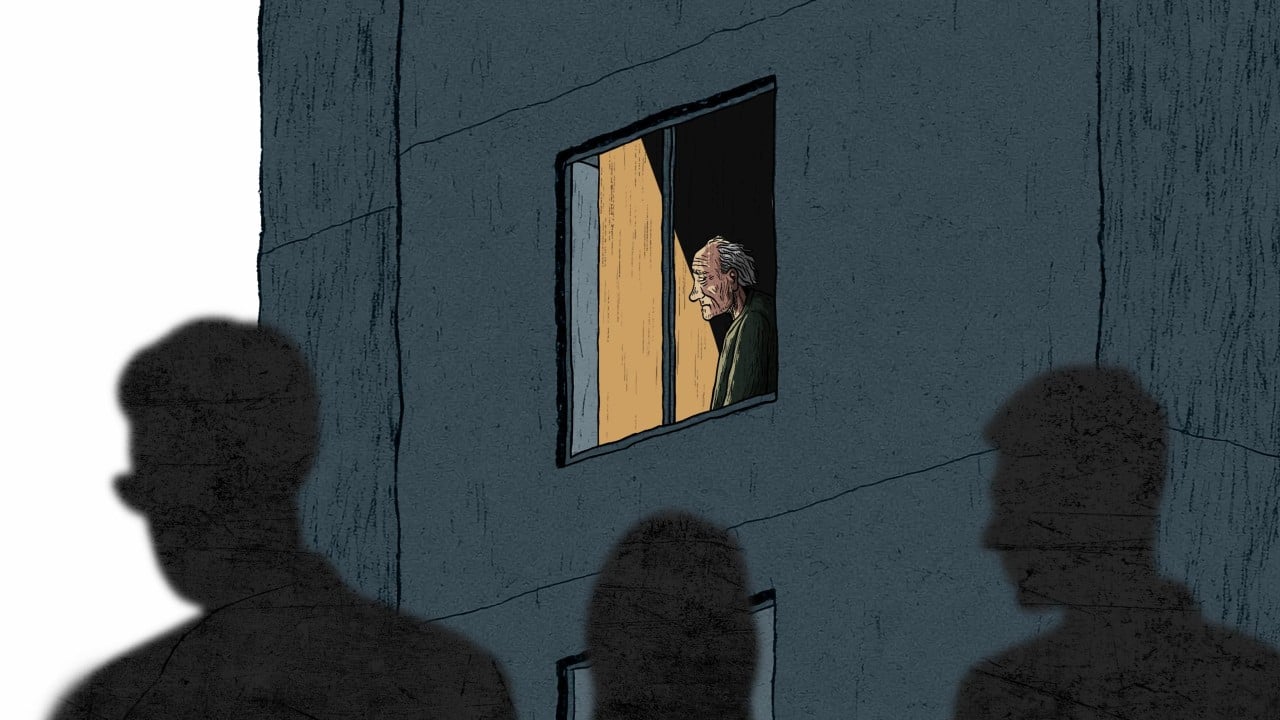
More than half of the seniors living in Hong Kong are cut off from society. That is not a minor statistical blip. It is a massive public health emergency staring us right in the face.
While global figures show that roughly a quarter to a third of older adults face isolation, Hong Kong blows past those numbers. A recent study led by Professor Eliza Wong from the Chinese University of Hong Kong surveyed 647 people aged 65 and above. The findings were stark. Exactly 50.4 percent of elderly residents experienced social isolation. Think about that for a second. Every second older person you pass on the street in neighborhoods like Sham Shui Po or Cheung Sha Wan is likely navigating life entirely alone.
People assume loneliness is just a sad emotion. It isn't. It kills. Research consistently proves that severe isolation carries health risks equivalent to heavy smoking. In a rapidly aging city, ignoring this problem means setting up the public healthcare system for a massive collapse. We need to look honestly at why this is happening and what actually works to fix it.
The True Roots of the Isolation Epidemic
You cannot fix a problem if you misdiagnose it. Most people think older folks choose to stay indoors because they prefer peace and quiet. That is a myth.
The real drivers of Hong Kong elderly social isolation are far more concrete and devastating.
The Physical Trap of Chronic Illness
Take the case of Law Wai-ho, an 81-year-old widow living in a public housing flat in Cheung Sha Wan. She struggles with severe foot and lower back pain, high blood pressure, and heart disease. She depends on a walking cane and has to take eight different medications every single day.
When your body fails you, the city becomes an obstacle course. Walking down a steep flight of stairs or navigating crowded MTR stations becomes terrifying. For seniors like Law, the easiest option is simply staying inside. She admits she rarely leaves her flat except for grocery shopping or medical appointments. She even stocks up heavily on food just to avoid making trips outside. When physical pain limits mobility, the walls of a tiny apartment quickly turn into a prison.
Broken Family Ties and the Emigration Wave
Family dynamics have shifted drastically in Hong Kong. Poor relationships with relatives or the sudden loss of a spouse leave huge gaps in an older person's daily life.
Compounding this is the recent wave of emigration. Many young families have packed up and moved abroad to places like the United Kingdom or Canada. Often, elderly parents are left behind. They find themselves stuck in the city without their primary support network. Suddenly, the children and grandchildren who used to visit every weekend are a dozen time zones away, reduced to occasional video calls that cannot replace physical presence.
The Loss of Routine and Motivation
Ted Liu Chi-ho, a community organizer with the Society for Community Organisation (SoCO), works directly with isolated seniors. He points out that chronic pain and restricted mobility create a vicious cycle.
When you cannot move easily, you lose the motivation to try. You stop going out. You stop talking to neighbors. Eventually, you even forget to take your medication. Law Wai-ho confessed that she sometimes forgets her pills and resorts to applying mentholated balm to her forehead just to ward off fainting spells while alone in her flat. That is the daily reality of severe isolation.
Practical Fixes That Actually Work
Throwing money at generic community centers does not solve this. We need targeted, creative interventions that meet seniors where they are. Here is what actually makes a difference according to frontline experts.
Mindful Acceptance Over Simple Distraction
We often tell lonely people to just go out and find a hobby. That advice sounds good in theory but fails in practice. When you are deeply lonely, forcing yourself to smile at a social gathering feels impossible.
Professor Chou Kee-lee, the chair professor of social policy at the Education University of Hong Kong, advocates for a completely different approach. His research suggests that mindfulness and short meditation sessions can significantly lower loneliness.
- Short Duration: Sessions only need to last between five and twenty minutes.
- Simple Techniques: Focus on deep breathing, listening to ambient sounds, and paying attention to physical and mental sensations.
- The Goal: Loneliness is an internal emotional state. Mindfulness teaches seniors to accept the feeling without distress, calming the mind and helping them focus back on their health.
Low Impact Team Sports and Play
Seniors need a reason to get moving, and regular exercises can feel like a chore. The solution lies in competitive, low-impact games that build immediate social bonds.
Sandy Macalister, a senior adviser at the charity Helping Hand, points to sports like boccia and pickleball, alongside tabletop games like Rummikub. Helping Hand deploys dedicated staff to coach residents in these activities and even hosts annual city-wide boccia competitions.
These games give seniors a sense of purpose. They offer something to strive for, genuine encouragement, and fast friendships. You can't feel isolated when you are actively trying to win a game of Rummikub with three peers sitting right across from you.
Micro Connections and Organized Outings
Community organizations must bridge the gap for those who lack the drive to step outside. SoCO organizes monthly sessions where isolated seniors can meet, talk, and share their unique challenges.
But we also need to offer experiences that spark genuine joy. Law Wai-ho mentioned that she wishes for more engaging, subsidized trips to places like the Hong Kong Disneyland Resort. Why not? Joy shouldn't have an age limit. Giving seniors a memorable day out breaks the monotony of public housing life and creates shared memories that fuel conversations for months.
Immediate Action Steps for Neighbors and Families
If you want to combat Hong Kong elderly social isolation today, waiting for government policy is a losing game. Change starts at the neighborhood level.
- Audit Your Building: Look around your own residential block. Identify the elderly residents who live alone.
- Knock on Doors: Do not wait for them to ask for help. Knock on their door to check in. Offer to pick up groceries or heavy items like rice bags when you do your own shopping.
- Learn Their Needs: Sit down and listen. Do they struggle with medication schedules? Do they need help setting up a doctor's appointment on their phone? Understand their specific barriers before offering random solutions.
- Connect with Local NGOs: If you notice a senior living in squalor or showing signs of deep cognitive decline, connect them immediately with groups like SoCO or Helping Hand. These organizations have the resources to step in effectively.
The data proves that half of our seniors are suffering in silence. It is a quiet crisis, hidden behind closed doors in high-rise public estates. By changing how we interact with the older generation and scaling up proven, targeted community activities, we can pull thousands of seniors back from the edge of total isolation.