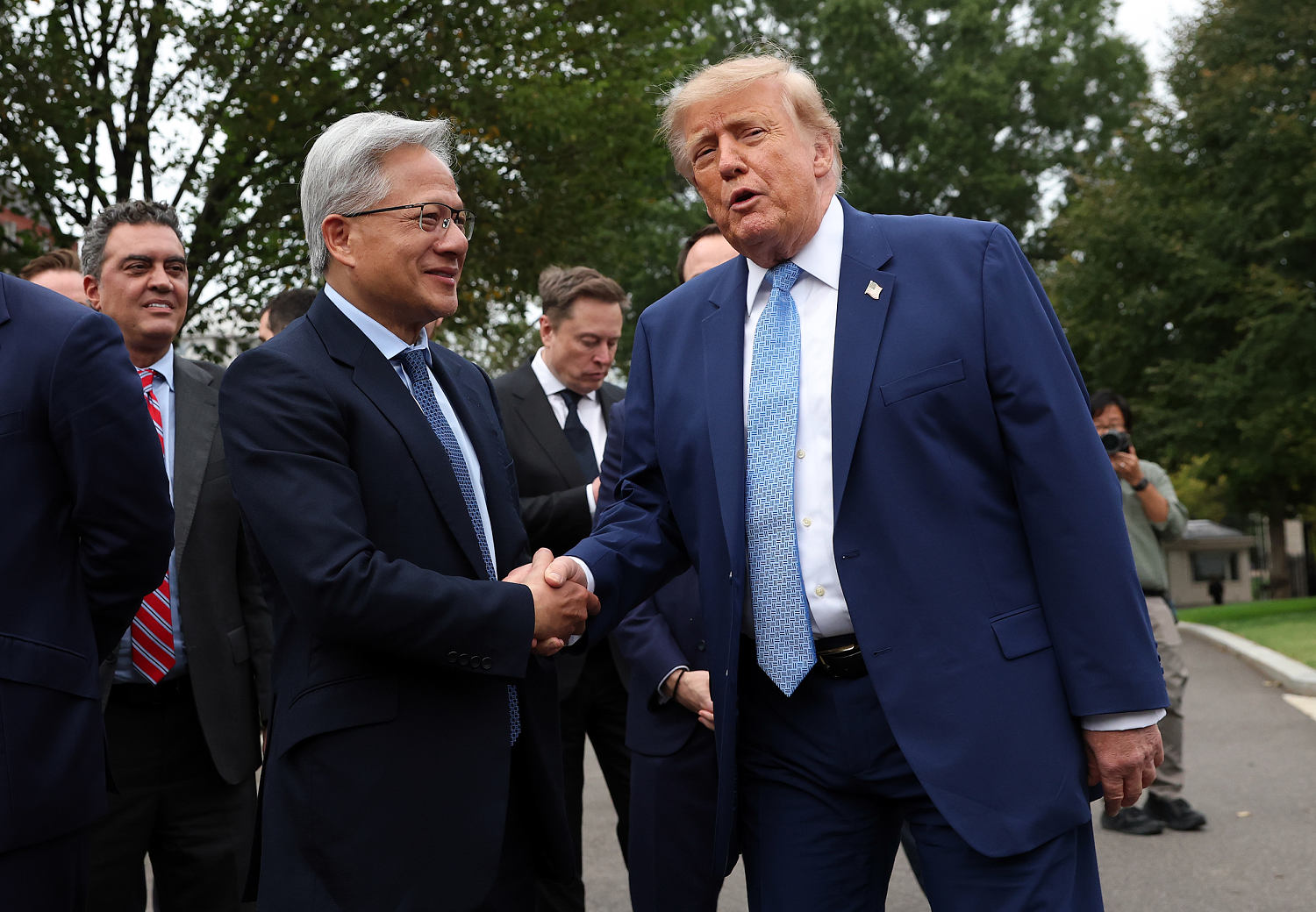
Eleven days after resigning amid personal and national-security headlines, Jensen Huang is back in the corner office. Nvidia's board voted unanimously on November 23, 2026 to reinstate him as president, chief executive officer, and board member effective immediately, triggering a stock surge that lifted shares from around $125 on Friday to just over $160 after the news broke.
That headline jump is easy to read as a simple victory lap. Honestly, it's much messier than that.
When a founder walks out on November 12, gets replaced on an interim basis by CFO Colette Kress while Harvey C. Jones steps in as first-ever board chair, and then returns less than two weeks later with White House backing and a new Chief Compliance Officer search underway, you aren't watching normal corporate governance. You're watching a trillion-dollar bottleneck in real time. Markets didn't just cheer a comeback. They priced in the relief of avoiding an abrupt leadership vacuum at the center of AI compute.
Why Jensen Huang Returning as Nvidia CEO Shocked Wall Street
Just days before the reversal, the board looked firmly dug in. During an earnings call that followed a quarter where Nvidia reported revenue jumping 103% year over year to $115.8 billion, board chair Harvey C. Jones stated the board did not intend to reinstate Huang.
Then everything shifted over a weekend. Reports in The New York Times tied Alice Huang—a chip executive linked in press accounts to an extramarital relationship with Huang—to contact with a senior official from China's intelligence apparatus. Instead of burying Huang's chances, that flashpoint collided with intense political pressure. President Donald Trump publicly urged the board on Truth Social to rehire Huang, later told CNBC he had advocated directly and indirectly with directors, and stated that senior U.S. officials and the attorney general saw no national security risk or evidence of unlawful conduct.
From a cold market perspective, the math looked brutal without him. Nearly 6,000 current Nvidia employees, more than 1,100 former staffers, and over 63,000 shareholders had signed a petition demanding due process and his return, joined by prominent tech leaders like Elon Musk. Meanwhile, Arm CEO Rene Haas—whom reports indicated had been approached about succeeding Huang—locked in a new deal keeping him at Arm through 2033. If Nvidia had dragged out a multi-month CEO search while exporting H200 chips to China was halted and congressional scrutiny loomed, customers and rival chipmakers would have smelled blood.
The Real Tension Behind Nvidia's Reversal
Here's the mistake most commentators make when they see a 30% premarket spike: they treat a sharp rally as proof that the underlying risks disappeared. They didn't.
When I look at high-stakes corporate crises up close, boards rarely reverse course out of pure sentiment. They reverse course when the downside of staying the course looks worse than the controversy of turning back. In this case, Nvidia wasn't just an ordinary public company with a deep bench of interchangeable executives. Its roadmap, supply chain commitments, and customer relationships are tightly bound to Huang's personal bandwidth and dealmaking.
Still, bringing him back doesn't erase the guardrails the board put in place. Nvidia announced it is searching for a new Chief Compliance Officer to report to the Nominating and Corporate Governance Committee, following the November 17 creation of a National Security and Export Control Oversight Committee. Colette Kress also remains a central steadying hand as CFO after holding down the interim CEO slot during an extraordinary stretch.
There is a real debate worth having here. Critics of the reversal argue that rapid political intervention and founder gravity can weaken board independence, especially when personal conduct and foreign-influence questions intersect with sensitive export controls. Supporters counter that forcing out a founder over contested allegations without a completed process—and risking broader market turmoil across the S&P 500 and Nasdaq—would have been reckless. Both sides have a point, and pretending there's zero tension between executive authority and oversight is naive.
How This Plays Out for Investors, Builders, and Teams
If you hold Nvidia stock, build infrastructure on its hardware, or lead a tech team watching this drama unfold, don't treat Monday's price action as the end of the story. Volatility doesn't vanish just because a founder retakes the helm.
- Watch compliance and export-control signals, not just product launches. Look at who gets hired as Chief Compliance Officer and how the new oversight committee operates. Regulatory friction and export rules—like the halt on H200 shipments to China announced during the interim period—move revenue faster than press releases.
- Separate founder charisma from governance risk. Jensen Huang has built one of the most consequential compute franchises in modern tech, and his return restores continuity. That doesn't mean congressional inquiries or national-security scrutiny go away overnight. Expect sharper questions from lawmakers and institutional investors.
- Stress-test your own vendor and leadership assumptions. Whether you run an AI startup or a large enterprise IT shop, relying on a single charismatic leader or a single hardware supplier creates concentration risk. Even when the founder comes back, smart operators keep backup plans ready.
Read the official NVIDIA Newsroom announcement for the board's exact wording on governance and compliance, and track market coverage from outlets like BNN Bloomberg and TechCrunch as new regulatory details emerge.
If you're making portfolio moves or infrastructure bets right now, size your positions for turbulence, verify every headline against primary disclosures, and keep your eyes on what the board actually enforces next.