One boardroom reversal just flipped an entire market panic upside down. If you watched major indexes slide into correction territory last week, you probably wondered whether the AI trade was finally dead. Stock futures are surging on Monday, November 23, 2026, led by beaten-down chipmakers and cloud names after Nvidia shocked Wall Street by reinstating Jensen Huang as chief executive.
Let's be honest about what happened. This isn't a quiet, polite bounce where cautious money slowly tiptoes back into equities. It's a violent snapback fueled by relief, short-covering, and a dramatic U-turn from Nvidia's board. Just days ago, chairman Harvey Jones and the board had signaled Huang wouldn't be coming back following personal conduct controversies and national security questions. Today, the board voted unanimously to bring him right back in.
Watching that drama unfold from a trading desk over the last two weeks felt surreal. In my experience watching mega-cap tech cycles, markets rarely care about moral nuance when a single founder holds the keys to the supply chain. Traders cared about two things last week: whether Nvidia's AI momentum was breaking, and whether Washington or boardroom chaos would cripple the company's execution. Reinstating Huang didn't magically erase every risk, yet it removed the immediate fear of a messy succession fight.
How Wall Street Got Thrashed Last Week
To understand why today's futures bounce feels so electric, you have to look at how ugly last week actually got. Major U.S. benchmarks slipped into correction territory—defined as falling 10% or more from recent highs—as tech stocks got hammered. The S&P 500 extended a seven-day losing streak and sat roughly 12% below its highs, while the Nasdaq Composite surrendered its 2026 gains after Friday's steep drop.
Chip stocks took the brunt of the punishment. The Philadelphia Semiconductor Index tumbled roughly 17% over the week, and volatility spiked hard, with the VIX surging to 40 on Friday before pulling back toward the low 30s. Meanwhile, Anthropic's recent market debut ran into turbulence after an initial jump, losing ground late in the week and adding to the nervous mood around AI valuations.
A common mistake investors make during a sell-off like that is assuming every red candle means the underlying demand evaporated. Sometimes it does. Often, though, forced selling, margin pressure, and crowded positioning push prices way past what fundamentals justify. When a stock drops 14% in a single session—as Nvidia did on Friday—even a modest spark can trigger a massive relief wave.
Why Stock Futures Surged on Monday Morning
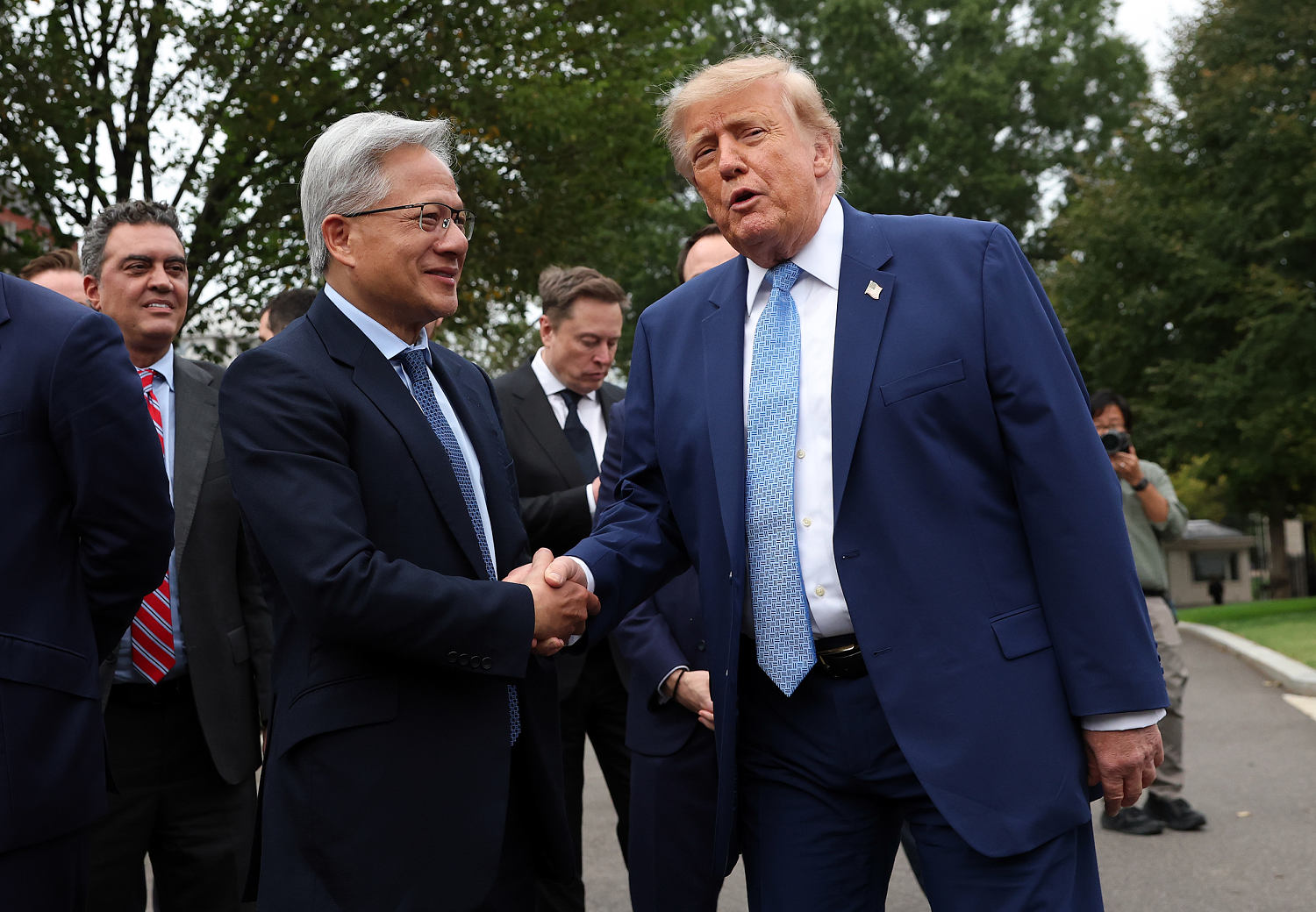
The headline catalyst is unmistakable: Nvidia's board brought Jensen Huang back as CEO, effective immediately, after stating it was satisfied with his candor and leadership and saw no national security risk following input from senior U.S. government officials. President Donald Trump also publicly backed Huang and said he had spoken with the board about his return.
That single move lit up premarket and early trading across AI infrastructure. Nvidia shares rocketed higher—surging roughly 30% in trading—while chip peers like AMD, Broadcom, Micron, and Arm jumped, and AI cloud providers including CoreWeave and Nebius posted big gains. Across the broader market, mega-cap names like Alphabet, Meta, and Amazon also caught a bid.
Deal flow added another layer of energy to the morning tape. CrowdStrike announced plans to acquire cloud security firm Zscaler for around $44 billion, sending Zscaler soaring in early action. And Oracle climbed after saying it secured funding for its OpenAI contract and expects positive free cash flow in the second half of 2028.
Still, let's keep our feet on the ground. Part of Monday's jump is classic "buy the dip" bargain hunting and short-covering after an extreme washout. When a stock gets heavily shorted into a panic, good news forces bears to buy back shares fast, amplifying the bounce.
What's Still Hanging Over This Rebound
If you treat today's green screen as proof that all clear sirens are ringing, you might get burned twice. Several real headwinds haven't gone anywhere:
- Federal Reserve rate pressure: Markets are still pricing in a roughly 90%-plus odds of a 25-basis-point rate hike at the Fed's December meeting. Sticky inflation expectations haven't given policymakers much room to pivot dovish just because stocks had a rough week.
- Governance and oversight questions: Nvidia's board said it formed a committee to examine whether foreign intelligence efforts targeted Huang and plans to search for a new chief compliance officer. Governance critics are already questioning how fast the board reversed course.
- Regulatory scrutiny: Reporting indicates Nvidia is also facing a U.S. Securities and Exchange Commission probe into its accounting, which remains an overhang even as the stock rallies.
- A holiday-shortened calendar: With Thanksgiving coming up on Thursday and a shortened session on Friday, liquidity can thin out and exaggerate price swings.
What Traders and Investors Should Watch Next
Over the next few days, price action alone won't tell you whether this rebound has legs. Macro data and earnings are right in front of the market.
First, keep an eye on economic releases hitting ahead of the Thanksgiving break. Markets are watching business activity readings, consumer confidence, a revised Q3 GDP reading, and especially Wednesday's PCE inflation report—the Fed's preferred gauge—alongside remarks from Fed officials like New York Fed President John Williams. If inflation comes in hotter than expected, higher yields could test tech valuations all over again.
Second, watch enterprise hardware and cloud commentary as companies like Hewlett Packard Enterprise and Dell report results. Those numbers help show whether corporate data-center spending is actually translating into steady shipments or cooling off.
Third, check your own portfolio concentration. Last week's slide showed how heavily index performance and sentiment depend on a handful of AI and semiconductor leaders. When breadth weakens and volatility sits above 30, position sizing matters way more than heroics.
Practical Next Steps Before the Holiday
Don't make emotional moves ten minutes into a big relief rally. Take a breath and walk through a few practical checks before markets close for Thanksgiving:
- Audit your AI and chip exposure: Add up how much of your portfolio sits directly in Nvidia, semiconductor ETFs, and mega-cap tech—including indirect exposure through index funds. Decide whether your current weight matches your stomach for 10% to 30% swings.
- Separate news spikes from trend shifts: A sharp bounce off oversold levels can be real and still fail at overhead resistance. Avoid chasing vertical green candles without a clear plan for risk if Wednesday's inflation data spooks bond yields.
- Prepare for thinner holiday trading: Expect wider bid-ask spreads and sudden headlines around Thursday's Thanksgiving closure and Friday's early close. If you plan to rebalance or trim concentrated winners, size orders thoughtfully rather than forcing everything at once.