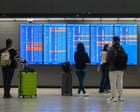
If you were stuck on a tarmac or stranded at a departure gate during the historic Federal Aviation Administration ground stop, you already know the official reassurances felt hollow. Over 10,000 flights were delayed or canceled, turning major hubs into parking lots and stranding hundreds of thousands of passengers in a matter of hours. The agency called it a temporary telecommunications outage. Officials pointed fingers at aging infrastructure trying to digest modern upgrades.
Whatever the root technical failure, the reality is stark. America's aviation network is deeply fragile, and clearing the ground stop only scratches the surface of a much larger logistical nightmare that will ripple through the weekend. Meanwhile, you can find other stories here: Why The Ss United States Had To Die To Become An Underwater Legend.
What Actually Triggered the Chaos
At approximately 3:54 p.m. Eastern time, the FAA pulled an emergency ripcord that hasn't been yanked nationally since the aftermath of September 11 and a brief computer glitch in early 2023. Communication issues slammed multiple Air Route Traffic Control Centers, the high-altitude facilities responsible for guiding planes safely between destinations. Out of an abundance of caution, departures nationwide were brought to a screeching halt.
During a late-night White House press briefing, Transportation Secretary Sean Duffy and Homeland Security Secretary Markwayne Mullin laid bare the uncomfortable truth. The culprit wasn't a sophisticated cyberattack, though initial jitters ran high. Instead, officials pointed to an ancient air traffic control ecosystem buckling under the weight of data. Patching modern communication tools and new software onto decades-old analog infrastructure created data bottlenecks, overloading switches and routers until they started outputting corrupted data and shut down. To see the bigger picture, check out the detailed article by The Points Guy.
When critical network hardware starts throwing errors at high altitudes, regulators have zero margin for error. Grounding every single departure was the only safe play, but it exposed how a single systemic choke point can paralyze the entire continent.
The Real Crisis Begins After the Ground Stop Lifts
Lifting the restriction doesn't mean flights magically resume on schedule. That is the fundamental misunderstanding most travelers have when they hear the emergency order has ended.
A nationwide ground stop throws the delicate choreography of commercial aviation completely out of whack. Planes are sitting at the wrong airports. Flight crews have timed out and legally cannot fly without mandatory rest. Gates are jammed with incoming aircraft waiting hours just to deplane passengers.
Airlines like Delta, United, and American warned that recovery efforts would take days. Budget carriers and major hubs alike faced cascading cancellations that stretched well past the initial timeline. If your aircraft and your pilot are three time zones away because of a four-hour administrative freeze, your Friday night flight isn't leaving just because a computer screen turned green again.
Why Fixing This Won't Be Easy
Government officials used the crisis to advocate for massive funding infusions, pointing out that decades of patchwork fixes and underinvestment have left air traffic controllers relying on equipment that belongs in a museum rather than a modern control room. Congress approved billions recently, but modernizing a nationwide network of air route traffic control centers while keeping tens of thousands of daily flights moving safely is like trying to rebuild a jet engine while flying at 30,000 feet.
Until a total structural overhaul takes place, travelers are playing Russian roulette with their itineraries. Every time the system gets pushed to its limits, the risk of another catastrophic bottleneck grows.
How to Protect Your Travel Plans Right Now
You can't control FAA infrastructure, but you can stop falling victim to systemic airline meltdowns. Stop booking the last flight of the day. When schedules cascade into chaos, airlines prioritize morning departures and recovery sweeps, leaving late-night passengers stranded first.
Download your airline's app and track your incoming aircraft's tail number rather than just staring at the departure board. If the plane operating your flight is stuck three states away, you know you are delayed long before the gate agent makes an announcement. Always pack essentials in your carry-on bag, and if a total disruption hits, bypass the airport customer service line entirely. Call the airline's priority support line or use their app chat feature while standing in the queue to secure a rebooking before everyone else catches on.
The skies are open again, but the system remains vulnerable. Plan accordingly.