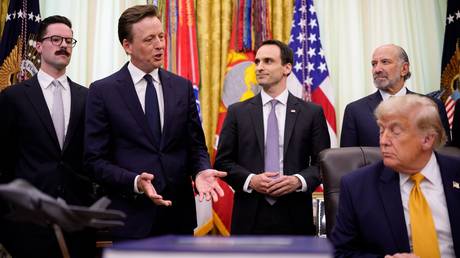
Firing the White House cyber chief makes for great cable news, yet it doesn't fix brittle routers or rushed software patches.
On November 19, 2026, word broke that Sean Cairncross was out as head of the Office of the National Cyber Director, with Kirsten A. Davies stepping in as acting replacement. Reports from outlets including CBC News, The Guardian, and CyberScoop pointed to anonymous sources saying President Donald Trump backed the move amid a bruising stretch of technology failures and internal doubts about Cairncross's technical credentials. At the same time, the White House described him as stepping down, and officials haven't confirmed a direct cause-and-effect link between the outages and his exit.
Here's the catch if you're hoping a new face in Washington solves what went wrong over the past week. Most of the headline-grabbing disruptions weren't coordinated foreign cyberattacks at all. They were self-inflicted operational headaches, third-party vendor hits, and maintenance stumbles colliding at once.
What Actually Happened During the Sean Cairncross Exit and Outage Wave
If you only read quick social posts, you might think hostile hackers took down American aviation, banking, and federal networks in one grand strike. That's not what the reporting shows.
U.S. intelligence leadership, including Director of National Intelligence Jay Clayton, pushed back on the coordinated-attack narrative, stating that the recent disruptions stemmed from separate service outages tied to maintenance, software and hardware faults, and technical changes rather than a state-sponsored campaign. Speaking with Fox News ahead of the APEC Summit, Trump told the public to relax and said everything was good.
Meanwhile, the actual incidents had very different roots:
- Aviation and cloud hiccups: Reporting compiled by Shattered and wire services pointed to a Federal Aviation Administration ground stop involving dozens of disabled routers, a major Microsoft service disruption that hit email and gateways, and brief flight delays at carriers like United Airlines.
- National security and banking bumps: News reports noted a temporary disruption affecting an internal network at the National Security Agency, alongside banking access glitches tied to an on-premises software bug at Chase.
- Real attacks on third-party suppliers: Not everything was an accidental outage. JPMorgan Chase disclosed that third-party vendors working with the bank were targeted in a cyberattack that exposed certain marketing data, and separate reporting highlighted a supply-chain compromise hitting organizations using Optimizely.
Honestly, mixing up an accidental configuration error with a nation-state breach is one of the oldest traps in tech coverage. From a practical standpoint, a failed router or a buggy patch can paralyze operations just as thoroughly as an adversary. You can't re-route flights or process transactions if your own systems are down, regardless of intent.
Why Credentials and Politics Collided at ONCD
Sean Cairncross came into the job after serving as an executive and chief operating officer with the Republican National Committee and working inside the first Trump administration, winning Senate confirmation in August 2025. According to reporting cited by The Guardian and other outlets, anonymous sources claimed Chief of Staff Stephen Miller pushed for the change because Cairncross lacked deep cyber credentials, and Trump supported his removal.
I've watched plenty of senior tech and security roles get caught in Washington crossfire. When political operatives take top policy seats, critics immediately question their engineering fluency. When career technologists take those seats, they sometimes struggle with budget turf wars and Hill messaging.
Either way, the Office of the National Cyber Director is a policy and coordination hub, not a live incident-response command center that manually reboots airline servers or patches enterprise firewalls. Expecting one person in a policy office to stop every bad software update across thousands of private companies is kinda like blaming the city planner when a delivery truck hits a pothole.
The Patching Frenzy Nobody Talks About
One detail in the reporting deserves way more attention than the political gossip. Cybersecurity experts speaking to Reuters and outlets like CyberScoop noted that recent disruptions appear tied to organizations rushing to patch newly discovered software vulnerabilities uncovered in the AI era.
Think about what happens when AI tools help researchers and attackers find flaws faster than ever. Security teams get flooded with urgent advisories. Pressure mounts to push emergency fixes immediately.
When teams rush patches without full regression testing across complex hybrid clouds and legacy gear, things break. A "fix" for one vulnerability can knock out authentication, choke network gateways, or trigger cascading failures across interdependent services.
I've seen this movie play out in enterprise IT environments more times than I care to count. A well-intentioned weekend security patch goes out on Friday night, and by Monday morning half the workflows are stuck in limbo. Speed matters in security, sure, yet blind speed without testing is just another flavor of fragility.
A Harder Senate Map Ahead for a Permanent Pick
Whatever happened behind closed doors at the White House, filling the permanent role won't be quick or quiet. As reporting on the shake-up points out, a permanent nominee requires Senate confirmation, and Democrats take control of the Senate in January.
That timing changes the math completely. Kirsten A. Davies has stepped in as acting head—and Pentagon leader Pete Hegseth publicly cheered her taking on the role—while a permanent candidate faces a tougher confirmation gauntlet. Even if the administration moves fast, confirmation battles and transition handoffs can slow policy momentum for months.
What This Shake-Up Means for Businesses and Everyday Users
You don't need a security clearance to feel the ripple effects when airlines stall, email drops, or banking apps act up. For IT leaders, founders, and everyday users, the real lesson isn't waiting on a new title in Washington. It's building systems that bend without snapping.
If you run operations or manage infrastructure, take a hard look at where single points of failure hide in your stack:
- Test emergency patches before wide rollout. Keep a staging environment that mirrors production closely enough to catch broken dependencies before a security fix hits critical systems.
- Audit third-party vendors like your own network. Vendor breaches and upstream supply-chain flaws keep biting major enterprises. Ask every critical supplier how they isolate incidents and notify customers.
- Plan for outages without blaming hackers first. Build manual fallbacks, clear communication playbooks, and realistic recovery times so your team isn't scrambling blindly during a software or cloud failure.
For individuals, keep basic backups of essential documents and recovery codes offline or across more than one place, and don't panic every time an app or airline goes dark. Most hiccups turn out to be messy engineering rather than cyber warfare, though keeping your guard up is still smart.
Leadership changes at the top grab headlines fast, yet real resilience gets built one tested update and one boring backup plan at a time.