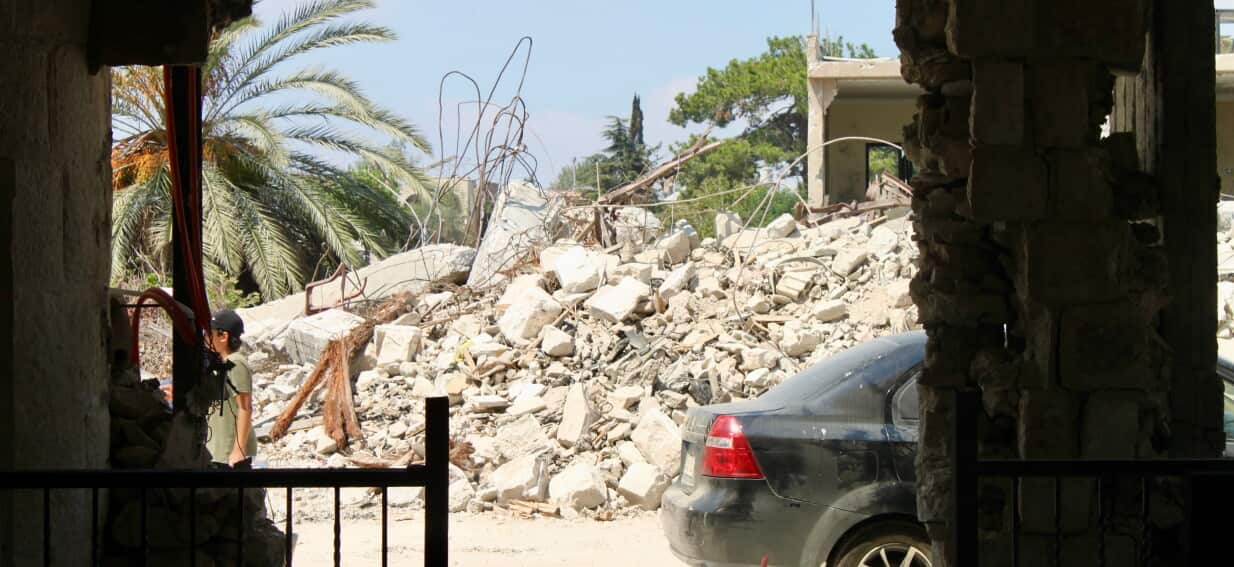
Paper agreements don't stop bombs. When Israeli strikes hit southern and eastern Lebanon late on a Saturday, they killed three people and injured 23 others, proving that a ceasefire name on a diplomatic document means very little to the people living on the ground.
Let's look at what actually happened. The Lebanese health ministry confirmed that strikes tore through five distinct locations across the Tyre, Nabatieh, and Bekaa regions. Two young men riding a motorcycle in Nabatieh were targeted and killed instantly. Another strike on a house in the village of Rmadiyeh—which was packed with families displaced from other combat zones—left a third person dead and fifteen others wounded, including children and emergency rescuers. Don't miss our earlier post on this related article.
If a truce is active, why are people still dying? That is the real question everyone in the region is asking.
The official line from governments and international bodies sounds clean and orderly. But reality is messy. Israel announced it had taken control of the strategic Ali al-Taher ridge, with Defence Minister Israel Katz stating the military intended to prevent enemy re-establishment in the area. Meanwhile, Hezbollah didn't even confirm losing the ground, leaving a dangerous vacuum of conflicting claims. If you want more about the history here, The New York Times provides an informative summary.
When you look closely at the mechanics of these modern conflicts, ceasefires are rarely light switches. They are slow, contested, and frequently violated by tactical military objectives on the ground.
The Reality of Post-Ceasefire Lebanon
If you talk to humanitarian workers or look at field reports from organizations like the United Nations, a grim picture emerges. Imran Riza, the UN humanitarian coordinator for Lebanon, pointed out that families trying to return to places like Nabatieh face total devastation. They are coming back to homes turned into rubble, a complete lack of basic services, and continuous insecurity.
People want to rebuild their lives. They want to check on what is left of their property. But stepping back into these zones feels like playing Russian roulette.
Here is what most news summaries gloss over:
- The geographic scope of the strikes isn't restricted to a single border skirmish point. They span multiple regions from the south up to the Bekaa valley.
- Critical infrastructure like roads, ridges, and residential hubs remain heavily militarized focal points.
- Emergency responders are caught directly in the crossfire, with multiple rescue workers injured while trying to pull victims from collapsed buildings.
Understanding the Stakes Behind the Ongoing Violence
The conflict didn't start yesterday. Ever since Hezbollah dragged Lebanon into the wider regional war by launching attacks in support of Iran back in March, the toll has been catastrophic. Lebanese authorities report that Israeli airstrikes and ground operations have killed more than 4,300 people since the escalation began.
Even after a US-Iran memorandum of understanding and a framework agreement between Israel and Lebanon quieted the macro-level war in June, localized violence never truly stopped. Tactical operations, strategic hill captures, and targeted vehicle strikes continue to puncture the peace.
You cannot simply declare a war over and expect old grudges and immediate security demands to vanish overnight. Armies operate on hard security metrics—holding ridges, eliminating perceived threats, and securing buffer zones. Diplomats operate on political optics. The gap between those two worlds is measured in human lives.
If you are following this crisis, stop looking at the broad headline of the truce agreement. Look at the specific ground maneuvers, the control of strategic geography, and the daily survival metrics of displaced families. That is where the story actually unfolds. Keep track of independent field updates from local agencies rather than waiting for official political statements that often lag behind the bloodshed.


