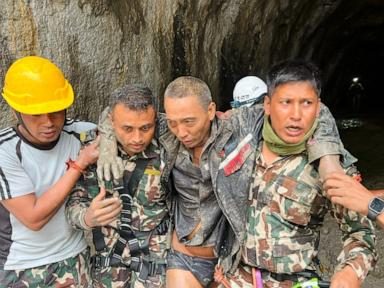
Nine days in pitch-black darkness can break almost anyone. Yet, underground inside the Trishuli 3A Hydropower Project in Nepal, two men refused to give up. When flash flooding triggered by a glacial collapse struck the Nepal-Tibet border, it sent tons of mud, rocks, and debris roaring into regional infrastructure. Thousands went missing, and villages were completely submerged. But amidst unimaginable devastation, a miraculous discovery changed the tone of the entire recovery mission: two workers were pulled alive from a blocked subterranean tunnel more than a week after the disaster.
If you are following the crisis, you probably want to know how they survived so long and whether rescue teams can actually reach the dozens of others still trapped. Let's break down what's really happening on the ground.
The Miracle Inside the Trishuli 3A Tunnel
The harrowing ordeal began when the sudden wall of water and debris cut off escape routes for workers inside the facility. Sanjaya Shah, a mechanical foreman, later recounted how he urged his colleagues to flee while he tried to help others. He simply ran out of time. Trapped deep underground, Shah relied on sheer mental fortitude, chanting mantras in the dark to keep panic at bay. Remarkably, he managed to maintain sporadic contact with a few other workers scattered elsewhere in the complex.
Rescue teams from the Nepal Army, alongside specialized local emergency responders, faced a brutal operating environment. Thick, compacted mud and unstable rock formations blocked entry points, turning every meter gained into a dangerous battle against time and gravity. Colonel Jhabindra Reshmi of the Nepal Army noted that clearing the massive blockages required extreme caution to avoid triggering secondary collapses.
Then, breakthrough moments happened. Search teams heard faint voices echoing from deep within the conduit. Cameras and listening devices confirmed signs of life, prompting an intense push that successfully brought out Sanjaya Shah and Kabir Maharjan, a mechanical supervisor. Both men were immediately airlifted to a hospital in Kathmandu in stable condition, greeted by emotional families who had spent over a week fearing the worst.
Can More Survivors Be Found
The rescue of Shah and Maharjan isn't just an isolated miracle; it breathes life into a much larger search operation. Energy Minister Biraj Bhakta Shrestha captured the mood of the nation on social media, writing, "As long as there is breath, there is hope!"
Experts point out that underground tunnel systems often feature pockets or elevated air chambers—sometimes referred to by specialists as a "Goldilocks zone"—where trapped individuals can find breathable air and shelter away from rising waters. Authorities estimate that dozens of other workers might still be holding out in similar pockets across affected hydropower sites along the Trishuli River basin.
However, the clock is ticking. Dehydration, hypothermia, and dwindling oxygen supplies pose immediate threats to anyone remaining underground. Heavy machinery is being deployed to clear heavy silt, but manual digging remains essential in tight spaces where heavy equipment cannot fit.
The Broader Humanitarian Crisis
The tunnel entrapments are part of a much larger national catastrophe. The late August flash floods claimed over 1,300 lives across Nepal, with thousands more remaining unaccounted for. Infrastructure damage is staggering, affecting multiple hydropower projects that form the backbone of the region's energy grid. Neighboring Tibet also reported heavy casualties and missing persons as the glacial outburst overwhelmed cross-border river valleys.
Despite the immense scale of the disaster, stories of resilience continue to drive the relief effort forward. Local authorities, international aid partners, and military personnel are coordinating around the clock. They aren't just recovering bodies anymore; they are actively hunting for more air pockets where survivors might still be waiting.
The situation remains fluid and dangerous. Yet, as long as rescue crews continue hearing faint sounds beneath the rubble, the mission goes on.
Two workers rescued alive from Nepal tunnel, 9 days after devastating floods
This video documents the dramatic rescue operation where emergency teams successfully pulled trapped workers out of the Nepal hydropower tunnel after more than a week underground.
http://googleusercontent.com/youtube_content/1