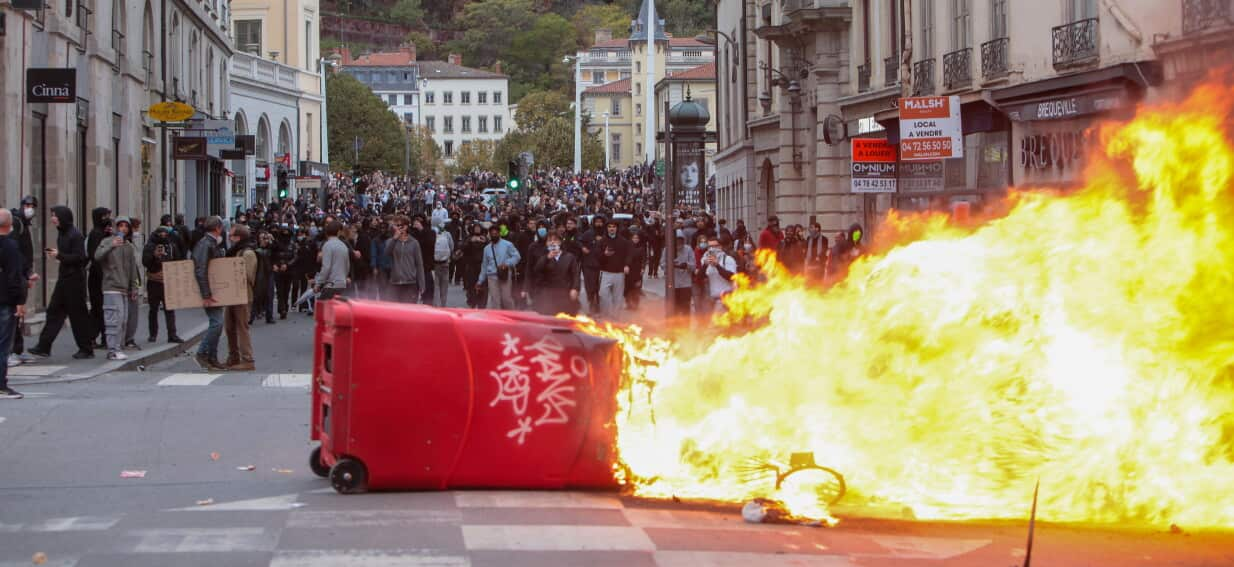
When a government starts rewriting the rules of the street, you know things have gone past the point of no return. France is bracing for another weekend of demonstrations, but this time, the state is drawing a hard line. Authorities are banning marches, locking down city centres, and rolling out a massive wave of security reinforcements following weeks of intense civil unrest over the cost of living, public services, and mounting economic pressure.
If you've been watching the smoke clear from the chaos in Paris, Lyon, and Grenoble, you realize this isn't just about ordinary disagreement anymore. It is a full-scale collision between public fury and state control.
The Breaking Point Behind the Barricades
To understand why the current administration is panicking, look at what happened over the preceding weekend. What started as mass demonstrations involving over half a million people demanding relief from surging prices quickly degraded into some of the worst street violence France has seen in years.
We are talking about hundreds of shops looted, public buildings torched, and masked groups going toe-to-toe with security forces. In Lyon alone, authorities reported that roughly 200 to 300 shops were gutted and a tourist office burned down in hours of pure chaos.
Interior officials admitted flat out that enforcement teams lost control in certain sectors. When thousands of arrests happen in a matter of days and hundreds of people face swift prosecution, the velvet gloves come off. President Emmanuel Macron and Prime Minister Sébastien Lecornu are staring down a populace that refuses to back down, and their primary weapon right now is sheer containment.
Blanket Bans and Targeted Restrictions
Instead of allowing demonstrations to flow organically, the state has opted for pre-emptive containment. Authorities across multiple regional hubs have declared outright bans on fresh protests in sensitive urban zones.
In Paris, the police prefecture drew a strict boundary. A planned march was restricted to the eastern edges of the capital starting at Bastille, keeping protesters completely away from the city centre, major shopping districts, government ministries, and the Elysée presidential palace. High-profile events are feeling the squeeze too; cultural landmarks and major gatherings, like the Art Basel art fair, decided to shut down early to avoid the impending storm.
Meanwhile, regional authorities have resorted to curfews, targeting minors in northern cities like Lille and coastal hubs like Nice, while blocking entry to shopping hot-spots like Les Halles.
Critics aren't staying silent. Civil liberties groups and student unions argue that banning protests outright destroys the constitutional right to demonstrate. They point out that a government choosing which groups have "legitimacy" is walking a dangerous tightrope toward authoritarian suppression. On the flip side, business owners whose storefronts were smashed to pieces last weekend are begging for absolute protection. You can see both sides, but the result on the ground is an increasingly militarized urban landscape.
A Massive Security Surge
The response to this weekend's expected rallies involves a significant escalation in numbers. The interior ministry confirmed that roughly 20 percent more police officers and gendarmes will be deployed compared to the previous weekend. Elite tactical units are on standby, and reports indicate that military personnel are stepping in to handle routine perimeter protection, freeing up active-duty police to handle potential riots.
Yet, more boots on the ground don't automatically fix systemic rage. Past crackdowns in France—whether during the height of the Yellow Vest movement or pension reform riots—prove that heavy policing often acts as a catalyst rather than a deterrent. When people feel squeezed by inflation, poor school conditions, and a disconnect with political elites, adding armored vehicles and batons to the mix rarely cools the temperature.
The tension in French cities right now is palpable. As the weekend unfolds, the government is banking on the idea that overwhelming force and legal bans will choke out the momentum of the streets. Whether that strategy restores order or simply drives the anger underground remains to be seen.