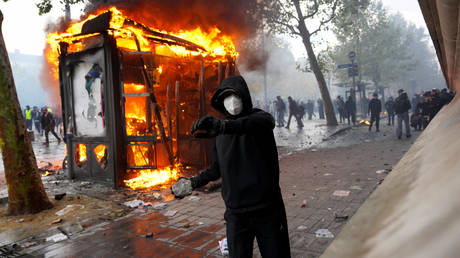
French politics is playing with fire again. When streets fill with burning bins, smashed shop windows, and clashes with riot police, someone always has to pick up the tab. Usually, it's the taxpayer. Paris has decided it's time to change that rulebook.
The French Senate just backed a sweeping new legislative package aimed squarely at the pocketbooks of modern protesters and vandals. If you run with a destructive crowd, you could soon find yourself on the hook for up to €10,000 in damages—even if you didn't throw the rock yourself. It’s a hardline bet by the government to stanch mounting public disorder, but it's already triggering fierce backlash from civil liberties groups and left-wing politicians who see an authoritarian trap.
The Mechanics of Joint Financial Liability
Let's look at how the proposal actually works. Backed by a 229 to 105 vote in the Senate, the bill establishes a principle of collective civil liability. Interior Minister Laurent Nunez pushed the measure forward as a way to relieve everyday taxpayers from funding the repair bills left behind by rampaging crowds.
The law targets people who knowingly join a group formed with the explicit intent to commit violence or vandalism. It also captures those who refuse to disperse after police issue formal warnings. If a court establishes fault, individuals can be held liable for property destruction committed by others within that same group.
To ensure the money actually gets collected, the legislation goes a step further. Courts could authorize direct deductions from state social benefits. This includes family allowances, housing assistance, and minimum-income payouts.
Proponents argue this creates real accountability. Opponents point out that garnishing welfare benefits hits struggling families hardest, turning a punitive measure for civil unrest into a wider social safety net hazard.
Why This Bill is Hitting Now
France isn't a stranger to protests. Striking, marching, and blockading are practically national pastimes. But the threshold for acceptable public anger has shifted dramatically over the past year.
What started as sporadic outbursts following soccer celebrations over the summer morphed into massive nationwide unrest. Spiraling living costs and declining public services have turned ordinary demonstrations into volatile flashpoints. Cities like Limoges saw historic landmarks like their 19th-century city hall torched, while commercial hubs in Paris faced widespread looting.
Thousands of arrests and hundreds of injuries later, the political landscape ahead of the 2027 presidential election has hardened. Conservative and centrist lawmakers want to look decisive. Marine Le Pen's National Rally has championed the "vandals pay" concept for months, cornering President Emmanuel Macron's administration into taking an aggressive stance on law and order.
The Civil Liberties Clash
Whenever a government tries to clamp down on mass gatherings, human rights watchdogs sound the alarm. Nathalie Godard, director of the action department at Amnesty International France, didn't mince words. She warned that the legislation threatens to deter ordinary citizens from exercising their legitimate right to peaceful assembly.
The core fear is mission creep. While architects of the bill insist that peaceful demonstrators and innocent bystanders are legally exempt—and carve out specific protections for journalists and medical volunteers—critics remain skeptical. Proving intent in the chaotic fog of a street clash is notoriously difficult. If police kettle a massive crowd, every person trapped inside risks being lumped into the same legal bucket.
Left-wing politicians like Jean-Luc Melenchon have walked a tightrope, condemning looting while backing the underlying grievances of the protesters, accusing heavy-handed police tactics of pouring fuel on the fire.
The Battleground Ahead
The Senate was the easy part. Because the upper house leans conservative, the bill passed smoothly. The real political warfare happens next in the fractured National Assembly.
Centrist and right-wing deputies hold enough combined seats to push the measure through, but internal divisions remain deep. With the 2027 presidential race looming large, every debate over public safety doubles as an audition for the top job. Voters are exhausted by the violence, but they're equally wary of losing their constitutional right to dissent.
If this law survives the legislative gauntlet, France will set a radical precedent for European policing. Expect other capitals watching civil unrest flare up to take notes on whether hitting rioters in the wallet can actually restore order to the streets.