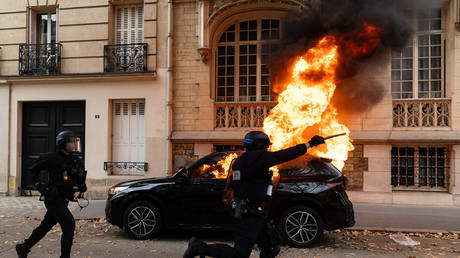
Tear gas fills the air around Place Vauban while fireworks streak across the Paris sky, marking yet another escalation in a movement that shows zero signs of cooling down. French high school and university students have hit the streets for their fifth consecutive round of nationwide demonstrations, demanding a complete overhaul of deteriorating learning conditions. What started as localized campus grievances has quickly snowballed into a major domestic crisis.
Turnout numbers tell a conflicting story, as they always do. The Interior Ministry reports that around 161,500 people joined demonstrations nationwide, including 41,500 in the capital alone. Organizers paint a much larger picture, putting total participation closer to 480,000. No matter which figures you trust, the scale of public anger is impossible to ignore. Over 6,800 individuals have been detained since these rallies kicked off last month when students decided to join forces with striking public sector workers. Don't forget to check out our previous post on this related article.
The atmosphere in central Paris turned hostile on Tuesday afternoon. At the historic square near Les Invalides, protesters hurled cobblestones and launched mortar-style fireworks directly at law enforcement lines. Officers responded rapidly with volleys of tear gas and baton charges to clear the streets. Burned-out cars and charred debris lined parts of the route, reflecting the intense friction between demonstrators and security forces.
Government officials aren't backing down from their stance either. Interior Minister Laurent Nunez pointed fingers straight at radical left-wing political elements, accusing groups like Le Poing Leve and Revolution Permanente of hijacking peaceful student grievances to stoke chaos in the suburbs. Authorities also claim that La France Insoumise, a prominent left-wing parliamentary party, is fueling the flames of unrest. To read more about the background here, Wikipedia offers an excellent breakdown.
Naturally, those accusations have met fierce pushback. Left-wing figures and student groups completely rejected the government's narrative, firing back that the administration is simply trying to deflect accountability. They argue that the real crisis stems from chronic underfunding, crumbling facilities, and overcrowded lecture halls. Activists label the heavy police presence a brutal crackdown designed to silence legitimate public dissent.
The core demands driving these protests go far beyond temporary political posturing. Students are dealing with leaking roofs, freezing lecture halls in winter, and classrooms packed so tightly that sitting exams becomes a logistical nightmare. When you combine these daily frustrations with broader economic anxieties, boiling points are inevitable.
If you are following the situation on the ground, expect further disruptions. Labor unions and student associations are already discussing plans for subsequent mobilization waves later this month. Keep a close eye on public transport schedules and central city routes if you need to travel through major French hubs, because disruptions will continue until concrete policy changes materialize.