The traditional playbook for southern Chinese capital expanding into Southeast Asia used to be predictable. You set up a holding company in Singapore, built factories in Vietnam or Malaysia, and ignored the rest of the region until your supply chains required a backup plan.
That old strategy is breaking down. A massive shift in regional logistics, updated property laws, and a biting manufacturing crunch in mainland China are forcing companies across the Guangdong-Hong Kong-Macao Greater Bay Area (GBA) to rethink their geographic footprint.
The biggest beneficiary of this shift isn't the usual suspect. Manila is aggressively making its move.
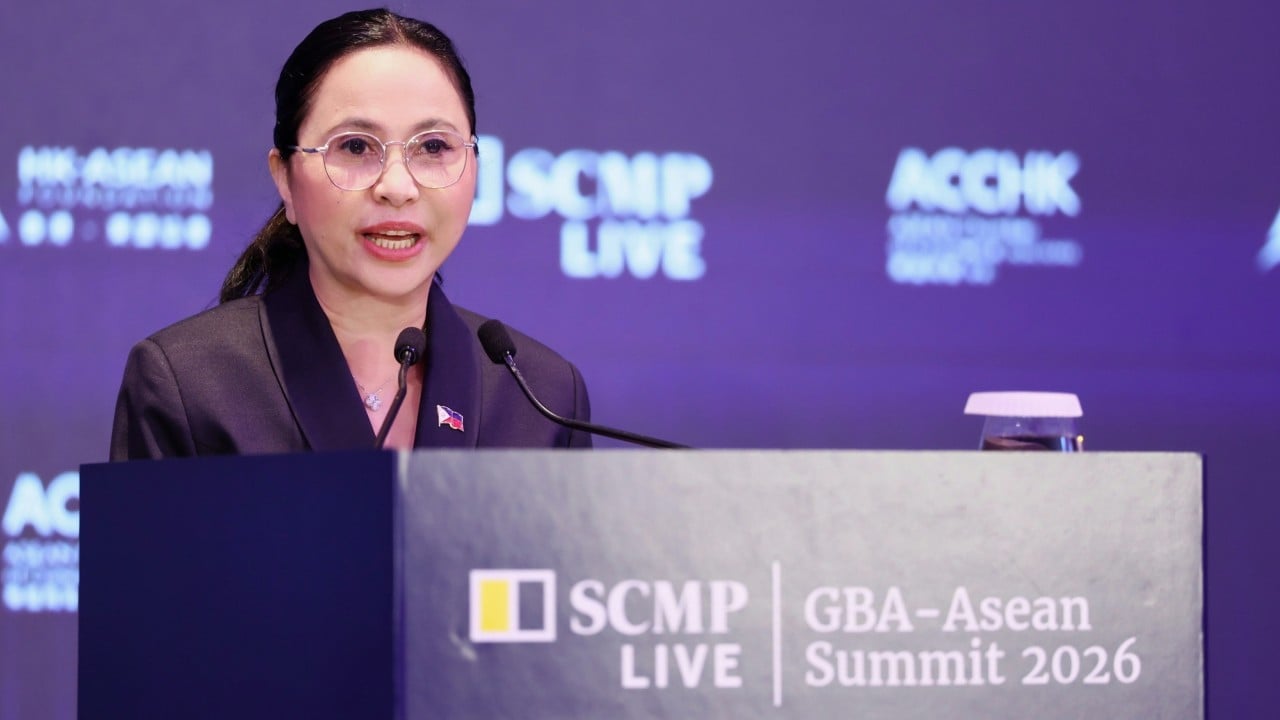
At the GBA-ASEAN Summit in Hong Kong, Philippine Department of Trade and Industry (DTI) Secretary Cristina Roque laid out a direct pitch to the region's top industrialists and financiers. Backed by a historic surge in Philippine exports—which jumped 15.4% to hit an all-time high—Manila isn't just asking for passive investment. They're positioning the archipelago as the primary co-engineering and manufacturing bridge between southern China's tech clusters and the broader ASEAN market.
If you're managing capital or supply chains in Shenzhen, Guangzhou, or Hong Kong, the ground beneath you just changed. Here's what's actually driving this corridor, where the smart money is moving, and the structural traps you need to look out for.
The 99-Year Land Lease Fix
For decades, foreign investors skipped the Philippines for one glaring reason: restrictive property laws. The fear of pouring millions into factory infrastructure on land you could only lease for a short, unstable window kept multi-billion dollar manufacturing plants rooted in Thailand or Vietnam instead.
Manila quietly fixed this. Under Republic Act 12252, foreign investors can now secure private land leases for up to 99 years.
This isn't a minor regulatory tweak. It completely changes the risk assessment for a capital-intensive tech facility or a sprawling semiconductor packaging plant. A 99-year lease provides the long-term operational stability that corporate boards demand before moving supply lines out of the Pearl River Delta.
Combine this with the fact that the Marcos administration has built out a massive trade network—now counting 18 Free Trade Agreements either active or in late-stage negotiation—and the legal friction that used to define Philippine business practically vanishes.
Where the GBA Capital is Actually Landing
Southern Chinese firms aren't just looking for cheap labor anymore. The GBA is an ecosystem built on advanced electronics, electric vehicles, and high-end automated manufacturing. They need an offshore base that can handle technical complexity, not just low-margin assembly.
Three specific sectors are soaking up the majority of this incoming capital.
1. Electronics and Semiconductor Co-Engineering
The Philippines has a massive, highly specialized electronics sector that represents the backbone of its export economy. GBA tech firms are increasingly pairing their internal R&D and capital with the digital-native, English-proficient workforce in places like Clark and Cavite. Instead of just outsourcing simple assembly, companies are building co-engineering setups where product iterations happen fluidly across the South China Sea.
2. The Luzon Economic Corridor Play
If you want to know where the physical infrastructure is going, trace the Luzon Economic Corridor. Connecting Subic Bay, Clark, Manila, and Batangas, this corridor accounts for roughly 50% of the country's GDP. Massive logistics projects are underway here, including the 132-mile Subic-Clark-Manila-Batangas Railway funded with international backing. This infrastructure lets GBA firms drop components into Subic Bay, process them in a Clark freeport, and ship them out of Batangas without getting swallowed by Metro Manila's legendary traffic congestion.
3. Renewable Energy Integration
The mainland Chinese green tech pipeline is looking for places to deploy capital, and the Philippines has some of the most aggressive green energy mandates in Southeast Asia. From solar arrays to energy storage systems, GBA firms are anchoring themselves in local utility projects. They are providing the hardware and grid integration expertise while taking advantage of the country's deregulated energy market structures.
The Trade-Offs Nobody Tells You About
Let's be completely honest. The pitch sounds flawless on a summit stage in Hong Kong, but executing on the ground in the Philippines presents brutal challenges if you rely on old mainland blueprints.
The biggest bottleneck isn't red tape anymore; it's power infrastructure.
The Philippine energy grid is historically expensive and prone to supply volatility. While international private equity firms and local conglomerates are rushing to install massive modular power backup systems—like the recent 150MW facility in Rizal designed to stabilize grid reserves—you still have to factor high power costs into your operational margins. If your factory requires uninterrupted, cheap heavy industrial power, a blind move to an unserviced province will hurt your bottom line.
There is also a stark talent mismatch that catches companies off guard. The country boasts an exceptionally skilled, highly adaptable, and English-fluent technical workforce. But competition for top-tier engineering talent in the economic zones is fierce. You aren't just competing with local firms; you're competing with American and Japanese multinationals that have spent thirty years embedding themselves in the local ecosystem.
How to Move Forward
If you're looking to position your business along this corridor, stop thinking about generic joint ventures in Manila. The real value is found by moving deliberately through targeted structural channels.
First, plug directly into the local investment infrastructure. Don't try to navigate the bureaucracy from the outside. Use the DTI's Foreign Trade Service Corps and the dedicated Philippine Trade and Investment Centers (PTIC) to map out your tax incentives before you sign anything.
Second, target the designated economic zones. If your logistics rely on rapid turnarounds, focus exclusively on the infrastructure nodes along the Luzon Economic Corridor. Look at freeports in Clark or Subic that offer streamlined customs procedures and direct proximity to deep-water ports.
Finally, secure your operational inputs early. Factor localized power solutions and dedicated engineering training pipelines directly into your initial capital expenditure budgets. The policy environment is friendlier than it has ever been, but execution still belongs to the firms that plan for local structural realities.