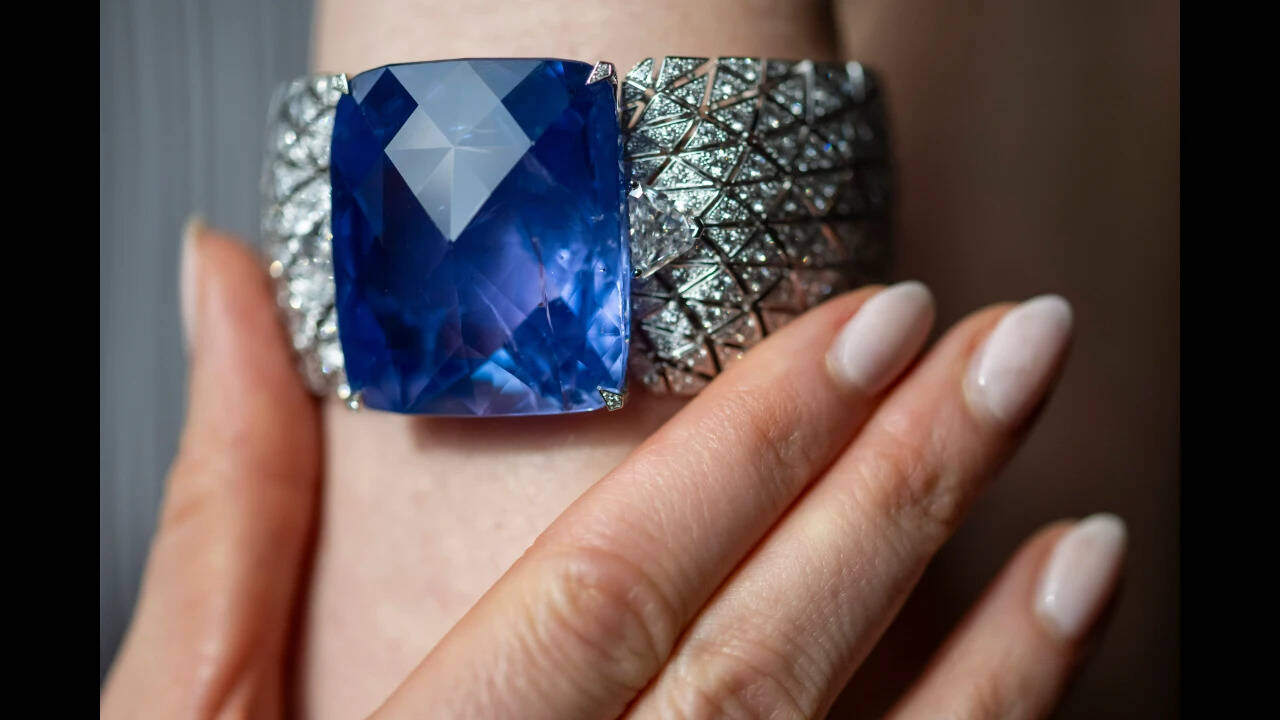
When a massive 197.80-carat sapphire once pinned to the skirt of Russia's Dowager Empress hit the auction block in Geneva, experts expected a solid bidding war. They didn't expect the gem to pull in nearly five million dollars. Sotheby's watchers looked on as the historic piece shattered its highest presale valuation, proving once again that royal provenance carries massive weight in the high-end jewelry market.
If you've followed major estate sales lately, you know that raw carat weight alone rarely explains these astronomical prices. Buyers aren't just purchasing stones; they are buying centuries of dramatic history, secret exiles, and royal glamour.
The Journey from the Winter Palace to Modern Geneva
The story of the Romanov Sapphire reads like an adventure novel. Long before it landed in a modern Cartier bracelet design
Why That Record Shattering Russian Imperial Sapphire Is Worth Every Penny
celebs
History has a funny way of showing up in auction rooms with a massive price tag. When a glittering 197.80-carat sapphire once owned by Russia's last imperial family crossed the auction block in Geneva, it didn't just sell. It obliterated expectations.
Going for a cool 4.9 million dollars against a conservative presale estimate of two million, this gemstone reminds us why royal provenance still drives collectors wild. Most people look at a piece like this and just see shiny blue rocks wrapped in gold. They miss the chaotic survival story, the brutal end of an empire, and the sheer rarity of stones that survived the Russian Revolution. Let's talk about what makes this specific 197-carat sapphire a masterclass in historical market value.
The 1903 Winter Ball and the Ghost of an Empire
Picture Saint Petersburg in February 1903. The Winter Palace is freezing outside, but inside, the Russian elite are drowning themselves in velvet, diamonds, and centuries-old heirloom jewels. Dowager Empress Maria Feodorovna wore this exact sapphire to the legendary costume ball, an opulent night captured in photographs that feel haunting today.
Just over a decade later, the Romanov dynasty collapsed in blood and fire. How this colossal gem slipped through the chaos of 1917 remains part of its magnetic appeal. Pieces of this caliber don't stay in state treasuries when a country falls. They travel through diplomatic pouches, secret sales, and tense European exiles.
Most jewelry buyers today spend millions on newly mined stones stamped with clean ethical certificates from modern labs in Switzerland or Thailand. But you aren't buying the carbon lattice when you bid on a Romanov piece. You're buying survival. You're buying the literal baggage of a collapsing autocracy that somehow crossed borders when millions of ordinary citizens couldn't.
Why Auctions Keep Smashing Estimates
Auction houses love lowballing estimates. Christie's or Sotheby's will slap a modest two-million-dollar tag on an object like this partly out of caution, but mostly to trigger a bidding war. When you deal with high-net-worth collectors from Geneva, New York, or Singapore, logic goes out the window.
Rarity dictates price, but provenance dictates obsession. A 190-plus-carat unheated natural sapphire of this color saturation is already scarce. Attach it to Dowager Empress Maria Feodorovna, the mother of the executed Tsar Nicholas II, and the asset class shifts from luxury commodity to museum-grade artifact.
Bidders aren't wearing these to charity galas. They're locking them in Swiss vaults or lending them to institutions. The $4.9 million price tag is basically pocket change for ultra-wealthy collectors who view historical jewelry as a safer bet than contemporary art or volatile tech stocks.
The Technical Reality Behind the Blue
Gemologists get tired of people assuming big stones are automatically high quality. Size usually destroys clarity in corundum. Large sapphires routinely look murky, heavily included, or cooked with artificial heat treatments to improve color.
This specific cushion-cut monster defies standard geological odds. Retaining a clean appearance across nearly 200 carats means the original rough crystal unearthed deep in the earth must have been massive—easily double that weight before the cutter touched it.
When you look at the physical metrics, the valuation starts making brutal economic sense:
- Weight sits at an astonishing 197.80 carats, putting it in a tier occupied by very few surviving royal gems.
- Natural, untreated color saturation avoids the artificial enhancements common in commercial jewelry stores.
- Historical association with the Romanov court provides built-in authentication that money alone cannot manufacture.
Spotting the Real Value in Antique Jewels
If you find yourself browsing auction catalogs or estate sales, stop looking at the sparkle. Look at the paper trail. The market is flooded with synthetic stones and sketchy provenance claims cooked up by clever dealers trying to squeeze extra zeros out of gullible buyers.
Real investment-grade antique jewelry requires independent laboratory certs from institutions like SSEF or Gübelin. If a seller tells you a ring belonged to a grand duchess but lacks archival proof, walk away. The paper trail is worth half the price.
Stop treating historical jewelry like fashion accessories. Treat them like hard assets with a heartbeat. The market for pieces tied to tragic or magnificent historical eras will outlast any modern designer trend.
Do your homework, verify the archival records, and remember that when royal history hits the auction block, the final price is never actually about the stones. It is about what people will pay to own a tiny, glittering piece of the past.