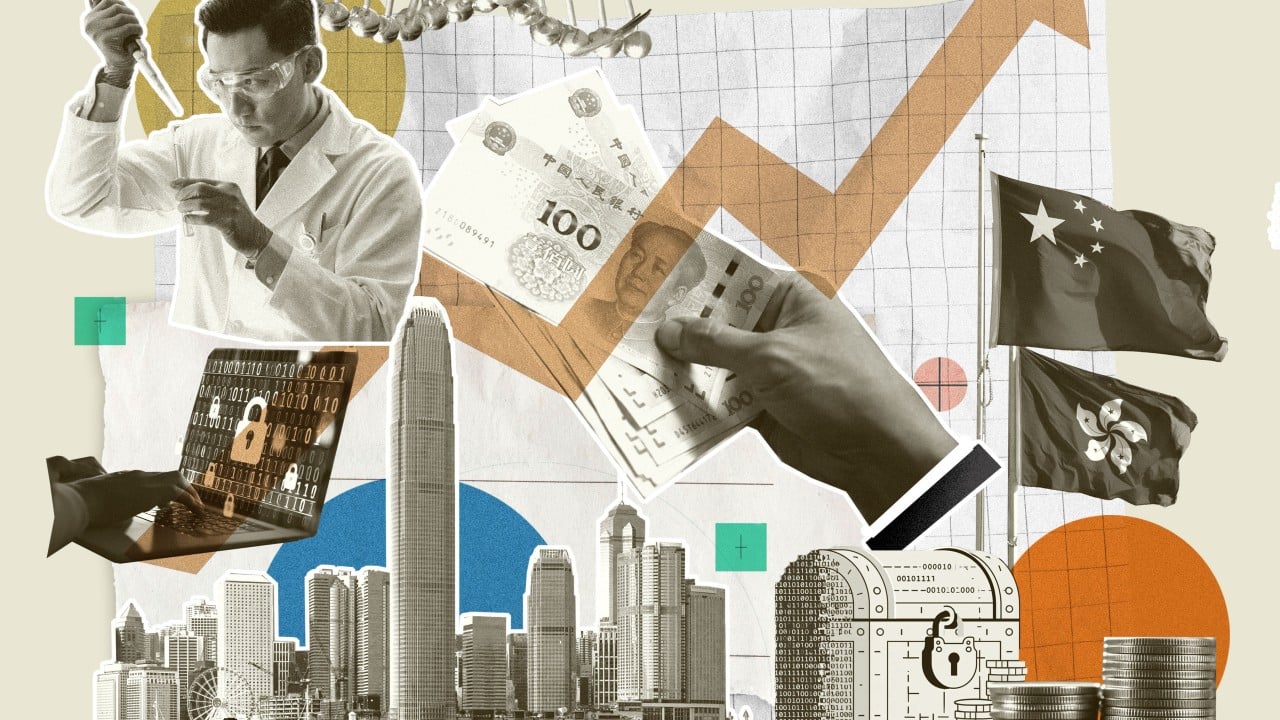
Hong Kong's long romance with pure laissez-faire capitalism is officially over. When Chief Executive John Lee stepped up to unveil the city's first-ever five-year development plan, he didn't just borrow a page from mainland China's playbook. He adopted the whole binding script.
For decades, the financial hub prided itself on hands-off governance and minimal state interference. Now, aligned with the nation's 2026–30 blueprint, the administration is steering a different course. Beneath the rhetoric of maintaining capitalist market rules lies a deeper, rarely spoken reality. Beijing has a massive trust issue with Hong Kong. To fix it, the city had to stop acting like an independent economic island and start proving its absolute loyalty through structured, state-guided compliance.
The Anatomy of a Trust Deficit
Why does Beijing care so much about planning a city that used to run fine on its own? The answer goes back to the political unrest of 2019. Following those massive protests, leadership change brought former security chief John Lee to power with a clear mandate. He delivered a homegrown national security law in 2024 to satisfy immediate political safety demands. But security is just the baseline.
Trust isn't built on police powers alone. It requires economic integration, synchronized goals, and a shared ideological rhythm. For years, mainland officials viewed Hong Kong's unbridled openness as both a strategic asset and a dangerous vulnerability. Money moved too freely. Ideological alignment was patchy. Western influence ran deep. By locking Hong Kong into a rigid five-year framework, Beijing gets something invaluable: predictability.
Officials insist this isn't a command economy. The administration claims property rights, the rule of law, and free capital flows remain untouched. Yet, market watchers know better. When a city shifts its industrial policy to heavily target specific metrics—like doubling domestic research and development spending to three percent of GDP—it's no longer just regulating. It's steering.
What the Financial Hub Must Deliver Now
If Hong Kong wants to earn full structural confidence from the central government, it has to prove it can do more than trade stocks and handle wealth management. The new development framework explicitly aims to broaden the city's identity beyond a pure financial center.
The strategy relies heavily on the Northern Metropolis, a massive project intended to turn thirty thousand hectares of land near the Shenzhen border into an innovation and technology powerhouse. It's an ambitious bet. The plan promises to build three distinct university towns focusing on fields like artificial intelligence and robotics, aiming to house millions and create hundreds of thousands of jobs.
There's just one catch. Hong Kong's administrative machinery was built for regulation, not heavy strategic steering. Critics point out that the city lacks the deep bureaucratic planning experience, data infrastructure, and specialized talent pools that mainland cities have spent decades refining. Turning rural borderlands into a high-tech ecosystem takes more than good intentions and government decrees. It takes institutional muscle that the city is still scrambling to build.
Walking the Tightrope Between Two Worlds
Can Hong Kong remain an international financial gateway while executing state-directed targets? That is the billion-dollar question keeping foreign chambers of commerce awake at night.
The plan doubles down on traditional strengths while leaning aggressively into mainland integration. It seeks to reinforce the city's status as the world's largest offshore renminbi hub, even exploring the use of Chinese currency for government expenditures. At the same time, it tries to convince global investors that the traditional business environment is safe from heavy-handed meddling.
Walking that tightrope gets harder every day. If the city hits its innovation targets and successfully merges its academic sectors with Shenzhen's manufacturing might, Beijing's trust deficit will shrink. If execution falters, the pressure from the north will only tighten.
Watch the execution of the Northern Metropolis over the next twenty-four months. That will tell you whether this grand planning experiment saves the city or suffocates it.