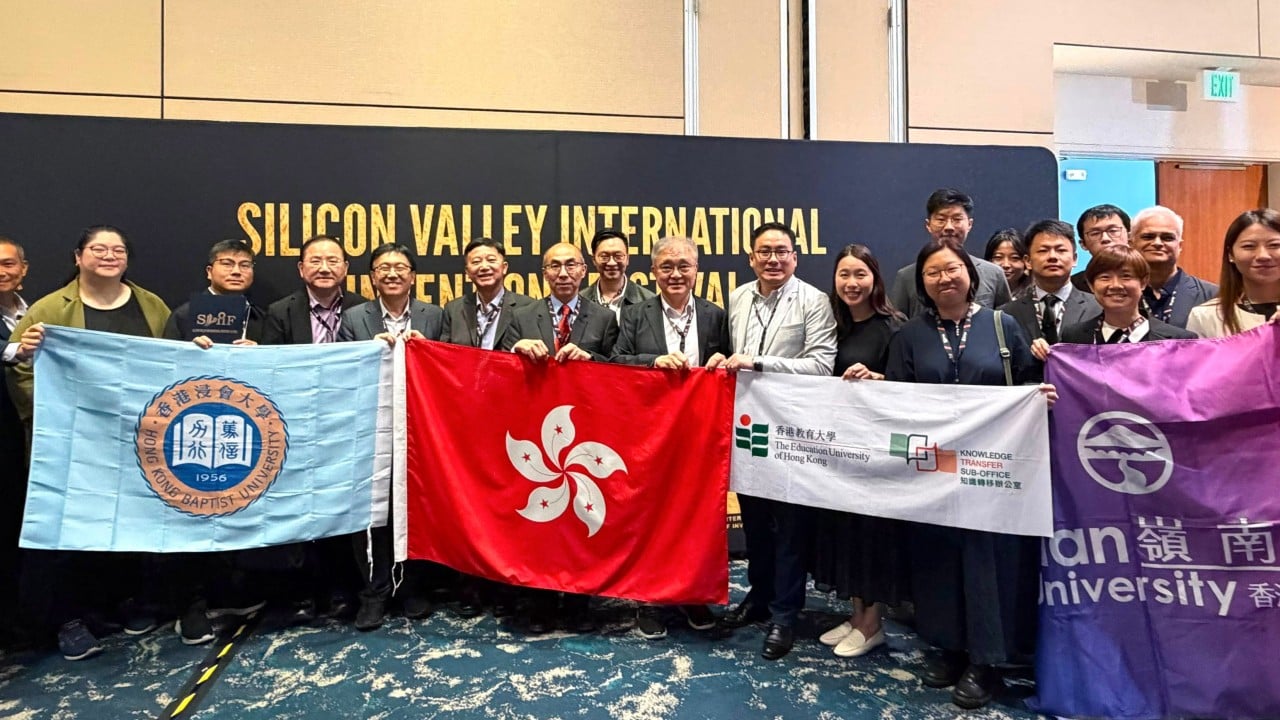
When local research teams clean up at a global tech showcase, people usually shrug it off as polite international diplomacy. But what just happened at the Silicon Valley International Invention Festival breaks that pattern completely. Hong Kong's delegation didn't just show up; they walked away with a grand prix, dozens of medals, and hard proof that the city's R&D ecosystem is punching well above its weight.
If you think Hong Kong is only about finance and real estate, you're missing a massive tectonic shift happening in local university labs and startup hubs.
The Numbers Behind the Silicon Valley Sweep
Local universities and research institutions secured a massive haul at the festival, bringing home 22 gold medals and 13 silver medals alongside top-tier special honors. Leading the charge was a solar-powered fertiliser system that topped the awards, proving that green tech and practical agriculture are taking center stage.
Meanwhile, institutions like Lingnan University dominated the higher education categories. Their teams bagged 16 total awards, including eight gold medals and six silver medals. Projects like "GaitGPT"—an evidence-grounded AI system for clinical gait translation led by Professor S. Joe Qin and Professor Yu Lisha—picked up the prestigious IFIA Best Invention Award.
Hong Kong Baptist University also pulled its weight with nine awards, featuring innovations like "AuraMist," a voice-controlled water mist bathing system that slashes water consumption for wheelchair users by over 70%, and a portable fruit quality analyzer built with advanced optical sensors.
Why This Win Changes the Local Startup Equation
Winning medals in California is nice for a press release, but what does it mean for actual product commercialization? That is where most academic inventions usually stall out.
Labs are great at building prototypes, but terrible at surviving market realities. What makes this year's batch different is the heavy focus on immediate, deployable utility. Take the health-tech entries: tools targeting colorectal cancer microbial therapy, fall-prevention platforms for elderly mobility, and rapid diagnostic tech aren't theoretical exercises. They solve painful, expensive problems that healthcare systems face globally.
When local inventors test their ideas against global competition in America's backyard, they are forced to answer hard questions about scalability, cost, and user friction. Secretary for Innovation, Technology and Industry Sun Dong noted that these achievements highlight the city's deep talent pool and R&D grit. But the real test begins now: turning these festival trophies into commercial companies that can survive without government grants.
What Most Observers Miss About Hong Kong R&D
People often assume that world-class hardware or software needs a massive Silicon Valley garage culture to thrive. Hong Kong proves otherwise. Space is tight, funding is notoriously conservative, and the local market is small.
Those constraints actually force a unique kind of discipline. Because local teams can't rely on a massive domestic consumer base to test ideas, they design solutions that are either hyper-specialized for dense urban environments or easily adaptable for international export from day one.
We are seeing a maturation of the "Liberal Arts plus Tech" and "AI plus" initiatives championed across local campuses. When data scientists collaborate directly with visual artists and medical researchers, you stop getting sterile, over-engineered code and start getting tools that actual humans can use without a manual.
What Needs to Happen Next
If Hong Kong wants to capitalize on this Silicon Valley momentum, a few roadblocks need immediate attention:
- Venture Capital Risk Tolerance: Local investors still lean heavily toward safe, traditional sectors. Seed rounds for hard tech and biotech need aggressive private backing, not just public funding.
- Cross-Border Talent Flow: Bridging the manufacturing muscle of the Greater Bay Area with Hong Kong's fundamental research is the only way to scale hardware manufacturing affordably.
- Commercial Mentorship: Bringing veteran operators into university labs early on to kill dead-end projects before they waste precious months in development.
Stop treating local tech wins as isolated anomalies. The talent and the intellectual property are already here. The only question left is whether the market infrastructure can move fast enough to back them.