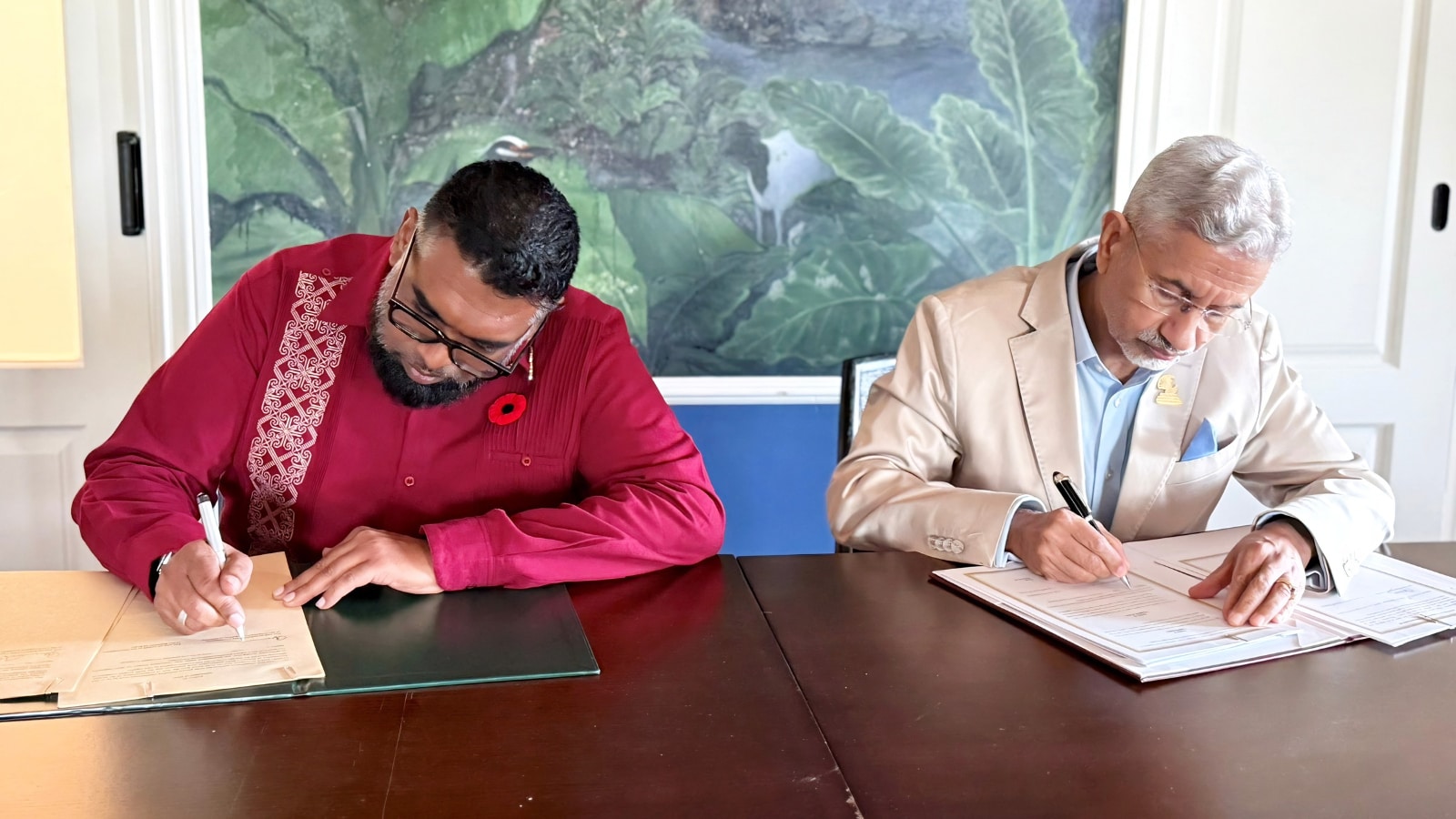
Geopolitics rarely moves in a straight line, but every once in a while, a financial commitment cuts right through the diplomatic noise. India has officially extended a massive $500 million line of credit to Guyana, targeting three critical pillars: road networks, healthcare, and defence projects.
If you've been watching South American trade corridors or tracking New Delhi’s expanding diplomatic footprint, this announcement shouldn't come as a surprise. It’s the direct continuation of a high-stakes partnership that accelerated heavily following Prime Minister Narendra Modi's historic visit to Guyana.
External Affairs Minister S. Jaishankar met with Guyanese President Mohamed Irfaan Ali on the sidelines of the Commonwealth Heads of Government Meeting in Antigua and Barbuda to lock down the details. But what does this financial arrangement actually mean on the ground, and why does New Delhi care so much about a small South American nation? Let's break it down.
Behind the Numbers of the India Guyana Credit Line
Money talks, but lines of credit require careful unpacking. Unlike outright grants, a line of credit functions as a soft loan extended by an exporting country's financial institution to finance specific projects. It's basically a financial toolkit that allows Guyana to build what it desperately needs while tying procurement back to Indian capabilities, contractors, and goods.
The $500 million backing isn't being thrown into a general fund. It has strict destinations:
- Roads and Infrastructure: Guyana is experiencing an economic boom fueled by recent offshore energy discoveries, but its physical infrastructure struggles to keep pace. Better roads mean faster supply chains and connected communities.
- Healthcare Upgrades: Hospitals require modern equipment, reliable supply chains, and advanced medical training—areas where Indian pharmaceutical and medical manufacturing sectors hold a distinct edge.
- Defence Cooperation: Strategic security in the Caribbean and northern South America is shifting. Strengthening defence ties allows both nations to secure maritime and land borders against emerging threats.
Beyond the headline half-billion-dollar figure, Jaishankar and President Ali oversaw the signing of additional bilateral agreements. These include specialized frameworks for the supply and installation of manufacturing projects aimed at Micro and Small Enterprises (MSEs), alongside grant assistance dedicated to Quick Impact Projects (QIPs).
The Digital Public Infrastructure Playbook
India isn't just exporting concrete and steel; it's exporting software models that have transformed its own domestic economy.
If you look closely at how New Delhi builds international alliances today, digital public infrastructure is always part of the conversation. During previous diplomatic exchanges, discussions centered heavily on implementing a UPI-like instant digital payment system in Guyana.
Exporting fintech frameworks changes the game for developing economies. It brings unbanked populations into the formal economy, curbs corruption, and creates long-term technological dependencies that bind partner nations closer to Indian tech standards.
What This Means for Global Trade and Energy
Why is Guyana suddenly on every major nation's radar? Simple: oil. Guyana boasts one of the fastest-growing economies on Earth thanks to massive offshore petroleum discoveries led by companies like ExxonMobil.
For energy-hungry economies like India, securing reliable diplomatic and economic channels in Georgetown is a smart, calculated move. India imports massive amounts of crude oil, and diversifying supply sources while embedding Indian industry into Guyana's explosive growth phase creates a win-win scenario.
Critics might argue that India is spreading its development assistance too thin across the Global South. But that misses the point entirely. These strategic investments build long-term goodwill, counter rival influence in Latin America and the Caribbean, and open up lucrative international markets for Indian engineering and manufacturing firms.
Keep an eye on how quickly these road and hospital projects break ground over the next year. The financial commitments are signed, the political will is locked in, and the execution phase has officially begun.