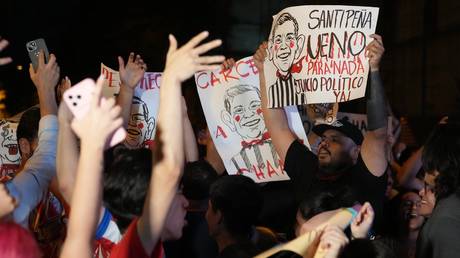
Tear gas and rubber bullets filled the air outside government buildings in Asunción. Three million people suddenly realized their digital bank accounts were frozen. Panic turned into rage almost overnight.
When Ueno Bank collapsed under the weight of financial irregularities and crashing capital ratios, it didn't just rattle Paraguay's economy. It ignited violent street clashes and triggered an immediate push to impeach President Santiago Peña. If you think a banking crisis is just numbers on a screen, what's happening right now in Paraguay proves how fast financial failure turns into literal fire on the streets.
How Three Million Customers Got Locked Out
Ueno Bank wasn't a minor player. It operated as a massive digital lender holding accounts for roughly three million people—about sixty percent of Paraguay's adult population. When regulators swooped in to seize control after the bank's solvency ratio plummeted below half the legal minimum, accounts slammed shut.
People couldn't buy groceries. Families couldn't pay rent. Pension funds and public health money totaling hundreds of millions of dollars sat trapped behind digital walls.
Confidence vanished in hours. Depositors rushed to physical branches that were already shuttered, and frustration quickly spilled over into downtown Asunción. Protesters flooded the streets demanding answers, leading to volatile confrontations with riot police firing tear gas and water cannons.
The Political Firestorm Hits President Peña
A financial collapse of this magnitude was never going to stay confined to the banking sector. Lawmakers in the lower house wasted zero time submitting articles of impeachment against President Santiago Peña.
The political anger stems from tangled ties. Peña previously held shares in the business group controlling Ueno before selling them in 2025. Critics point out deep conflicts of interest, accusing the administration of regulatory blind spots or outright cover-ups. Meanwhile, the head of the Central Bank, Carlos Carvallo, resigned under intense pressure after public scrutiny highlighted his past executive role at the bank.
Prosecutors didn't stop at political casualties. Arrest warrants went out for top bank executives, including president Juan Manuel Gustale and chief executive Federico Miguel Vázquez Villasanti, on suspicions of breach of trust and financial mismanagement.
What This Means for Financial Oversight Moving Forward
Governments love to tout the convenience of digital-first banking and rapid financial inclusion. Ueno pushed hard into that exact narrative, marketing itself as a modern financial solution for everyday citizens. But speed without rock-solid regulatory safeguards creates a ticking time bomb.
When a digital lender collapses, depositors face a terrifying reality. There are no teller windows to bang on, no physical vaults to secure trust, and no immediate cash to withdraw. The reliance on app-based banking means a backend capital failure instantly locks a citizen out of their entire livelihood.
President Peña claims the broader financial system remains stable and promises expedited payout mechanisms to guarantee returned funds. Yet, public trust takes years to build and seconds to shatter.
Paraguay is paying a heavy price for regulatory failure. Citizens want accountability, fast restitution, and a complete overhaul of how financial institutions are monitored before the next digital platform implodes.