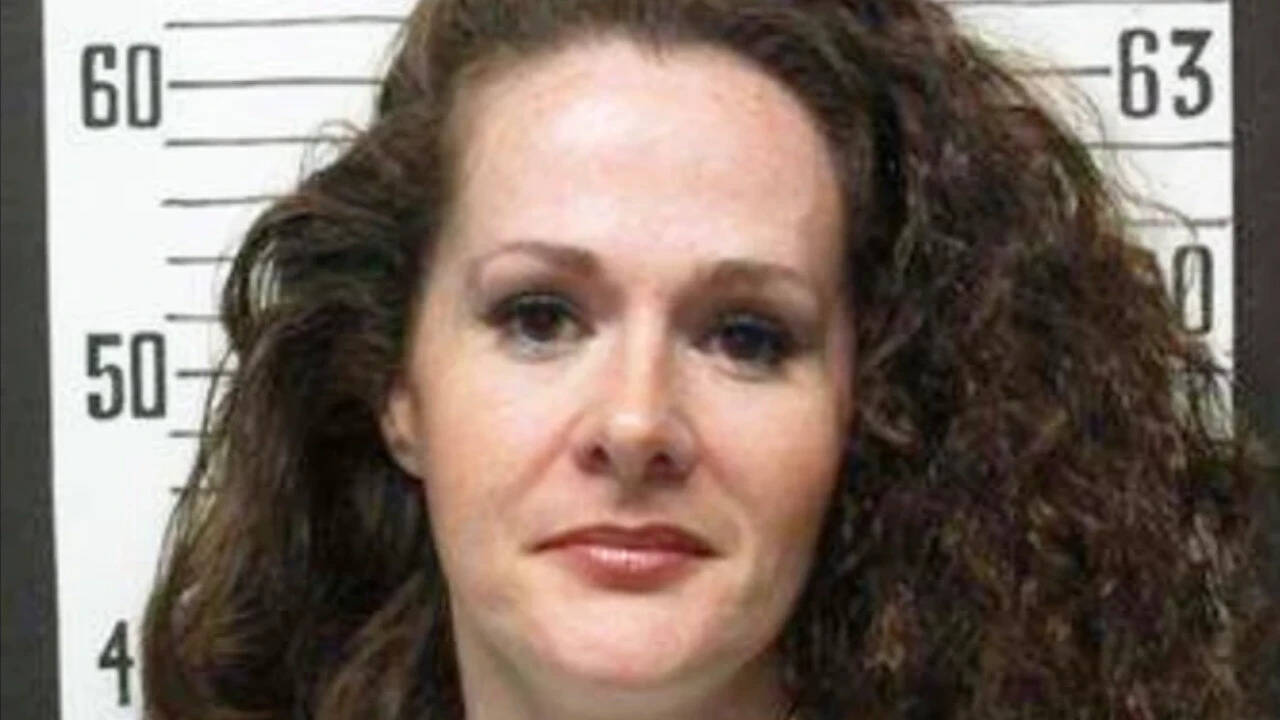
You wake up expecting death, only to open your eyes in a sterile hospital room, confused and burning with agony. That is the surreal, horrific reality Christa Pike faced after surviving two doses of pentobarbital during a botched lethal injection in Tennessee.
Thirty days after state executioners failed to take her life, Pike broke her silence. Through a statement dictated to her lawyers, she laid bare an existence defined by constant physical torment and deep psychological scars.
"There hasn't been a moment since that night when I haven't been in pain," Pike said. "My body hurts. My arms hurt. My hands hurt. My throat hurts. I still struggle to speak. And the pain isn't just physical. There is pain in my mind and in my soul."
The Anatomy of a Botched Execution
The execution attempt took place on September 30, casting a harsh national spotlight back onto capital punishment protocols in the United States. Pike, the only woman on Tennessee's death row, was strapped to a gurney as state officials administered two separate doses of the sedative pentobarbital.
Things went disastrously wrong. Instead of a swift, quiet passing, the procedure devolved into a medical emergency. Emergency 911 calls later revealed chaotic scenes outside the prison gates as confusion reigned over whether first responders would be allowed access. Pike was rushed to a hospital, placed on a ventilator, and expected by many to die.
Instead, she fought through. After spending ten agonizing days hospitalized—with severe skin blistering, swelling, and burns marring her arms from the compromised IV lines—she regained consciousness. By October 10, she was discharged and dragged right back to the maximum-security women's facility.
Life Back in the Medical Ward
Survival hasn't brought freedom or peace. It has brought a fresh layer of punishment.
Upon returning to the Deborah K. Johnson Rehabilitation Center, prison officials placed Pike in isolation within the medical ward. For anyone who knows her history, this isolation stings with cruel irony. Pike spent nearly three decades isolated on death row, enduring conditions defined by sensory deprivation and constant psychological wear-and-tear.
"That isolation brings its own kind of pain," Pike noted in her statement. "I spent 28 years in solitary confinement and much of what I am experiencing today is a repeat of that condition."
Her legal team points out that her arms remain severely discolored and damaged from the botched procedure. Meanwhile, she grapples with the existential weight of her survival.
"I don't know why I survived that night," she admitted. "I don't know what comes next. Some days, finding hope is harder than others."
The Crime and the Ongoing Debate
To understand the immense gravity surrounding Christa Pike, you have to look back at the horrific crime that landed her behind bars in the mid-1990s. In 1995, when she was just 18 years old, Pike and two co-conspirators brutally murdered 19-year-old classmate Colleen Slemmer in Knoxville, Tennessee. The crime involved extreme violence, resulting in a 1996 first-degree murder conviction that made Pike the youngest woman sentenced to death in modern US history.
For decades, the case remained a dark chapter tucked away in legal archives. Now, her survival has blown the doors off the national conversation regarding lethal injection mechanics, state competency, and the Eighth Amendment prohibition against cruel and unusual punishment.
Governor Bill Lee has faced intense pressure, pausing other scheduled executions while independent investigations unfold. Defense attorneys are pushing hard for a sentence commutation to life imprisonment, arguing that subjecting someone to a second execution attempt after a failed first try crosses a constitutional line.
Meanwhile, victims' families are left reliving an unhealable trauma. Colleen Slemmer's mother, May Martinez, has insisted publicly that Pike should face her sentence, maintaining that survival through a state error shouldn't wipe away a historical debt.
What Comes Next
Christa Pike is alive, but she occupies a legal and physical purgatory. The state of Tennessee retains a legal avenue to try again once her physical condition stabilizes and legal challenges clear the courts.
Until then, she remains locked away, nursing burned veins, struggling to speak through a damaged throat, and searching for meaning in an outcome nobody planned for.
She wanted peace. She thought she had made it. Instead, she's back in a cage, waiting to see if the state will return to finish what it started.