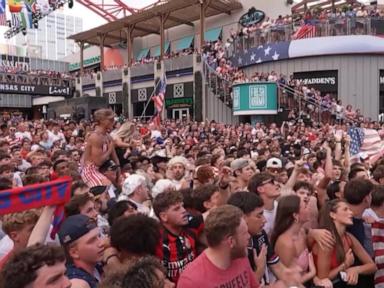
Football Twitter is broken. If you spent any time on social media after the final whistle blew in Group J, you probably saw the frantic videos, the grainy screenshots, and the screaming headlines. The narrative was set within minutes. People screamed that the chaotic 3-3 Austria Algeria World Cup match fixing allegations online proved the game was dirty. They claimed both teams shook hands on a mutually beneficial result to dump Iran out of the tournament. It makes for a juicy story, but it completely falls apart the second you actually watch the game with an understanding of tournament football.
Let's be completely honest about what happened in Kansas City. We saw two exhausted teams playing under immense pressure, navigating complex tournament math in real-time. To call this a scripted fix is to completely misunderstand how high-stakes football works.
The internet wants you to believe that a secret agreement was made. They look at a 3-3 scoreline and see a conspiracy. I look at that scoreline and see a tactical rollercoaster that ended in the ultimate footballing defense mechanism: self-preservation.
The Insane Final Six Minutes That Set Social Media on Fire
The entire conspiracy theory hinges on a wild sequence in stoppage time. If you want to fix a football match, you don't do it by trading goals in the 93rd and 96th minutes. That is the literal definition of insanity.
Let's look at the facts of how those final minutes unfolded. Algeria was keeping possession, putting together a massive 110-pass sequence. They were playing wide, killing time, and trying to protect a 2-2 draw that suited them perfectly. Then, Austria's defense switched off for a split second. Riyad Mahrez saw a gap, made a run, and scored to make it 3-2.
If the match was fixed for a draw, why did Mahrez score? Why did Algeria take the lead with almost the last kick of the game? If they wanted a safe, clean 2-2 to send both teams through, going up 3-2 was a massive risk. For those three minutes, Austria was staring elimination directly in the face.
Then came the 96th minute. Austria threw everyone forward in desperation. Sasa Kalajdzic found space and smashed home the equalizer. Suddenly it was 3-3. The whistle blew, and social media exploded.
Conspiracy theorists immediately pointed to a heated exchange between Marko Arnautovic and the Algerian bench right before the equalizer. TikTok sleuths claimed Arnautovic was reminding them of a deal. That is pure fiction. Anyone who has ever played a competitive sport knows that when you are seconds away from going home, emotions boil over. It wasn't a tactical negotiation. It was an angry, stressed-out veteran venting his frustration at opponents who were trying to waste time.
Why the Tactical Reality Dismantles the Conspiracy
To understand why this wasn't a fix, you have to understand the concept of a "biscotto." This is the traditional Italian football term for a match where a specific draw benefits both teams, leading to a unspoken, passive agreement not to hurt each other. We have seen them before in tournament history. But real biscottos are boring. They feature two teams passing the ball lazily across the backline for 90 minutes without a single shot on target.
This game was a six-goal thriller. Austria took the lead twice earlier in the match. They were playing with high intensity until the final quarter of the game.
What happened in the last twenty minutes wasn't match-fixing. It was basic footballing logic. When the game was tied at 2-2, the risk-reward ratio completely shifted for both managers.
Imagine you are Ralf Rangnick. You know that a draw guarantees your spot in the round of 32. If you commit six players forward to chase a win, you open up space for a lethal Algerian counter-attack. If you lose, you risk going home. What do you do? You park the bus. You sit in a compact low block and tell your players not to leave their positions.
On the other side, Algeria found themselves facing an eleven-man wall. They kept the ball, passing it sideways because trying to force a pass through a crowded penalty box invites a turnover. It wasn't a conspiracy to draw. It was two teams refusing to take catastrophic risks.
What Riyad Mahrez Actually Meant by Awkward
The fire was fueled even further by the post-match comments from Algerian captain Riyad Mahrez. He admitted to reporters that the final minutes felt awkward and embarrassing. The internet took this as a confession.
Let's look at his actual quote without the social media spin. Mahrez explained that they were playing wide, trying to see out the game, but when a teammate played the ball into space, he had to respect the game and try to score. He acknowledged the situation was awkward because nobody wanted to open up, but he emphasized that it is just football.
Mahrez was describing the psychological tension of tournament football, not a criminal conspiracy. It is deeply awkward when both teams know the math. It creates a strange atmosphere on the pitch where the normal rhythm of a game breaks down. Players are human beings. They know what is at stake. When a mistake can ruin four years of hard work for your entire country, you play differently. That isn't match-fixing. That is survival.
The Irony of the 1982 Parallel
The loudest voices online are calling this match the "Disgrace of Kansas City." This is a direct reference to one of the darkest days in World Cup history: the 1982 "Disgrace of Gijón."
In that infamous 1982 tournament, West Germany and Austria knew that a 1-0 win for the Germans would send both of them through to the next round, eliminating Algeria. After West Germany scored in the 10th minute, both teams completely stopped playing. They literally walked around the pitch for 80 minutes. It was so blatant that it forced FIFA to change the rules forever, ensuring that the final group stage matches are always played simultaneously to avoid collusion.
The irony here is overwhelming. The internet is accusing Algeria of colluding with Austria, the very country that screwed them over 44 years ago. If there is one nation on earth that would never, ever agree to a fixed draw with Austria, it is Algeria. The historical trauma of 1982 is etched into Algerian football culture. The idea that they would willingly engineer a result to recreate that scenario is absurd.
The Real Danger of Social Media Sports Analysis
We live in an era where clip culture dominates sports discourse. Millions of fans don't watch the full 90 minutes. They watch a ten-second video on TikTok of a player looking disappointed, or a clip of a team passing the ball backward, and they make up their minds.
During this match, fans noticed that Mahrez didn't look ecstatic after scoring his late goal. The conspiracy theory claimed his teammates told him his goal meant they would face Spain instead of Switzerland in the next round, and he instantly regretted it.
Think about how ridiculous that sounds. A world-class winger scores a vital goal in a World Cup match, and in the middle of his celebration, he runs tactical calculations about the knockout bracket of another group and decides to feel sad? It is total nonsense. He was exhausted. The team was exhausted.
FIFA has already looked at the match metrics and the reports from the ground. They are not opening an investigation. There is absolutely no evidence of wrongdoing. Former officials have pointed out that orchestrating a 3-3 draw with late trading goals is practically impossible in the modern game. The level of scrutiny, video analysis, and betting-market monitoring makes genuine match-fixing at this level incredibly difficult to pull off without leaving a massive paper trail.
What You Should Look at Instead of TikTok Clips
If you want to understand why Group J ended the way it did, stop looking at conspiracy theories and look at the actual tournament structure.
The expanded World Cup format creates unique pressures. The stakes are higher, the margins are thinner, and the third-place qualification rules mean teams are constantly calculating goal differences on the fly.
If you want to analyze football properly, focus on these three elements from the match:
- The physical fatigue of both squads after playing three intense group games in a short window.
- The tactical shift by Ralf Rangnick to a strict low block after the 70th minute.
- The defensive mental lapse by Algeria in the 96th minute that allowed the final equalizer.
The next time a dramatic, mutually beneficial result happens at a major tournament, don't immediately assume the worst. Football is a game of probability, math, and human emotion. Sometimes, those elements collide to create a match that looks strange on paper but makes perfect sense when you understand the desperate desire to survive and advance. Turn off the social media notifications, ignore the clickbait, and appreciate the tactical drama for what it actually was.
For a deeper look at the tactical breakdown of how teams manage these high-pressure tournament scenarios, check out this comprehensive video analysis detailing the closing minutes of the game.
Austria vs Algeria Tactical Breakdown
This video provides an objective look at the viral footage and highlights the real tactical adjustments and emotional strain experienced by the players on the pitch during those chaotic final seconds.