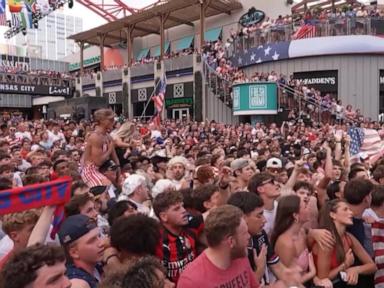
We heard the warnings for months. Analysts predicted that the 2026 World Cup across the United States, Mexico, and Canada would be a diplomatic disaster. The headlines were relentless. They talked about the second Trump administration’s travel ban affecting 39 countries, including qualified teams like Haiti, Iran, Ivory Coast, and Senegal. They covered the terrifying reality of an active military conflict between a host country and a participant, which forced the Iranian team to flee their planned training base in Tucson for Tijuana. We read about Immigration and Customs Enforcement (ICE) setting up shop inside American stadiums, sparking worker strikes and international travel warnings.
Then the whistle blew. Recently making news in related news: What The Internet Gets Wrong About The Austria Algeria World Cup Draw.
Suddenly, the front-page outrage evaporated. Walk into any sports bar or open any social feed today, and you won't hear about visa denials or geopolitical warfare. You'll hear about Germany’s high press, the brutal heat exhaustion facing squads in Texas, or how Argentina dominated Group J. The shift is jarring. It happens every four years, yet it catches the political class off guard every single time.
Understanding why these massive human rights and geopolitical arguments quiet down during the actual tournament requires looking at how modern sports media works. It reveals the uncomfortable truth of what fans actually care about when the game is on. More information on this are covered by Yahoo Sports.
The Pitch Suffocates the Newsroom
Sportswashing is a term people throw around constantly, but it doesn't fully capture what happens once a tournament begins. It isn't just that authoritarian states or controversial hosts successfully clean up their images. It's that the sheer volume of sports data creates a separate reality that pushes everything else out of the frame.
A modern World Cup is an content machine. When you have 48 teams playing dozens of matches across three massive nations, the pure sports data output is overwhelming. Fans are flooded with line-up announcements, injury updates, tactical breakdowns, and xG statistics. Media companies invest billions in broadcasting rights. They aren't going to spend their expensive pre-game coverage talking about border security or immigration raids. They want to talk about whether the US national team can survive their knockout match.
The sports press operates on a completely different rhythm than the political press. Political journalists look at structural issues, policy changes, and international law. Sports journalists look at the immediate, volatile drama of human performance. When an Iraqi striker like Aymen Hussein gets detained and interrogated by US border agents for seven hours, it makes political news a week before the tournament. But once he scores a game-winning goal on the pitch, the narrative arc completely changes. The interrogation becomes a footnote. The triumph becomes the story. The pitch consumes the controversy.
Real Friction Meets Selective Blindness
The problems plaguing this specific tournament didn't magically go away when the opening match kicked off. They're happening right now, just hidden behind stadium walls and glossy broadcasts.
Take the fan experience. The reality of the US travel policies means this is one of the most segregated World Cups in history. Ordinary fans from the 39 banned nations couldn't get visas. Supporters from ten different African nations decided to skip the trip entirely. They openly told researchers they didn't want to get stuck at an American airport for hours having their phones inspected by border officials.
Instead of vibrant, global crowds filling the stands, we see stadiums packed primarily with wealthy domestic consumers and corporate sponsors. This is amplified by FIFA’s predatory dynamic pricing model, which pushed tickets for the MetLife Stadium final up to $11,000. Several state attorneys general are actively investigating this pricing scheme, but you won't hear about that on the official broadcast.
The geographic distribution of the tournament has also created a logistical nightmare that distracts from politics. Teams are flying thousands of miles between completely different climates. One week a squad is dealing with moderate altitude and thin air, and the next they're playing in oppressive humidity and dangerous heat stress. Sports scientists and coaches are entirely focused on player recovery, electrolyte replacement, and cooling strategies. When a team loses because their players look sluggish under a hot roof, the post-match analysis blames the travel schedule, not the broader political environment that shaped the tournament.
Even the security crises have been compartmentalized. When cartel violence tore through Guadalajara in February following the assassination of a major drug lord, people wondered if Mexico could safely host its matches. The local organizers threw up massive security cordons, heavily militarized the stadium perimeters, and essentially created a bubble. The fans inside the stadium see a clean, controlled environment. The structural violence of the host city remains entirely invisible to the television cameras.
The Psychological Escape Hatch
We need to be honest about why we let this happen as fans. Sports offer something that modern politics rarely provides, which is absolute clarity.
Politics is messy, frustrating, and rarely ends with a clean victory. It's full of compromises, corrupt figures, and problems that drag on for decades. A soccer match is different. It lasts 90 minutes. The rules are clear. There is a winner and a loser. When you watch a game, you get to experience intense, tribal emotion without any of the real-world consequences.
This creates a powerful psychological escape hatch. Fans know about the US military actions abroad, they know about the ICE agents standing at the stadium gates, and they know about the workers who were exploited to build or renovate these massive arenas. They simply choose to turn that part of their brain off for two hours. It isn't ignorance. It's a conscious decision to prioritize entertainment over ethics.
FIFA understands this dynamic perfectly. Gianni Infantino has built close ties with global leaders, even handing out bizarre, manufactured honors like the "FIFA Peace Prize" to political figures. FIFA knows that as long as the product on the field is elite, the public will forgive almost any administrative or ethical failure. They weathered the massive corruption scandals of 2015, they weathered the intense criticisms of Russia in 2018 and Qatar in 2022, and they are weathering the current fractures of 2026. The beautiful game acts as a perfect shield.
Actionable Next Steps for Conscious Fans
If you're tired of the endless cycle of pre-tournament outrage followed by complete compliance, you don't have to just sit there and consume the corporate product blindly. You can change how you engage with international sports.
First, diversify your media diet during the knockout stages. Don't rely solely on the official rights-holders and broadcasters for your tournament updates. Follow independent journalists and human rights organizations that are actively tracking immigration enforcement, labor conditions, and local economic impacts around the host cities. Look for investigative pieces that don't stop reporting on structural issues just because a match is live.
Second, support local community sports initiatives. The corporate gigantism of FIFA threatens to completely alienate the game from its roots. Look at how ticket prices have locked out local working-class fans. You can counter this by investing your time and money into local, independent fan groups, youth academies, or amateur leagues in your own city. Remind yourself that soccer belongs to communities, not to international governing bodies or billionaire stadium owners.
Third, demand accountability from sponsors. Corporations spend hundreds of millions to plaster their logos across World Cup broadcasts because they want to associate their brands with joy and unity. Hold them accountable when they stay silent on visa discrimination, dynamic ticket gouging, or safety failures. Use your voice on public platforms to question why these companies fund organizations that disregard basic global equity.
The geopolitical criticisms haven't quieted down because the problems were solved. They quieted down because we allowed ourselves to be distracted. The ball keeps rolling, but that doesn't mean we have to keep looking away.