The Middle East isn't just sliding toward a wider regional conflict. It's already there. On July 9, 2026, Iran's Islamic Revolutionary Guard Corps did something that would have been unthinkable a few years ago. They fired ten ballistic missiles straight at the Al-Azraq Air Base in Jordan. Also known as the Muwaffaq Salti Air Base, this facility is a vital hub for American military power in the region. It houses advanced F-15s, F-22s, stealthy F-35s, and MQ-9 Reaper drones. By targeting it directly, Tehran didn't just cross a red line. They completely erased it.
If you're watching the headlines and trying to understand what this means, don't buy the corporate media spin that this is just another minor skirmish. This is a dramatic escalation that effectively dismantles the security framework the West relied on for decades. Jordan has long been Washington's quiet, reliable partner in the Levant. Attacking a base on Jordanian soil means Iran is no longer content with fighting through proxies in Lebanon or Yemen. They are striking directly at sovereign states that host American forces.
The immediate catalyst for this strike was a sequence of heavy American aerial bombardments ordered by the White House. Donald Trump declared that a previous ceasefire agreement was completely over after Iranian forces disrupted commercial shipping lines in the strategic Strait of Hormuz. Washington struck back hard, hitting dozens of Iranian targets. But if the Pentagon thought that a massive display of force would scare Tehran into submission, they severely miscalculated. Iran responded by showing it can hit every single functional American military base across four different countries in less than twenty-four hours.
The Reality Behind the Interception Numbers
The official reports coming out of Amman tell a story of a highly successful defense. Jordan's government spokesperson, Mohammad Al-Momani, quickly went on the record stating that their armed forces intercepted eight of the ten incoming Iranian ballistic missiles. They claimed the remaining falling debris caused zero casualties and no material damage on the ground. That sounds comforting. It looks like a win for Western-supplied air defense systems.
But if you look closer at the math, the reality is deeply troubling.
An eighty percent interception rate is statistically impressive during a live military drill. In a real war, it means two multi-ton ballistic warheads still managed to slip through the net and slam into or near a crowded military airfield. The IRGC immediately released statements through its state media outlets claiming that their long-range missiles successfully destroyed four targets inside the base, focusing heavily on aircraft hangars and command centers.
While satellite imagery began showing smoke and physical damage near the aprons, the exact level of destruction remains a matter of fierce debate. What isn't up for debate is the strategic vulnerability this reveals. If Iran decides to double its salvo size to twenty or thirty missiles next time, a standard mathematical projection shows that four to six warheads will hit the target. Air defense batteries have a finite number of interceptors ready to fire. They get depleted quickly. Once those interceptors are spent, the base is completely exposed.
A Four Country Barrage Targeting American Logic
To understand the sheer scale of what Iran is doing, you have to look at the broader map. The attack on Jordan's Azraq base wasn't an isolated incident. It was the final phase of a coordinated regional strike campaign that caught Western intelligence agencies off guard.
Just hours before the missiles flew toward Jordan, Iranian regular military units used precision strikes to target a massive fifteen-million-dollar satellite communications antenna at the Al Udeid Air Base in Qatar. This specific antenna serves as a primary data link connecting regional air operations. The day before that, similar missile and drone barrages struck American outposts in Kuwait and Bahrain, specifically targeting facilities at Camp Arifjan, Ali Al Salem, Sheikh Isa, and the naval installation at Juffair.
Think about what this means from a logistics standpoint. Within a single day, Iran demonstrated the operational capability to hit US infrastructure in four different sovereign nations simultaneously. They aren't hiding behind the Houthis or local militias anymore. The regular Iranian army and the IRGC are signing their own names to these attacks.
This completely upends the classic American deterrence model. For years, Washington operated under the assumption that its massive network of bases in the Gulf served as an untouchable shield. The theory was that no regional power would ever dare attack a base in Qatar or Jordan because the threat of American retaliation would be too devastating. Iran just proved that they are willing to take that gamble.
The Diplomatic Wall and the Collapse of Talks
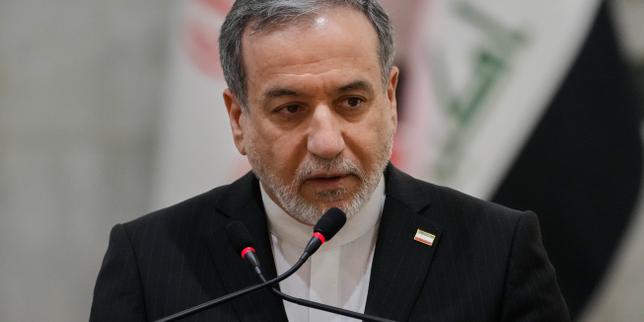
On the diplomatic front, things look just as broken. Iranian Foreign Minister Abbas Araghchi made it clear that Tehran is done playing nice. He warned the United States against attempting any new military initiatives in the region, stating bluntly that any further aggression would trigger immediate, heavy fire against every remaining American facility in West Asia.
Araghchi pointed back to the temporary memorandum of understanding that had been brokered by Pakistan. That short-lived agreement was supposed to usher in a sixty-day period of indirect peace talks. Instead, it dissolved into a bitter exchange of accusations. Araghchi accused Washington of failing to respect its own signature and trying to negotiate while holding a gun to Iran's head.
The political reality is that both sides have painted themselves into a tight corner. The White House cannot afford to look weak, especially after Trump publicly stated that the US military would strike Iran again if they didn't back down. At the same time, the leadership in Tehran is facing intense internal pressure to project absolute strength following the recent high-profile state funerals of their senior leadership. When both sides believe that backing down equals political suicide, diplomacy dies.
What This Means for Local Allies
The country in the most difficult position right now is Jordan. Amman has spent decades walking a delicate tightrope. They maintain a peace treaty with Israel, preserve a deep strategic alliance with the United States, and try to avoid provoking their massive neighbor to the east.
By allowing the US military to expand the Muwaffaq Salti Air Base into the densest concentration of advanced strike aircraft in the Levant, Jordan became an invaluable asset for the West. But that asset has now become a giant bullseye. The Jordanian public is deeply conflicted about their country being used as a staging ground for Western military operations. If Iranian missiles continue to breach Jordanian airspace and rain shrapnel down on local towns, the internal political pressure on the Jordanian monarchy will reach dangerous levels.
Other Gulf states like Qatar and Kuwait are watching this unfold with absolute dread. They don't want their territories to become battlegrounds in a direct war between Washington and Tehran. If the US can't guarantee that its air defenses can protect these bases from precision ballistic strikes, these host nations might start quietly asking American forces to restrict their offensive flight operations from their soil to avoid further retaliation.
Steps to Take Right Now
If you are trying to navigate the economic and strategic fallout of this sudden escalation, you need to look past the daily cable news cycles. Focus on the core macro indicators that actually matter.
First, track the shifting logistics of commercial shipping and aviation routes. The Strait of Hormuz is effectively a red zone, and with Jordan's airspace now seeing active ballistic missile interceptions, commercial air carriers are rerouting flights across the entire region. This will drive up insurance premiums and transport times globally.
Second, monitor the movement of US naval assets. If the Pentagon decides that fixed land bases in places like Jordan and Qatar are too vulnerable to ballistic missile salvos, they will rely heavily on carrier strike groups operating from safer distances in deep water. This will tell you exactly how severe the damage at these land facilities actually is, regardless of what the official press releases say.
Finally, prepare for heightened cyber risks. A direct military conflict of this scale is never restricted to the physical battlefield. State-sponsored groups always step up retaliatory cyber campaigns against critical infrastructure, financial networks, and logistics companies tied to Western interests. Review your security protocols immediately. The situation in the Middle East is shifting rapidly, and the old rules of engagement are officially gone.