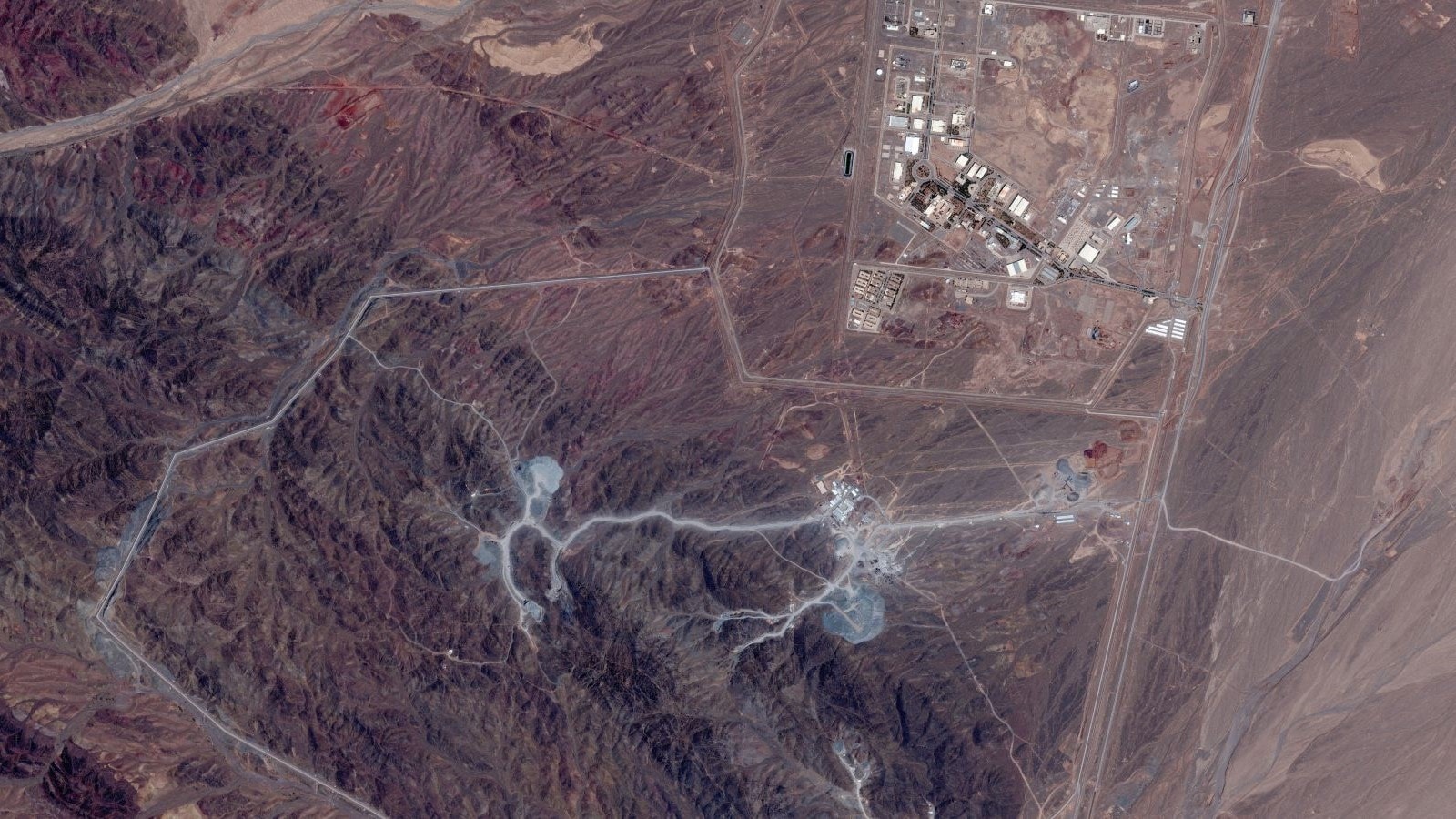
Military planners lose sleep over geography. When you bury a sensitive nuclear enrichment complex deep beneath hundreds of feet of solid granite, you change the entire calculus of modern warfare. That is the exact problem posed by Iran's Pickaxe Mountain facility, located roughly 220 kilometers south of Tehran near the older Natanz infrastructure.
For months, the site has dominated strategic briefings in Washington and Tel Aviv. While previous military operations targeted surface structures and shallow sites like Fordow using massive conventional bunker busters, Pickaxe Mountain represents a completely different engineering hurdle. Understanding why this installation frustrates military strategists requires looking closely at physics, satellite intelligence, and the strict limits of conventional non-nuclear payloads.
The Engineering Nightmare of Sub-Surface Fortification
Building underground is nothing new, but Iran has perfected the art of mountain shielding. Open-source satellite analysis from organizations like the Center for Strategic and International Studies (CSIS) highlights continuous construction and heavy activity tunnels carved deep into the rock matrix.
Estimates suggest portions of the complex sit beneath up to 300 feet of solid rock. That depth is intentional. It creates a massive acoustic and physical buffer that absorbs shockwaves and deflects kinetic energy.
Even the United States military's crown jewel for underground destruction—the 30,000-pound GBU-57 Massive Ordnance Penetrator (MOP)—faces severe performance ceilings here. While the MOP successfully pulverized shallower targets during prior campaigns, solid granite of this thickness behaves differently than reinforced concrete. Conventional explosives can crack entrances, cave in access roads, and disrupt external power grids, but carving through hundreds of feet of mountain stone to reach deep centrifuge halls may exceed the limits of standard ordinance.
Why Conventional Strikes Fall Short
During earlier engagements, air forces relied on coordinated drops from stealth bombers like the B-2 Spirit, complemented by submarine-launched Tomahawk cruise missiles. Those missions successfully crippled surface-level conversion plants and electrical substations.
Pickaxe Mountain is different. The facility was designed precisely to survive those exact playbooks. If sensitive research, metallurgy equipment, and advanced gas centrifuges have been successfully moved into the deepest chambers of the mountain, conventional air strikes can basically only accomplish a blockade.
Halting access by destroying entry portals and sealing ventilation shafts buys time, but it doesn't permanently eliminate what is inside. Once air campaigns pause, heavy excavation equipment can theoretically clear debris, leaving military planners stuck in an endless loop of tactical whack-a-mole.
The Nuclear Dilemma and Political Pressures
This technical stalemate fuels intense geopolitical friction. Reports indicate that Israeli leadership has pushed hard for definitive action, arguing that window-of-opportunity constraints mean the site must be dealt with permanently before enrichment levels cross irreversible thresholds.
The friction point is stark. Because conventional weapons struggle to guarantee structural collapse at that depth, extreme alternative scenarios—including the unthinkable use of low-yield nuclear options—inevitably leak into policy debates. Analysts and commentators have openly warned that crossing that threshold would shatter a decades-old taboo and trigger catastrophic regional contamination.
At the same time, political leaders in Washington walk a tightrope between maintaining deterrence, pursuing diplomatic off-ramps, and acknowledging the stubborn physical reality of the terrain. Tehran denies that active nuclear enrichment occurs inside the complex, maintaining a posture of defiance as satellite trackers monitor every truck movement and road expansion around the perimeter.
Until engineering solutions evolve or verifiable diplomatic frameworks lock down the site, Pickaxe Mountain will remain the ultimate test case for whether modern air power can actually defeat deep underground nuclear ambitions.