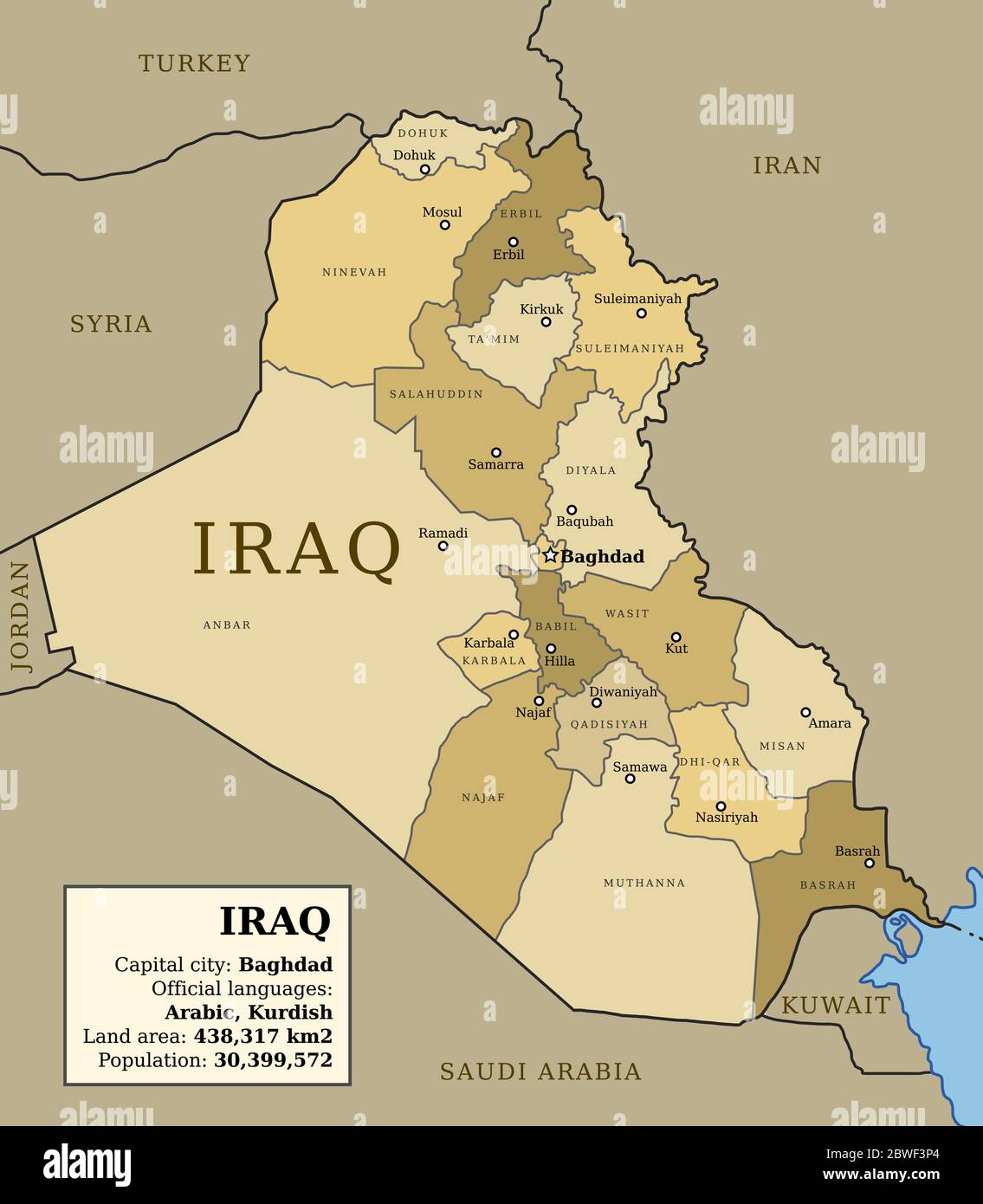
Baghdad is drawing a hard line. Iraq's Federal Supreme Court recently ruled that the central government has the ultimate authority to deploy federal forces along all international borders and oversee every border crossing, including those inside the semi-autonomous Kurdistan region.
If you've been following Middle Eastern politics, you know this isn't just about administrative paperwork. It is a direct escalation in the long-standing tug-of-war between Baghdad and the Kurdistan Regional Government (KRG) over sovereignty, billions of dollars in oil, and territorial control. Prime Minister Ali al-Zaidi's administration
Why Iraq Just Handed Baghdad Total Control Over Kurdish Oil and Borders
news
Power struggles in Baghdad rarely end quietly. Iraq's Federal Supreme Court just issued a ruling that shifts the balance of authority between the central government and the Kurdistan Regional Government in Erbil. The court declared that federal authorities possess the legal backing to take control of international border crossings and oil fields within the Kurdistan region. This isn't a minor administrative update. It's a seismic shift that hits right at the financial and territorial autonomy Erbil has guarded for decades.
If you've been watching the friction between Baghdad and Erbil, you know oil and borders have always been the main battleground. For years, the Kurdistan Regional Government operated its own energy sector, exporting crude independently and managing customs revenues at key international gates. Baghdad argued those moves bypassed the constitution. Erbil argued federal overreach threatened regional self-determination. Now, the highest court in the country has settled the legal debate. The central government holds the cards.
The Financial Mechanics Behind the Ruling
Let's look at why this matters beyond legal theory. Money drives politics. The Kurdistan Regional Government built its economy largely on direct oil sales and customs duties collected at border crossings with Turkey and Iran. When those revenue streams flow directly to the federal Ministry of Finance in Baghdad, Erbil loses its primary leverage.
Baghdad plans to integrate these operations under national oversight. That means federal energy companies and border enforcement units step into roles previously held by regional Kurdish authorities. The immediate fallout involves budgets, public sector salaries, and resource allocation. Erbil relies heavily on federal budget transfers to pay government workers, and disputes over revenue sharing have triggered financial crises in the past.
What the Court Decision Actually Means on the Ground
Legal rulings in Baghdad don't automatically translate to smooth transitions in the north. Security forces, regional officials, and international oil companies operating in the region face complex choices. Foreign energy firms caught between Baghdad and Erbil now have to navigate a new legal reality. Contracts signed directly with the regional government face intense federal scrutiny, creating major uncertainty for capital investments.
Border management brings its own set of logistical hurdles. Customs checkpoints handling billions in trade cannot simply swap uniforms overnight without risking bottlenecks. Truck drivers, merchants, and international trade partners are watching closely to see if federal control leads to tighter restrictions or smoother national standardization.
The Broader Regional Puzzle
This court decision doesn't happen in a vacuum. Neighboring countries like Turkey and Iran monitor every shift in the power balance between Baghdad and Erbil. Turkey, a vital transit route for oil exports from the north, deals directly with Baghdad on energy logistics. Regional stability depends heavily on how Baghdad exercises this newly affirmed authority. If federal authorities push too hard, political resistance in Erbil could paralyze governance. If they move too softly, the court ruling loses its bite.
Navigating this transition requires practical diplomacy and clear financial compromises. The central government faces the challenge of managing diverse populations without triggering deep-seated resentment. Erbil has to adapt to a framework where its independent economic policy is severely restricted.
Keep an eye on how upcoming federal budget allocations treat the region and whether foreign energy operators resume production under new federal oversight agreements. The legal battle is over, but the implementation phase will shape Iraq's political landscape for years.