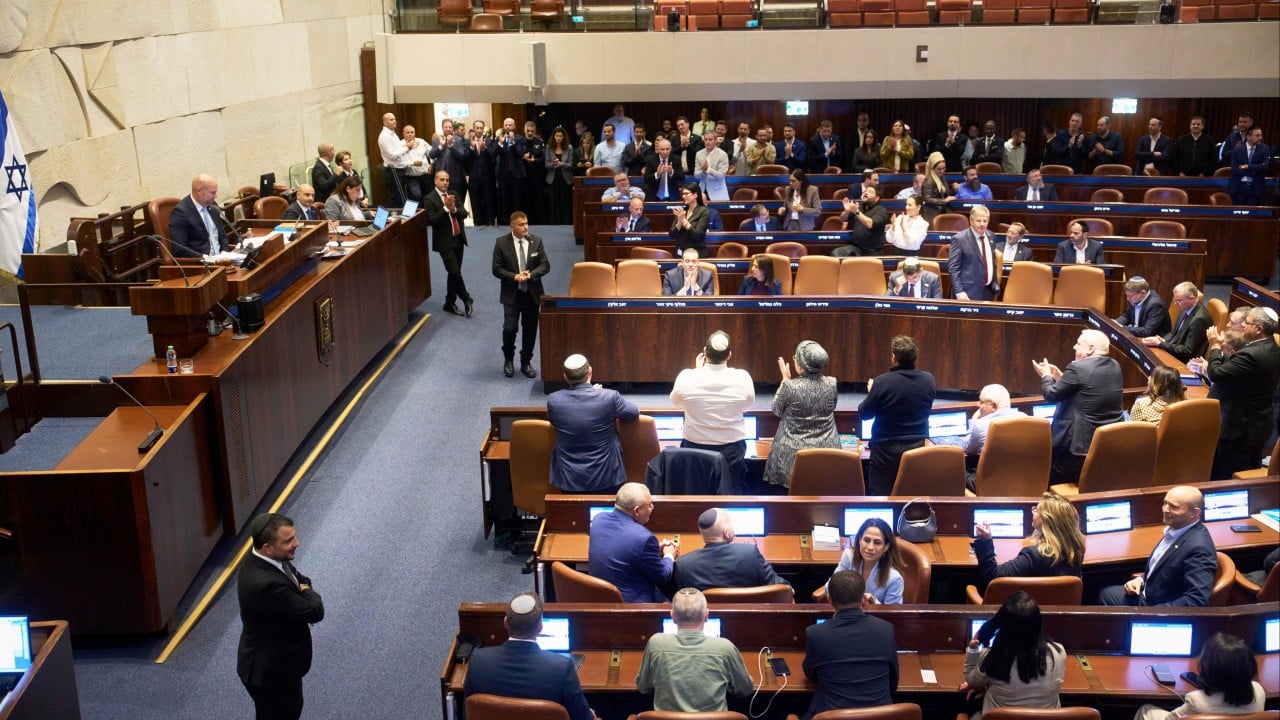
The political landscape in Jerusalem is shifting faster than most analysts anticipated. When the Knesset elected Matan Kahana as its new speaker with 66 votes, it wasn't just a routine administrative swap. It served notice. The anti-Benjamin Netanyahu bloc, spearheaded by figures like former military chief Gadi Eisenkot, has launched a full-scale legislative blitz to systematically unravel years of polarizing governance.
If you've watched Israeli politics over the last few years, you know the deep fractures left by judicial overhaul battles, media control debates, and intense street protests. Now, the parliament is moving with calculated speed to roll back those changes. This isn't just about partisan revenge. It's a structural attempt to reset the balance of power in a country exhausted by political turbulence.
The Legislative Counteroffensive
The speed of the current push catches everyone off guard. Under normal circumstances, advancing private members' bills through the Israeli parliament takes weeks of bureaucratic maneuvering. But the newly empowered opposition block used its control over the temporary arrangements committee to waive the standard 45-day waiting period.
Lawmakers advanced a slate of high-stakes bills through preliminary readings in a single session. What are they targeting?
- Measures that increase political influence over the judiciary.
- Legislation designed to weaken the independent authority of the attorney general.
- State-level changes aimed at media oversight and broadcasting.
- Statutes regulating prime ministerial term limits and incapacitation rules.
Critics of the previous administration argue these original laws were crafted primarily to insulate caretaker Prime Minister Benjamin Netanyahu from his ongoing corruption trial and cement executive overreach. Netanyahu’s loyalists, naturally, see it differently, framing the legislative rollback as a partisan attack designed to sabotage conservative achievements.
Why This Moment Matters for Israel’s Future
You have to look at the numbers to understand the fragility of the current moment. Eisenkot’s broad coalition and its allies secured enough leverage—bolstered by rare cooperation across political divides, including Arab-majority slates holding record numbers of seats—to outmaneuver the Likud bloc.
Yet, forming a stable governing coalition remains an uphill battle. Party leaders still clash over fundamental red lines, and Netanyahu continues to fight fiercely for his political survival, warning his traditional ultra-Orthodox allies that any alternative government will dismantle their religious and social funding.
Despite the gridlock on executive power-sharing, the Knesset floor has become an independent arena where the opposition can inflict heavy strategic blows. By seizing control of the speaker's chair—previously held by Netanyahu loyalist Amir Ohana—the anti-Netanyahu camp has broken the legislative bottleneck that protected the premier's agenda for years.
What Comes Next in the Knesset
The road ahead is far from straightforward. The advanced bills still need to clear rigorous committee reviews and three separate full readings before becoming binding law. Compromises are being floated behind closed doors, with some procedural delays traded to bypass immediate filibusters.
Every single vote from here on out will be razor-thin. If Eisenkot's mandate to form a government runs out by the end of December without a formal coalition agreement, the political initiative could swing right back to Netanyahu
How Israel is quietly dismantling Netanyahu’s legacy from the inside
news
Power rarely vanishes overnight. It usually chips away in small committee rooms, late-night parliamentary votes, and quiet procedural shifts that most people ignore until the landscape has completely transformed.
Right now, Israel’s political machinery is doing something remarkable. Lawmakers in the Knesset are systematically dismantling the legislative architecture built during Benjamin Netanyahu's extended grip on power. This isn't just standard political payback. It's a fundamental recalibration of how the state runs, how judicial checks function, and how power gets distributed away from the prime minister's office.
If you’ve only watched the high-stakes security drama dominate international headlines, you've missed the institutional counter-revolution happening right beneath the surface. Let's look at what's actually shifting and why it matters.
The anatomy of long-term rule dismantling
When a leader stays in power for over a decade and a half, the political system adapts to their style. Ministries reorganize. Alliances harden. Patronage networks grow deep roots.
Netanyahu didn't just govern. He reshaped the office of the prime minister into a centralized hub that dominated cabinet colleagues, sidelined coalition partners, and kept a tight grip on information flow.
Now, legislators are rewriting those rules. Committees are stripping away emergency powers that accumulated during various crises. Budget mechanisms are changing to give the finance ministry and independent bureaucrats more autonomy over spending tracks.
You see this play out in budget allocations and judicial appointments. For years, critics argued that the executive branch held too much sway over everyday governance without sufficient friction. The current legislative push aims to restore that friction. Lawmakers are introducing bills designed to limit consecutive terms for key administrative posts, decentralize bureaucratic sign-offs, and protect civil servants from political firings.
Why this shift is happening now
Crises expose structural weaknesses. The immense strain of recent years created profound fractures within Israeli society and government ranks.
When a coalition starts fraying from internal pressure, survival instincts kick in. Junior coalition members and opposition figures realize they share a common enemy: unchecked executive dominance. They might agree on almost nothing regarding foreign policy, security, or religion in the public sphere, but they agree that a weakened prime minister's office protects their own political survival.
This creates strange bedfellows in the Knesset. Centrists, leftists, and even disgruntled right-wing factions find themselves voting together on institutional reform bills. They want to make sure no single leader can ever consolidate that much control again.
The public mood and political fatigue
Voters get tired. Even loyal supporters eventually experience leadership fatigue.
The social fabric in Israel has been stretched to its absolute limit by polarizing judicial overhauls, massive street protests, and existential security pressures. People want normal governance back. They want boring committee meetings and predictable budget cycles.
This public exhaustion translates directly into legislative courage. Politicians who once feared crossing Netanyahu's political machine now sense a shifting tide. They know that running on an anti-centralization platform resonates with an electorate exhausted by endless ideological warfare.
What changes on the ground
Let's be clear. Laws on paper don't instantly erase decades of political culture. The networks remain. Loyalists still occupy important posts.
However, the legal guardrails are tightening. When independent state comptrollers issue sharp reports, they carry more weight now. When the courts review executive decisions, the legislative backing for judicial independence looks sturdier than it did a few years ago.
Ministries are reclaiming policy independence. Career professionals are pushing back against political appointees with a newfound confidence. They know the political winds have shifted, even if the ultimate outcome of the next election remains completely unpredictable.
The broader regional and domestic fallout
Domestic institutional reform never happens in a vacuum. Israel sits in a volatile neighborhood, facing multi-front security challenges and deep international scrutiny.
When a government spends its energy untangling its own internal governance structures, decision-making on critical security issues can slow down. Critics argue that infighting and procedural hurdles weaken the state's responsiveness in a crisis. Supporters counter that true security requires a stable, democratic foundation rooted in robust checks and balances rather than autocratic efficiency.
Both arguments hold weight. The friction is real. But democracies survive on friction. The system is intentionally designed to be hard to run, precisely to prevent a single person from steering the entire nation off a cliff.
Looking ahead
The rollback won't feature a single dramatic moment where an old era officially ends and a new one begins. History rarely works that way.
Instead, it's happening through a hundred small amendments, committee votes, and legal challenges. By the time the next major political cycle rolls around, the office of the prime minister may look fundamentally different from the powerhouse Netanyahu commanded for so long.
Keep an eye on administrative law adjustments and civil service protections over the coming months. That is where the real war for Israel's institutional future is being fought.