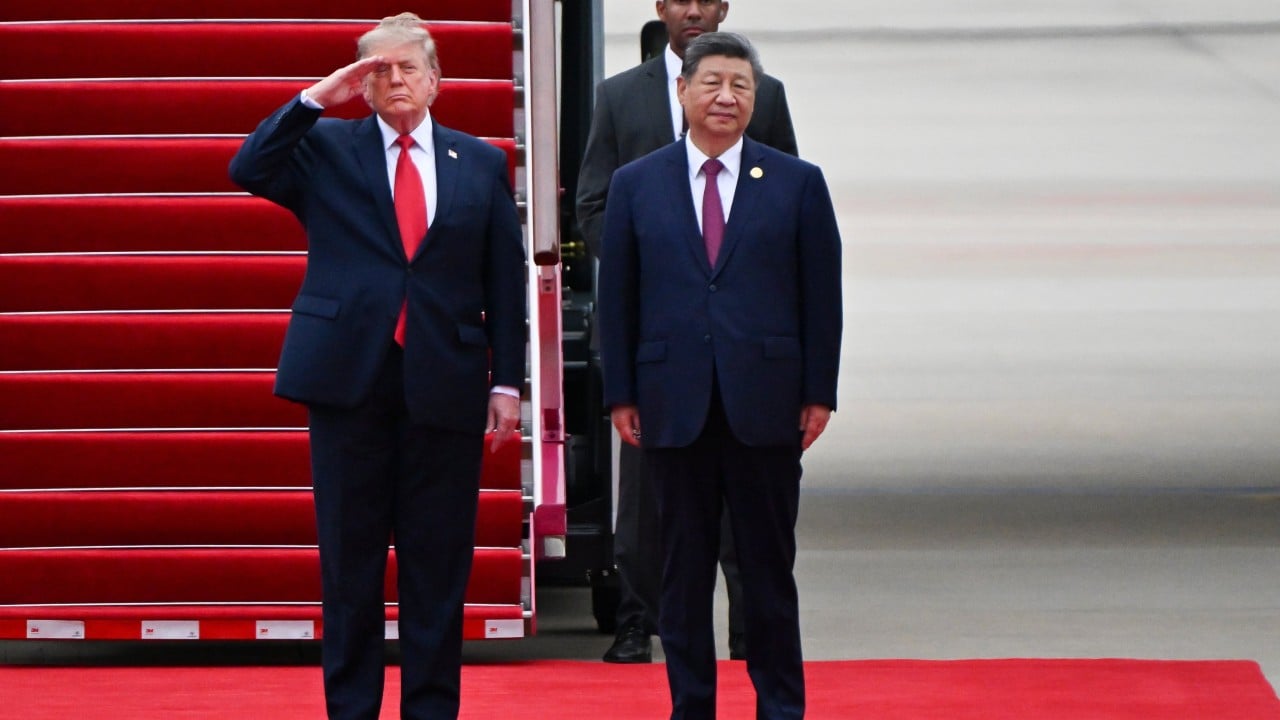
When Chinese President Xi Jinping stepped onto the tarmac at Shenzhen Bao'an International Airport to personally greet Donald Trump, he broke standard diplomatic protocol for a reason. It wasn't just about returning the hospitality Trump showed him during his September state visit to Washington. It was a calculated statement of high-stakes personal diplomacy.
As world leaders converged on China's tech capital for the 2026 Asia-Pacific Economic Cooperation (APEC) summit, this specific handshake and hug signaled a shift in how major superpowers manage friction. Forget rigid bureaucratic channels. Right now, top-tier global politics runs on direct leader-to-leader interaction.
The Shenzhen Stage and the Trump Factor
Shenzhen isn't just any city. As a booming engine for advanced technology and manufacturing, it served as a fitting backdrop for talks touching on artificial intelligence, trade tariffs, and global supply chains. Trump arrived fresh from a stop in Manila, stepping off Air Force One into an elaborate welcoming ceremony complete with traditional dancers and red carpets.
Unlike Russian President Vladimir Putin—who also arrived in Shenzhen on the same day but was met by lower-ranking officials like chief of staff Cai Qi—Trump received the full red-carpet treatment directly from Xi himself. Xi explicitly noted China's tradition of reciprocity, recalling the warmth he experienced in the U.S. Trump responded in kind, calling Xi a great leader and praising their ongoing dialogue.
Why the Trilateral Dynamics Matter
The real weight of the APEC gathering extended far beyond standard trade discussions. Behind closed doors at the heavily guarded Kylin Villa resort, attention focused heavily on a high-stakes three-way dynamic involving Xi, Trump, and Putin.
Critics and foreign policy analysts raised immediate concerns that a superpower triangle could bypass smaller nations and regional bodies like the European Union or Kyiv when addressing ongoing conflicts. Washington insisted that major geopolitical flashpoints, including the war in Ukraine and nuclear disarmament discussions following the expiration of bilateral treaties, remained front and center. Meanwhile, Beijing kept its public focus centered on strategic stability and economic cooperation.
What Comes Next for Global Diplomacy
Beneath the handshakes and diplomatic optics, deep structural tensions remain. The U.S. and China continue to lock horns over advanced semiconductor controls, rare earth supply chains, and market access. Yet, personal chemistry between heads of state often creates short-term stability when systemic friction threatens to boil over.
Watch how these bilateral commitments translate into actual policy adjustments over the coming months. If tariff rhetoric softens or tech export frameworks loosen, you'll know the Shenzhen handshake carried real weight. If not, it was just expensive theater.
Xi Jinping Welcomes Trump In China Ahead Of High-Stakes APEC Summit
This video captures the arrival ceremony and the moment Chinese President Xi Jinping welcomed U.S. President Donald Trump at the airport in Shenzhen.