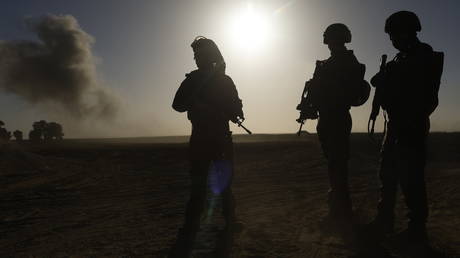
Twenty-three active-duty Israeli soldiers and officers have died by suicide since the start of 2026, marking the highest annual toll in 16 years according to Haaretz. That number alone is grim enough. Yet it only tells part of the story.
Look closer at the reporting and another figure jumps off the page: 17 soldiers who served in regular or reserve units during the Gaza war also died by suicide in 2026 after leaving active service. Add five police officers who died by suicide over the same period, and you start seeing a broader psychological strain across Israel's security apparatus. When people search for news about Israeli military suicides, they usually want a quick headcount. Honestly, a raw headcount misses how the system actually tracks—or fails to track—war trauma once a uniform comes off.
What the Official Army Tally Actually Measures
If you rely strictly on active-duty suicide figures, you get a neat timeline that still looks alarming. Before the war that began in October 2023, the Israeli military recorded an average of about 12 active-duty suicides per year over the preceding decade. Then the curve shifted upward: seven active-duty soldiers between October 7 and the end of 2023, 21 in 2024, 22 in 2025, and at least 23 in 2026.
Here is the catch that trips up casual readers. Military statistics on active-duty deaths don't automatically capture every former soldier or reservist who dies after finishing a tour or leaving service. Last year, the military acknowledged identifying 15 post-service cases since 2023—a number an officer in the army's Personnel Directorate suggested could be an underestimate. Even if earlier counts missed cases, the officer noted that the upward trend is hard to deny.
Among the 17 former soldiers reported to have died by suicide in 2026, the military assessed that 10 cases likely had a strong connection to military service, with one case still under review. That distinction matters for families, benefits, and official recognition. When a suicide happens during active service versus after discharge or reserve rotation, bureaucratic categories shape how the death is recorded and investigated.
Why Most Soldiers Who Died Hadn't Sought Care
One of the sharpest takeaways from the Haaretz reporting is that most active-duty soldiers who died by suicide in 2026 hadn't sought mental health treatment beforehand. That pattern isn't unique to any single military, yet in high-tempo operational environments it exposes a glaring gap between distress and help.
Why do troops stay quiet until a crisis hits? Stigma plays a real role, even when leadership tries to soften it. In tight-knit units, admitting you're struggling can feel like letting down your squad or losing your standing. Practical friction gets in the way too. When rotations are long, deployments overlap, and units keep moving across multiple fronts—including Gaza, Lebanon, Syria, Yemen, and clashes involving Iran—getting timely, consistent care is tough.
There's also a timing problem with trauma. Stress doesn't always peak while adrenaline is high and missions are constant. Often, the heaviest weight lands when the deployment ends, routines vanish, and a reservist goes back to civilian jobs, family life, and ordinary quiet. That's why Yossi Levi-Belz, head of the Center for Suicide and Mental Pain Studies at the University of Haifa, warned that soldiers—especially reservists—form a high-risk group, calling the coming years critical and potentially dramatic for suicide rates.
A Wider Psychological Strain Across Israel and the Region
Looking at Israeli military suicides in isolation can make it seem like a self-contained defense issue. It isn't. Across the broader society, mental health professionals and defense officials have pointed to rising trauma, substance use, and strained care capacity since October 2023.
Defense Ministry rehabilitation figures have shown a sharp surge in soldiers and veterans seeking support for psychological conditions alongside physical injuries, stretching clinical resources thin. Outside the military, surveys and commentators have warned of widespread mental health pressures across millions of Israelis dealing with prolonged conflict, displacement, and bereavement.
At the same time, any honest look at the human toll of the conflict has to acknowledge that the psychological devastation in Gaza is vastly larger in scale. Health agencies, humanitarian workers, and researchers have documented severe, ongoing trauma affecting hundreds of thousands of children and adults amid mass casualties, displacement, and ruined infrastructure. Comparing pain isn't a zero-sum game, nor does one tragedy cancel another out. Still, keeping the wider context in view stops partisan spin from flattening complex realities into slogans.
Common Misconceptions About Military Suicide Numbers
People tend to jump to two opposite conclusions when a headline like this breaks. Both are oversimplified.
- Misconception one: A single annual spike proves every case stems from one specific battle. Suicide rarely has a single neat cause. Combat exposure, cumulative deployments, pre-existing vulnerabilities, relationship stress, and access to means all interact. Researchers who study suicide prevention emphasize risk factors and patterns rather than one-line explanations.
- Misconception two: If someone didn't visit a clinic, there were no warning signs. Not seeking formal military or civilian care doesn't mean a person was fine. Many people cope privately, mask distress around peers, or don't recognize their own symptoms as a mental health emergency until things spiral.
Practical Steps If You or Someone You Know Is Struggling
Whether you're a service member, a reservist, a veteran, or someone checking in on a friend, waiting for someone to "ask for help" usually fails. Most people in deep distress don't reach out first.
- Ask directly without tiptoeing. If you're worried about a friend or relative who served, say plainly that you've noticed they seem exhausted, withdrawn, or on edge, and ask if they've had thoughts of ending their life. Asking directly doesn't plant the idea; it opens a door.
- Focus on immediate safety and small steps. When someone feels overwhelmed, big advice like "get your life together" is useless. Help them get through the next few hours, sleep, eat, or talk to a trusted doctor, counselor, or crisis line.
- Stay in touch after the deployment ends. Check in weeks and months after active or reserve duty wraps up, not just during intense news cycles. Transitions back to civilian life are often when quiet struggles surface.
- Use local crisis support right away. If you're in immediate danger or crisis, contact your local emergency services or a dedicated national suicide prevention helpline immediately—in the United States, you can call or text 988 for the Suicide & Crisis Lifeline, and in Israel, ERAN operates emotional first aid and crisis lines (
1201).
Trauma doesn't run on a press-release schedule, and counting deaths after the fact is no substitute for catching people before they hit the edge.