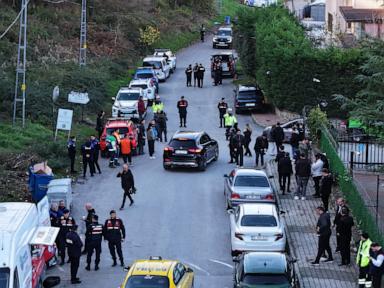
You don't expect to hit the brakes on a suburban road north of Istanbul and find a lioness staring back at you. Yet that's exactly what happened on November 22 and November 23, 2026, when a big cat sighting in the Sarıyer district sent police, gendarmerie forces, wildlife officials, and veterinarians scrambling into dense woods near Zekeriyaköy and Uskumruköy.
Authorities in Istanbul moved fast once security cameras and eyewitness reports pointed to a large predator roaming near residential neighborhoods. Sarıyer Mayor Oktay Aksu urged residents to stay indoors—both to keep people safe and to avoid getting in the way of search teams working with drones, thermal cameras, and specialist vets. Officials have not locked down every detail of the animal's exact lineage or origin, and even the General Directorate of Nature Conservation and National Parks initially described it as an animal resembling a lion while teams worked to locate and capture it alive. Still, the broader reality isn't a mystery. Big cats don't materialize out of thin air next to a Turkish villa complex. They end up there because illegal exotic ownership and regional wildlife smuggling keep colliding with real life. Building on this topic, you can find more in: Why Filmed Ice Confrontations Keep Sparking Backlash.
How the Search Unfolded Across Sarıyer
The alarm started on Sunday evening, November 22, 2026, after a tip-off led authorities to check security footage around Zekeriyaköy and nearby Uskumruköy. One local driver, Arda Koç, told Cumhuriyet he had actually gone out driving hoping to spot the animal when it suddenly bounded across his path, sending him straight to the gendarmerie.
Initial ground sweeps in the immediate spot where the camera caught the animal turned up nothing. That happens a lot in rough, wooded terrain. Dense brush and rolling coastal hills around northern Istanbul make visual checks tough, especially after dark. So teams widened the perimeter, brought in thermal imaging and drones, and stationed security along key roads leading in and out of the neighborhood. Experts at The Guardian have also weighed in on this matter.
By Monday morning, November 23, the Istanbul governor's office and the General Directorate of Nature Conservation and National Parks reported that searchers had pinpointed the animal's location inside a forested stretch near housing. Veterinary specialists joined the operation with a clear goal: bring the animal in alive without hurting either the public or the cat.
Honestly, watching a big cat search play out near homes exposes a funny gap between what people picture and what actually happens on the ground. People imagine a roaring movie monster tearing through streets. In practice, Mayor Aksu noted that the animal was moving through wooded cover and had even passed chickens without attacking them, leading him to suspect it might have been raised around humans. Whether that turns out to be true or not, any large predator loose near houses is dangerous and unpredictable. You don't gamble on a calm mood when a hundred-plus-pound carnivore is in the bushes.
The Exotic Pet Trap Behind Big Cat Escapes
Keeping dangerous wild animals like lions at private homes isn't legal in Turkey outside authorized facilities. Yet illegal exotic possession happens anyway, usually driven by ego, social media clout, or bad advice from shady dealers.
I've seen how these situations go sideways in exotic animal cases across different countries. First, someone buys a cute cub thinking they can handle it with a big yard or a high fence. Cubs grow fast, though. Within months, a playful kitten turns into a heavy, muscular predator with instincts no backyard wall can reliably contain. Once the novelty wears off—or a gate gets left unlatched—the animal either escapes or gets dumped somewhere quiet.
Even when owners mean well, private homes aren't built for apex predators. Lions need space, species-appropriate diet, enrichment, and veterinary care that goes way beyond standard clinic visits. When they bolt into woods bordering suburbs, they enter unfamiliar territory full of roads, noise, dogs, and curious onlookers driving around looking for a thrill.
There's also a real biological angle here that gets overlooked in breaking news flashes. A captive-bred or human-raised big cat doesn't magically turn into a textbook Serengeti hunter overnight, yet it still has teeth, claws, and fear responses. Cornering a stressed animal in thick trees takes patience and tranquilization expertise, not crowds or amateur tracking. That's why keeping people indoors isn't just about avoiding bites—it keeps the animal from bolting into traffic or panicking while vets line up a safe shot.
Why Turkey Sits at a Crossroads of Wildlife Trafficking
Zoom out past Sarıyer, and you start to see why stories like this keep popping up in Turkish headlines. Geography matters. Turkey sits right where flight and land routes link Africa, Europe, and Asia, making Istanbul a major global aviation hub.
Wildlife traffickers treat major transit hubs like chessboards. Smugglers try to move protected species and exotic animals across borders using air cargo, checked bags, or hidden compartments. Research published in Nature Conservation analyzing international wildlife trafficking seizure records involving Turkey from 2011 to 2022 found that air travel accounted for roughly 91% of recorded seizures (50 out of 55 cases), with mammals making up the largest share of those records.
Real enforcement cases show how varied and brazen those attempts can be:
- In December 2024, officials at Istanbul Airport intercepted a young gorilla smuggled on a flight route from Nigeria to Thailand.
- In November 2025, Turkish authorities announced the seizure of a 35-day-old male African lion cub that had been illegally brought into the country.
- In February 2026, customs teams at Istanbul Airport confiscated 20 African grey parrots brought in without required documentation under CITES rules.
Customs officers and nature conservation teams catch plenty of shipments, and seizures like those prove enforcement is active. Still, customs inspections can't catch every single animal that slips through or gets bred illegally inside the country. When an exotic animal turns up loose near a city, it reminds everyone that border enforcement and domestic oversight are two halves of the same problem.
What Most People Get Wrong About Big Cat Sightings
Whenever a lion or similar big cat is reported near a city, two opposite reactions show up right away. Some folks treat it like a joke—memes, casual drives into the woods, or assuming it's harmless because it looked calm on camera. Others swing the other way and assume the city is under siege by a pack of man-eaters.
Both reactions miss the mark. First, treating a suspected big cat sighting as a sightseeing trip is reckless. Driving slowly through dark forest roads at night can blind an animal with headlights, startle it, or block emergency vehicles and wildlife teams trying to work. Second, panic doesn't help either. Modern wildlife response teams coordinate with gendarmerie, municipal police, drones, thermal optics, and vets specifically to contain the zone and capture the animal safely.
Another misconception is assuming every viral clip or initial tip is 100% confirmed from minute one. Early reports often mix eyewitness accounts, grainy night footage, and preliminary descriptions. Waiting for official verification while still respecting safety warnings is the smart move. You don't need to argue about fur color on social media when officials are telling you to stay inside.
Practical Steps If a Dangerous Wild Animal Is Reported Near You
If you ever find yourself living near an active search for an escaped exotic animal—whether in Istanbul or anywhere else—a few simple habits keep you safe and let pros do their job.
- Follow local authorities immediately. If the governor's office, mayor, police, or gendarmerie say stay indoors or avoid a wooded area, listen. Those advisories exist to protect you and keep search lanes clear.
- Don't go hunting for a look. Tempting as it might feel, driving or walking into a search zone puts you in harm's way and can distract teams using thermal gear or drones.
- Keep pets and kids inside. Dogs can draw a predator's attention or trigger a defensive reaction, and kids shouldn't be playing near yards backing up to woods during an active alert.
- Report sightings with exact details. If you actually spot a large animal from a safe vantage point—like inside a locked car or behind a closed door—call emergency services right away and note the time, direction of travel, and nearby landmarks.
- Skip unverified rumors. Stick to official updates from wildlife agencies and local government rather than amplifying unconfirmed claims online.
Big cat alerts near cities are dramatic, jarring, and unforgettable. They're also a wake-up call about exotic pets, smuggling routes, and what happens when wild predators cross paths with everyday neighborhoods.