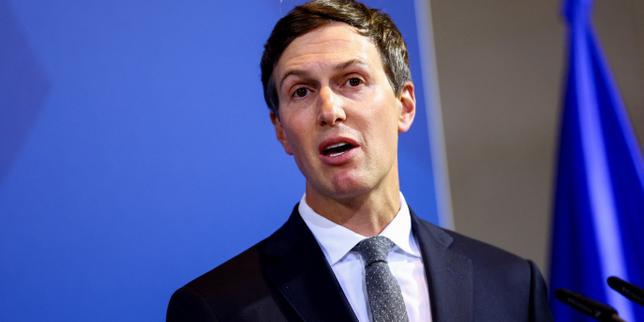
Calling the man who invaded his neighbor a "grandmaster of politics" was never going to land softly in Kyiv or Brussels. Yet on November 25, 2026, U.S. special envoy Jared Kushner did exactly that.
Sitting down for a 70-minute interview with Axel Springer CEO Mathias Döpfner on the MD Meets podcast, President Donald Trump's son-in-law pulled back the curtain on how Washington's negotiating team actually views the Kremlin. Within 48 hours, lawmakers from Ukraine to Germany were openly questioning whether Kushner and fellow envoy Steve Witkoff should even remain at the negotiating table. Meanwhile, you can read other events here: Why Cladding Remediation Talks Put Housebuilders On Notice Now.
If you've been following the stop-start peace talks throughout 2026, this diplomatic blowup isn't just another headline. It exposes a massive fault line between how Trump's inner circle approaches dealmaking and how Europe views existential survival.
What Jared Kushner Actually Said About Vladimir Putin
Kushner rarely gives long-form media interviews, which is why his conversation with Döpfner immediately became required reading across European foreign ministries. Speaking alongside his diplomatic track with Witkoff, Kushner didn't hedge his admiration for Putin's style at the bargaining table. To see the complete picture, check out the excellent report by Al Jazeera.
"President Putin is very organized," Kushner said. "People can like what he's done, they can not like what he's done, but he's definitely a grandmaster of politics. He's a historic figure. He's always very well prepared. He's very thoughtful. He takes a lot of notes when we're speaking, and then he transmits very specifically."
That was only the beginning. Kushner went on to credit the Russian president with showing "restraint" during the conflict because Putin agreed not to use nuclear weapons and assured U.S. negotiators that doing so wasn't his intention.
Then came the line that truly detonated in European capitals. Kushner described Russia's full-scale war in Ukraine as having "effectively become a proxy war where Europe is funding and arming Ukraine against Russia." He even claimed that European nations had spent over $250 billion on Russian energy during the conflict—arguing Europe had handed Moscow more cash than it had given Kyiv.
Why Kyiv and European Leaders Erupted
For politicians in Kyiv, Berlin, and Brussels, hearing a senior American peace envoy echo talking points straight out of Moscow's state media crossed a red line.
Oleksandr Merezhko, who chairs the Ukrainian Parliament's Committee on Foreign Affairs, didn't mince words when speaking to Politico. He called Kushner's mindset "extremely dangerous—not only for Ukraine but also for the security and national interests of the United States." Merezhko repeated his call for both Kushner and Witkoff to be removed from the negotiating team, warning that they view Ukraine "through the eyes of Putin himself."
Another Ukrainian lawmaker, Halyna Yanchenko of the Servant of the People party, pointed out the deeper trap. She argued that Kushner's framing erases Ukrainian agency entirely and turns a U.S. mediator into a defender of Russian narratives. In her view, the promise of a warm U.S.-Russia reset is a classic Kremlin mirage designed to string American negotiators along.
Reaction across the European Union was just as fierce:
- Marie-Agnes Strack-Zimmermann, chair of the European Parliament's Committee on Security and Defence, labeled Kushner's proxy-war framing "pure Kremlin propaganda." She argued that after remarks like these, Kushner can't be taken seriously as a neutral mediator, adding bluntly that the White House seemed to be "sitting on Putin's knees" rather than working toward a fair peace.
- Roderich Kiesewetter, a prominent German MP from Chancellor Friedrich Merz's Christian Democratic Union (CDU), accused Washington of abandoning any pretense of being an "honest broker." He argued that the Trump administration is applying one-sided pressure on Kyiv while effectively siding with Moscow.
- Garry Kasparov, the former world chess champion and longtime Kremlin critic, mocked the "grandmaster" label directly on X, writing that it's easy to look like a grandmaster when your opponents play like amateurs.
The Real Problem With Transactional Diplomacy in Wartime
I've watched business-minded negotiators enter high-stakes geopolitical conflicts for years, and they almost always make the exact same mistake. They confuse a counterpart's preparation with good faith.
Kushner is a real estate developer by background. In commercial real estate, when you sit across from a tough counterparty who takes meticulous notes, knows every clause, and argues clearly, you respect their professionalism. You assume both sides want to close a deal, split the difference, and walk away richer.
Geopolitics doesn't work like a Manhattan property acquisition.
When a former intelligence officer like Vladimir Putin sits across from you taking careful notes, he isn't trying to find a win-win compromise. He is mapping your psychological blind spots. Ukrainian analysts immediately zeroed in on this dynamic. As commentary in Ukrainian media pointed out, an experienced KGB operative will outmaneuver an unseasoned diplomat every single time if that diplomat mistakes flattery and attentiveness for genuine flexibility.
Look at the contradictions inside Kushner's own interview. On one hand, Kushner insisted that Putin wants peace and a "clean slate" with Washington. On the other hand, Kushner admitted that Putin isn't actually interested in an immediate ceasefire—because the Kremlin fears stopping the fighting before locking in political concessions.
You can't have both. A leader who refuses a ceasefire while demanding territorial capitulation isn't seeking a "new beginning." He's buying time on the battlefield.
Five Misconceptions in Kushner's Argument
To understand why European diplomats were so rattled—especially coming right after Kushner and Witkoff met European and Ukrainian officials in Berlin on November 19—you have to unpack the specific claims Kushner put forward. Several of them clash directly with documented facts.
1. Not using nuclear weapons is "restraint"
Calling a nuclear-armed aggressor restrained because he hasn't launched nuclear missiles sets the bar underground. For years, Moscow has used nuclear saber-rattling precisely to deter Western air defense and long-range missile deliveries. Praising Putin for not triggering nuclear armageddon rewards the exact blackmail tactic the Kremlin relies on.
2. Europe is waging a "proxy war"
Calling Ukraine's self-defense a European proxy war flips cause and effect upside down. Russia launched a full-scale invasion of a sovereign nation. European countries didn't push Ukraine into fighting; Ukrainians fought back to prevent their country from being wiped off the map, and Europe stepped in to help an ally survive.
3. Europe paid Russia more than it gave Ukraine
Kushner's claim that Europe spent over $250 billion on Russian energy during the war—exceeding its aid to Kyiv—leaves out crucial context. European Union nations slashed Russian pipeline gas imports by roughly 90 percent since 2022 and phased out Russian coal and seaborne oil at huge economic cost to themselves. Meanwhile, combined European financial, humanitarian, and military commitments to Ukraine have far outpaced those legacy energy payments, which were concentrated heavily in the first months before sanctions took full effect.
4. Borders are just lines moved by war
Kushner told Döpfner that most borders in Europe changed through war or concessions, adding that peace talks aren't "about fairness or who is right or wrong." That's a textbook realist argument, but it ignores why post-1945 Europe enjoyed eight decades of relative stability. The entire European security order rests on the rule that borders aren't redrawn by force. Abandoning that principle in Ukraine tells every authoritarian regime on earth that conquest works if you hold out long enough.
5. Security guarantees can just mirror NATO's Article 5
Kushner dismissed Kyiv's push for ironclad, concrete security commitments, arguing that the wording of NATO's Article 5 is already the "gold standard" and Washington can't offer anything stronger. European diplomats pushed back hard on this idea. As one NATO diplomat noted, being "close to Article 5" without actual NATO membership or binding mutual defense obligations is an illusion. Ukraine already received vague written assurances under the 1994 Budapest Memorandum—and watched Russia shred them twenty years later.
Where the Peace Talks Actually Stand Now
Behind the war of words, the actual negotiations remain deadlocked on the exact same issues that stalled them all year.
Kushner acknowledged that talks are stuck in a "territorial impasse." From February through September 2026, U.S. envoys stayed in constant contact with both capitals, yet neither Moscow nor Kyiv budged on core territorial demands. Moscow wants international recognition of occupied Ukrainian land and a veto over Ukraine's military alliances. Kyiv refuses to sign away millions of its citizens without enforceable security guarantees that prevent Russia from regrouping and invading again in three years.
Interestingly, even Ukrainian officials who fiercely criticized Kushner's public interview admit privately that the situation inside the negotiating room is complicated. According to reporting from the Kyiv Independent, some senior Ukrainian insiders view Kushner as far more engaged and creative than Steve Witkoff, noting that Kushner constantly types up new frameworks on his MacBook during meetings.
Even President Trump himself hasn't echoed every point his son-in-law made. Just a day after Kushner's interview aired, Trump declined to pressure Kyiv into halting deep strikes inside Russian territory, even as Ukrainian drones hit an oil refinery near Crimea. Trump has also publicly questioned Putin's willingness to stop fighting—a stark contrast to Kushner's rosy assessment of the Russian leader's intentions.
Still, words from a president's chief negotiator carry real weight. When Kushner blames Ukraine for stalling talks over an alleged 2025 strike on Putin's residence—an incident even U.S. intelligence questioned—he hands Moscow diplomatic ammunition it didn't earn.
How to Read Diplomatic Signals Around the Ukraine Talks
If you're trying to separate real diplomatic movement from media spin over the coming weeks, watch actions rather than podcast interviews.
- Track weapons and intelligence flows, not rhetoric. Ukrainian officials have quietly flagged delays in U.S. air defense interceptor deliveries and occasional friction in intelligence sharing. If those bottlenecks clear, Washington is keeping leverage on Moscow regardless of how politely Kushner speaks about Putin. If they tighten, pressure is being applied to Kyiv.
- Watch European defense budgets and frozen Russian assets. Every time a U.S. official describes the conflict as "Europe's proxy war," European leaders accelerate plans to fund Ukrainian weapons production directly. Follow announcements from Berlin, Paris, and Brussels on joint defense procurement.
- Look for concrete prisoner exchanges before year-end. U.S. negotiators have signaled hopes for a major prisoner swap before the holidays. Humanitarian exchanges are usually the first real test of whether backchannel talks have any traction.
- Check whether European seats at the table are real. Moscow previously pushed to exclude European representatives from talks in Abu Dhabi, though Washington has since engaged an eight-nation European and NATO working group. Any durable settlement requires European buy-in, because Europe will foot the reconstruction bill and enforce sanctions.
Diplomacy often requires talking to brutal adversaries in calm, measured tones. Nobody expects an envoy to insult Putin across a conference table. There's a wide gap, though, between keeping a channel open and romanticizing the man who started Europe's bloodiest war since 1945—and right now, Jared Kushner is standing squarely on the wrong side of that line.