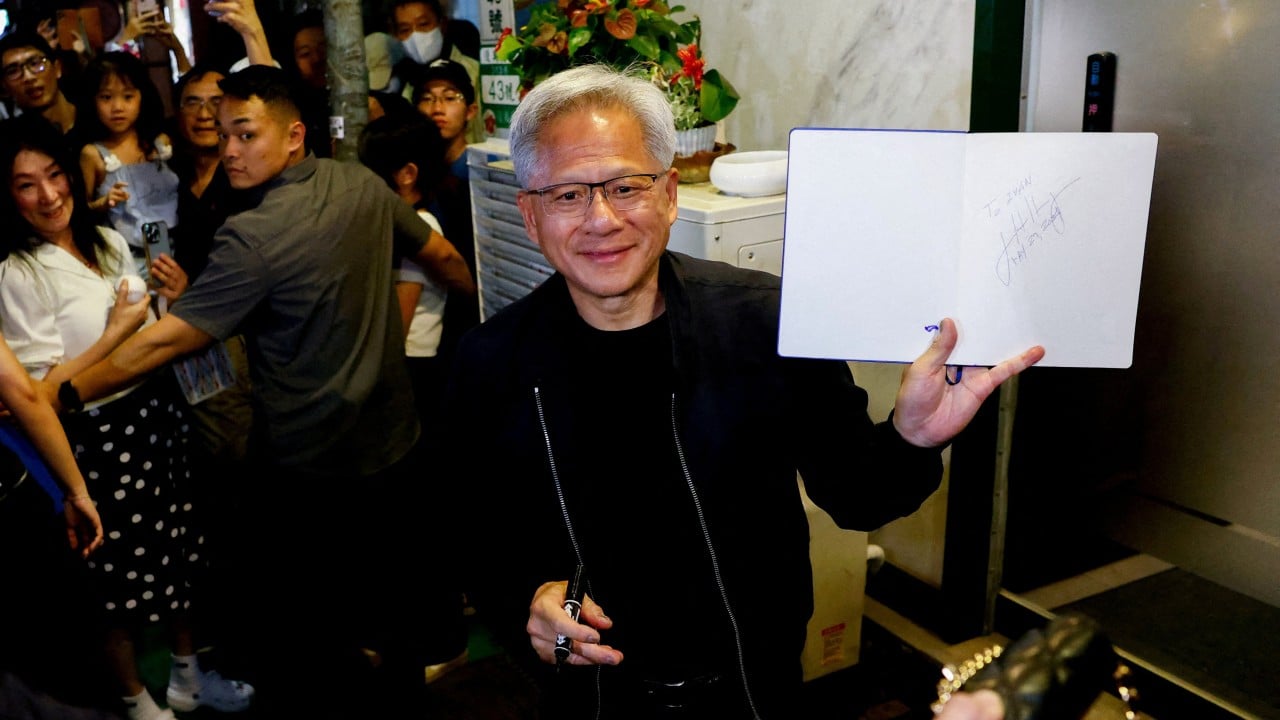
Jensen Huang walked back into Nvidia's corner office eleven days after walking out, and Wall Street threw a $950 billion party on Monday. One day later, reality showed up at the door with a sharper hangover.
If you've been watching the AI trade over the past few weeks, you know how unhinged things got. Huang resigned on November 12 amid explosive reports of extramarital affairs—including one with a woman U.S. intelligence agencies suspected of ties to Chinese intelligence, plus relationships involving Nvidia employees. Nvidia's stock tanked nearly 23% in the week after his exit, dragging broader AI stocks down with it. Then, on November 23, the board voted unanimously to reinstate him as president, CEO, and director with immediate effect, sending shares soaring 31.48% to $165.05 in the biggest single-day market cap surge on record before pulling back in early Tuesday trading.
Jensen Huang coming back isn't a simple "crisis over" moment for Nvidia. It's a permanent shift in how the company is governed, how Washington treats AI hardware, and how much founder mystique can carry when geopolitics and boardroom politics collide.
What Actually Happened During Those Eleven Days
Let's get the timeline straight, because a lot of people are conflating rumors with what actually went down.
On November 8, Nvidia's board announced an internal investigation. Four days later, on November 12, Huang stepped down. Reports had surfaced about his affair with Alice Huang—a businesswoman U.S. officials suspected of intelligence links to China—as well as relationships with subordinates, including Nvidia vice president of healthcare Kimberly Powell and another employee. Chief financial officer Colette Kress stepped in as interim CEO, and investor Harvey Jones became Nvidia's first board chair.
On paper, the numbers didn't blink while Huang was out. When Nvidia reported third-quarter fiscal 2027 results on November 17, revenue had jumped 103% year over year to a record $115.8 billion, beating consensus estimates around $109 billion, and Kress raised next-year revenue growth guidance from roughly 70% to about 75%. Yet on that very same earnings call, Harvey Jones indicated the board had no intention of bringing Huang back.
Five days after that, everything flipped.
According to multiple reports, President Donald Trump directly intervened with the board—even dialing into discussions and telling CNBC he "convinced them" and "made the deal". Nvidia's board stated it held multiple meetings with Huang that satisfied members regarding his candor and leadership ability, and said input from senior U.S. government officials gave it confidence that reinstating him poses no national security risk.
Even more striking: Bloomberg reported that the board finalized the move on Sunday afternoon without consulting interim CEO Colette Kress or several other top executives, announcing it right before Monday's opening bell. You don't pull off an eleventh-hour coup like that without leaving scars inside the C-suite.
Why Markets Cheered First and Winced Second
Honestly, Monday's 31.48% jump—roughly $954 billion in market value added in a single session, more than double Microsoft's prior single-day record—showed how terrified investors were of a post-Jensen Nvidia. Even after beating estimates on revenue, Nvidia shares had been trading around 13 times forward earnings during the turmoil, down sharply from their October 6 intraday high of $243.37.
Why did traders pile back in so fast? Three reasons stand out:
- Founder-led execution premium: Nvidia didn't just build GPUs; Huang built the CUDA ecosystem, forged tight supply-chain partnerships, and turned data-center buildouts into a multi-hundred-billion-dollar juggernaut. Markets often price founder-led tech giants as if nobody else can negotiate wafers or read the next architecture shift quite the same way.
- Short squeeze and relief rally: Bears who bet on a prolonged leadership vacuum and deeper slide got crushed when the reinstatement news hit before the bell, with reports noting heavy losses for short sellers and a broad bounce across chipmakers and Asian tech indexes.
- Perceived green light on national security: If senior U.S. officials told the board there wasn't a national security bar to his return, some traders assumed the worst-case political threat to Nvidia had peaked.
That assumption ran straight into Tuesday's reality check. Shares slipped in early trading as investors weighed governance fallout, bipartisan pushback in Congress, and the risk that political interference in a boardroom creates new headaches rather than wiping old ones clean. Also worth noting: bond yields remained elevated, with the 10-year Treasury hovering near 4.92% to 4.95% as markets eyed December Federal Reserve rate expectations—a reminder that macro gravity hasn't gone anywhere.
The Boardroom and Governance Mess Nobody Can Brush Aside
Here's what's debatable—and where I think the market is underpricing long-term friction.
Reinstating a CEO eleven days after a scandal involving alleged affairs with a suspected foreign intelligence asset and company employees sends a loud message about power at the top. Even with Nvidia's board creating a National Security and Export Control Oversight Committee and launching a search for a Chief Compliance Officer reporting to the Nominating and Corporate Governance Committee, governance credibility takes time to rebuild.
Think about what happened internally. Kress stepped up during a chaotic week, delivered strong Q3 numbers and raised guidance, and then reportedly found out alongside other senior leaders after the board had already settled on a reversal. Whether that breeds quiet resentment or a "whatever Jensen wants" culture, it changes how decisions get made.
At the same time, let's be fair about the counterargument. Some analysts and an open letter signed by over 165,000 people—including Elon Musk—argued that losing Huang would severely disrupt Nvidia's momentum, and equity researchers at firms like Morningstar noted that keeping Harvey Jones as chair and Colette Kress as CFO could help stabilize day-to-day operations. Both things can be true at once: Huang may drive product and customer urgency better than anyone else, while the governance precedent still looks messy.
Washington Isn't Done With Jensen Huang or Nvidia
If anyone thought getting reinstated meant the political heat was over, they haven't been reading Capitol Hill news.
Lawmakers from both parties—including sharp criticism from Republicans like Sen. Tom Cotton and Sen. Pete Ricketts alongside Democrats—have pushed back hard, questioning both the circumstances of the reinstatement and whether advanced AI chips or remote compute access have been diverted or smuggled to China. Reports have also linked scrutiny to ties involving a company to which Nvidia allegedly sold over $4 billion worth of chips and equipment.
Huang isn't dodging the spotlight next week:
- December 1, 2026: Huang is scheduled for a closed-door transcribed interview before three House panels—the House Intelligence Committee, the Foreign Affairs Committee, and the Select Committee on China. Nvidia general counsel Tim Teter has also agreed to appear on December 2.
- December 3, 2026: Huang is slated to testify in a public Senate Banking Committee hearing chaired by Sen. Tim Scott focused on oversight of U.S. export controls.
A spokesperson for the House Intelligence Committee made the stakes plain: Huang's reinstatement changes nothing about lawmakers' demand for answers. Meanwhile, legislation like the Chip Security Act—aimed at curbing diversion of restricted advanced chips to China—is gaining momentum in bipartisan debates. Even if the board feels reassured by executive-branch input, Congress controls oversight and statutory rules, and that battle is just heating up.
Common Misconceptions About This Comeback
A few myths are already floating around social feeds and group chats, so let's clear them up with actual facts:
- "The scandal is completely cleared up." No. A board decision to reinstate a CEO isn't the same as a congressional clearance or the end of government inquiries. Nvidia explicitly stated it will continue cooperating with ongoing government investigations and inquiries.
- "Nvidia's business collapsed without Huang for eleven days." Not in the Q3 numbers. Revenue still rose 103% to $115.8 billion. The real risk wasn't a sudden drop in shipments that week—it was multi-year customer confidence, export licensing, and leadership stability.
- "Monday's rally put NVDA back at all-time highs." Far from it. Even after jumping 31.48% to $165.05, the stock remained more than 32% below its October 6, 2026 record intraday high of $243.37.
Practical Next Steps If You Follow, Invest in, or Build on Nvidia
Whether you hold Nvidia stock, run an engineering team dependent on CUDA and GPU supply, or simply follow tech power dynamics, don't trade or plan on headlines alone.
- Track the December 1–3 congressional hearings closely. Watch how Huang answers export-control and supply-chain questions in public and what leaks or transcripts emerge from the House sessions—regulatory tone can move chip multiples faster than a single press release.
- Separate short-term volatility from fundamental demand. Check upcoming data-center and server bellwethers—such as Dell's earnings report—to see whether hyperscalers and enterprise buyers are changing order behavior or staying locked into current roadmaps.
- Avoid single-vendor concentration risk if you build AI products. Even if Nvidia stays dominant on raw performance and software tooling, export controls, allocation shifts, and political headlines make multi-architecture or multi-cloud fallbacks smart engineering hygiene.
- Watch governance and compliance disclosures. Pay attention to who is named Chief Compliance Officer and how the National Security and Export Control Oversight Committee operates in upcoming filings—real accountability shows up in guardrails and audits, not speeches.